Tag: SE QLD

  • Boat Towing & Transport SE QLD: The 2026 Expert Guardian’s Guide

    Boat Towing & Transport SE QLD: The 2026 Expert Guardian’s Guide

    What if the most hazardous part of your weekend on the water isn’t the swell at the Gold Coast Seaway, but the fifty-kilometre transit back to your driveway? We understand that your vessel is far more than a simple asset; it’s a prized possession that represents years of passion and meticulous maintenance. The fear of structural stress, hull abrasions, or a catastrophic trailer failure on the M1 is a heavy burden for any owner to carry. When it comes to professional boat towing, you deserve a service that prioritises the engineering integrity of your craft above all else.

    This 2026 guide provides the clarity you need to relocate your boat across South-East Queensland with absolute confidence and surgical precision. You’ll learn how to navigate complex oversize load permits and adhere to the latest Queensland road rules without the usual confusion. We will also examine the specialised equipment required for damage-free delivery and the elite handling standards that ensure your investment remains protected from the moment it leaves the water until it’s safely berthed at the marina or positioned in your driveway.

    Key Takeaways

    • Understand the 2026 Queensland road rules regarding vessel dimensions and permits to ensure your transit remains fully compliant and stress-free.
    • Discover how professional boat towing services utilise an “Expert Guardian” methodology to protect high-value hulls and structural integrity.
    • Evaluate the technical advantages of specialised tilt-tray transport over DIY methods to mitigate the risk of trailer breakdowns and mechanical fatigue.
    • Master the critical pre-transport checklist for securing loose equipment and managing fluids before your vessel leaves the water.
    • Learn why a Stapylton-based operational hub provides the ideal logistical advantage for boat owners across Logan and the North Gold Coast.

    Professional Boat Towing: More Than Just a Hitch and a Trailer

    Professional boat towing is a specialised logistics service that transcends the simple act of hitching a trailer to a 4WD. It requires a disciplined, detail-oriented methodology to ensure that high-value marine assets arrive in pristine condition. While many believe a standard tow ball and a bit of luck are sufficient, the reality of the Queensland highway environment suggests otherwise. A dedicated provider understands that a vessel is a complex piece of engineering that requires specific handling during land-based transit.

    This is where the “Expert Guardian” approach becomes essential. It’s a philosophy that treats every vessel as a prized possession rather than just another task on a manifest. Unlike general logistics providers who might move a shipping container one hour and a boat the next, a specialist focuses on the unique engineering requirements of marine transport. For those unfamiliar with the fundamentals, understanding boat trailer basics is a good starting point, but professional transport adds layers of security that standard equipment simply cannot match.

    The transit from a boat ramp to a driveway involves significant stressors that can compromise your vessel’s value. These include:

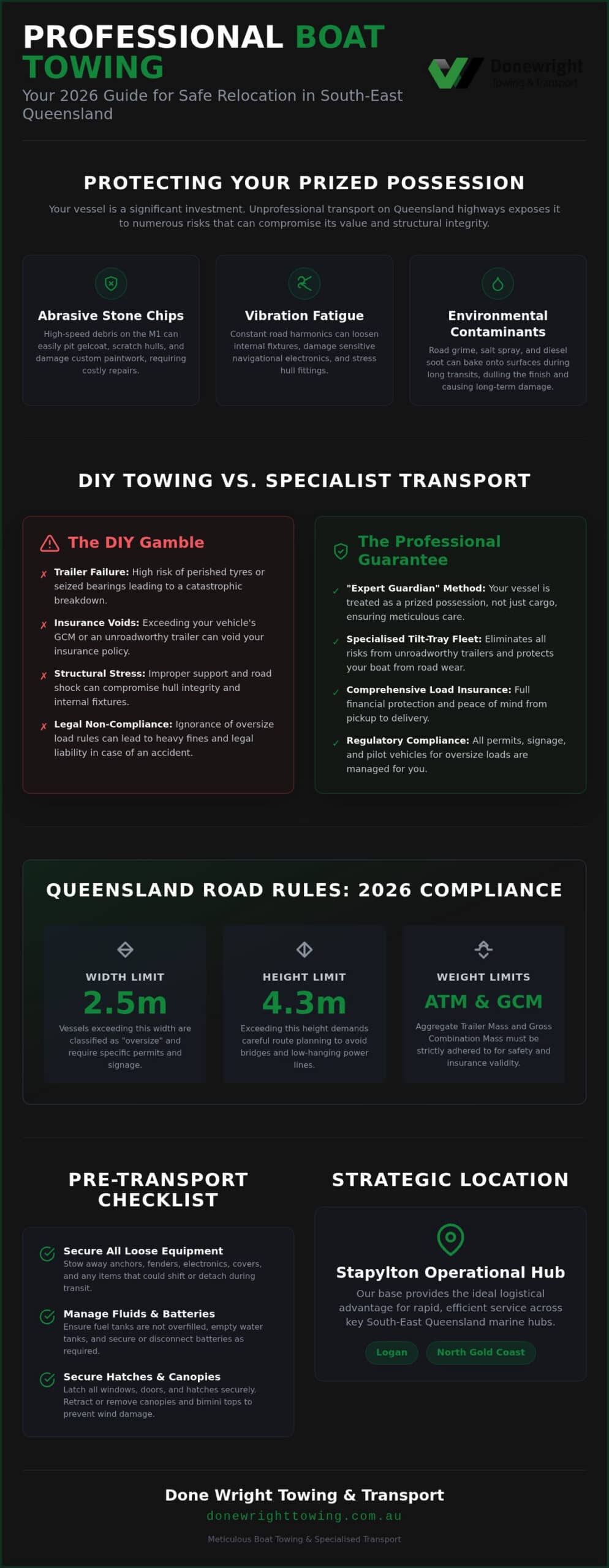
    • Abrasive stone chips: High-speed debris on the M1 can easily pit gelcoat or damage custom paintwork.
    • Vibration fatigue: Constant road harmonics can loosen internal fixtures and stress sensitive navigational electronics.
    • Environmental contaminants: Road grime, salt spray, and diesel soot can bake onto surfaces during long transits.

    The High Stakes of Marine Transport

    For most owners, a boat represents both a significant financial investment and a deep emotional connection to the water. Maintaining the integrity of the gelcoat and the structural soundness of the hull is paramount. Professional relocation ensures that the vessel is secured using non-abrasive equipment designed specifically for marine finishes. A licensed specialist also provides comprehensive load insurance, offering peace of mind that a DIY tow simply cannot provide. This level of protection is vital when moving assets across the varied terrain of South-East Queensland.

    When to Call a Professional Boat Mover

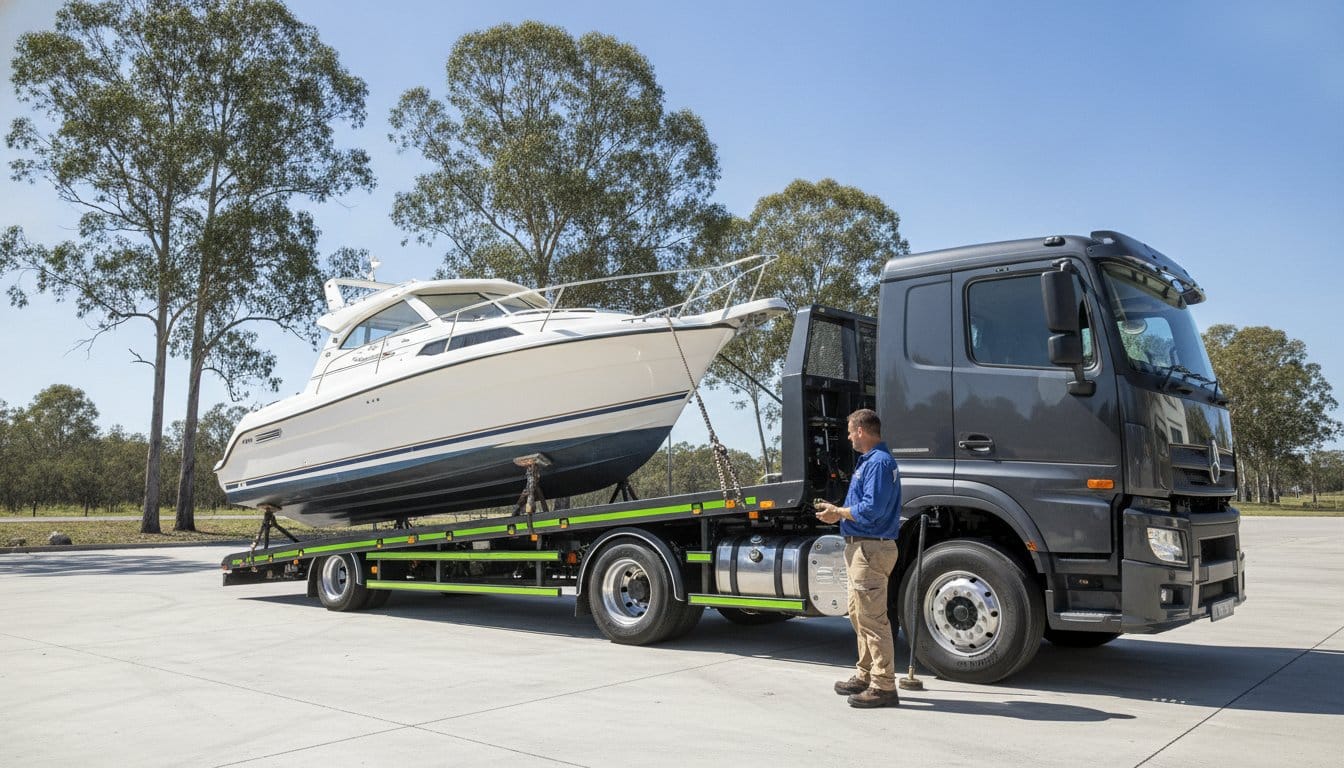
    There are several scenarios where professional intervention is the only logical choice. Relocating a vessel to a new marina or a dry storage facility in Stapylton requires precise timing and reliable scheduling. If you’ve recently purchased a boat from a dealer or an auction, the existing trailer may be unregistered or, worse, unroadworthy. Attempting to tow a vessel with perished tyres or seized bearings is a recipe for a highway breakdown. In these instances, using a tilt-tray service ensures the boat is transported safely without ever putting a wheel on the bitumen.

    Compliance on Queensland roads is not merely a matter of avoiding fines; it is a critical component of vessel safety and public liability. The legal framework governing boat towing in the Sunshine State is rigorous, designed to manage the unique challenges posed by long, heavy, and often wide loads. For owners in South-East Queensland, staying abreast of these regulations is the first step toward a successful relocation. Ignorance of the law provides no protection if a mishap occurs on the M1 or through the tight streets of Logan.

    Queensland Dimension and Weight Limits

    The standard width limit for a vehicle and trailer combination in Queensland is 2.5 metres. If your vessel exceeds this width, it is classified as an “oversize load,” requiring specific yellow-and-black warning flags and, in some cases, “Oversize” signage. Height is equally critical. While most standard trailers clear local infrastructure, any combination exceeding 4.3 metres requires careful route planning to avoid bridges and low-hanging power lines. Rear overhang, measured from the centre of the rear axle group to the end of the boat, must also remain within legal tolerances to prevent dangerous tail-swing.

    Weight distribution is managed through two primary metrics: Aggregate Trailer Mass (ATM) and Gross Combination Mass (GCM). The ATM is the total weight of the trailer and its load when not attached to the tow vehicle, while the GCM is the maximum allowable weight of the entire rig. Exceeding these limits is a major safety risk and can void your insurance policy. Utilising a safe towing checklist can help you verify these weights and ensure your vehicle is capable of the task before you depart.

    Safety Equipment and Lighting Regulations

    Every trailer must be roadworthy and equipped with functioning indicators, brake lights, and clearance lamps. For larger vessels, the visibility of these lights is often obscured by the hull, necessitating the use of light boards or extended wiring. Safety chains are mandatory, and trailers with an ATM over 2,000kg must be fitted with an independent break-away system that applies the trailer brakes if it becomes disconnected from the tow vehicle.

    Visibility is another legal sticking point. If your boat is wider than your tow vehicle, you are legally required to fit extended towing mirrors to maintain a clear line of sight along both sides of the trailer. If managing these technicalities feels overwhelming, choosing a professional transport specialist ensures your vessel meets every legal requirement without you having to study the transport manual. These regulations ensure that only those with the appropriate equipment and skill sets are handling heavy marine assets on our busy highways.

    DIY vs. Specialist Transport: Protecting Your Pride and Joy

    While the temptation to manage your own vessel relocation is understandable, the true cost of DIY boat towing often extends far beyond a tank of diesel. Many owners overlook the cumulative wear on their own vehicle’s transmission and the intense psychological stress of managing a multi-tonne load through the variable traffic of South-East Queensland. Professional transport isn’t merely a convenience; it’s a strategic decision to preserve the engineering integrity of your craft.

    The Hidden Risks of DIY Towing

    Physics is unforgiving on the highway. Incorrect tongue weight is perhaps the most common DIY error, leading to the dreaded “trailer sway” that can easily overwhelm a standard 4WD. Without the precise weight distribution managed by a specialist, a vessel can become an oscillating pendulum at 100km/h on the M1. Inadequate tie-down points on many recreational trailers are not designed for the sustained G-forces of long-distance road transit. This often results in structural stress on the hull or hairline fractures in the gelcoat that aren’t visible until the next time you hit the water.

    The mental toll is also significant. Navigating narrow construction zones or merging with heavy freight vehicles requires a level of focus that can be exhausting for an occasional tower. A professional mover eliminates this burden, allowing you to focus on your destination while your asset is handled by a disciplined specialist. By elevating the vessel onto a heavy-duty tilt-tray with advanced suspension systems, we isolate the hull from the harsh vibrations of the bitumen. This significantly reduces “road shock,” which is vital for modern boats equipped with sensitive glass-cockpit electronics and delicate interior finishes.

    The Done Wright Difference in Marine Logistics

    We apply the same meticulous standards to marine assets that we use for prestige and classic car transport. Every relocation follows a methodical process designed to de-risk the transit. This protective approach includes:

    • Non-abrasive securement: We utilise specialised soft-strap systems that provide immense holding power without ever marring the polished finish of your hull.
    • Protective barriers: Strategically placed padding ensures that no metal components ever make contact with your vessel’s surfaces.
    • Continuous monitoring: Our operators perform regular physical inspections of the load at scheduled intervals throughout the transit across SE QLD.

    Our commitment to “Done Wright” execution ensures that the emotional and financial stakes of your investment are always protected by an expert guardian. This elite handling appeals to enthusiasts who are protective of their investments and require a reliable, high-standard partner for their logistical needs.
    Boat Towing & Transport SE QLD: The 2026 Expert Guardian’s Guide

    Pre-Transport Checklist: Preparing Your Vessel for the Road

    Preparing a vessel for the highway requires a distinct shift in mindset from preparing for a day on the water. While the hull is designed to withstand the fluid dynamics of the ocean, it faces entirely different stressors when subjected to the high-velocity wind and constant vibrations of land-based transit. A meticulous pre-transport routine is the hallmark of a responsible owner and ensures that your boat towing experience remains uneventful and secure.

    Wind resistance is a primary concern. At 100km/h on the M1, a loosely secured bimini or a trailing boat cover acts as a massive sail, creating immense structural torque on mounting points. All canvas tops, antennas, and outriggers must be retracted or removed entirely. Similarly, loose interior items such as cushions, life jackets, and fishing gear should be stowed in secure lockers or moved to the tow vehicle. These items are easily displaced by road-induced turbulence, posing a risk to other motorists and your vessel’s interior finish.

    Fluid management is another critical, yet often overlooked, step. Ensure the bilge is completely drained to reduce unnecessary weight and to comply with biosecurity regulations regarding the transport of aquatic pests. We recommend keeping fuel levels to a minimum; a full tank adds significant mass and increases the load on the trailer’s suspension and braking systems. If you require a professional to handle these logistical complexities, you can book your boat transport today with our expert team.

    Interior and Exterior Preparation

    High-value electronics, including GPS units and fishfinders, should be removed and packed separately to protect them from both theft and vibration fatigue. The outboard motor must be trimmed down and secured with a dedicated travel bracket to prevent the hydraulic system from overextending during bumps. Finally, perform a thorough walk-around of the hull. Document the current condition with high-resolution photographs, focusing on the gelcoat and prop, to provide a clear baseline for insurance peace of mind.

    Mechanical and Structural Stability

    The physical connection between the boat and the trailer must be infallible. Inspect the winch strap for any signs of fraying or UV degradation, as this is your primary securement point. Safety chains should be rated for the load and free of heavy corrosion. Crucially, verify that all cabin hatches, windows, and portlights are securely latched. A hatch that catches the wind at highway speeds can be ripped from its hinges in seconds, leading to significant structural damage and potential road hazards.

    Done Wright: Meticulous Boat Towing in Stapylton and SE QLD

    The “Done Wright” philosophy is more than just a clever name; it is a verbal promise of perfection and a commitment to correct execution. Since 2017, our family-owned Australian business has specialised in the relocation of high-value assets, applying the same meticulous care to marine vessels that we provide for prestige automotive transport. Our operational hub in Stapylton serves as a strategic launchpad, allowing us to deliver reliable, scheduled service that respects both your time and the financial stakes of your investment.

    Local Experts in Stapylton and Logan

    Our location in Stapylton provides a distinct logistical advantage for boat owners across Logan and the North Gold Coast. We possess deep, technical knowledge of local boat ramps and marina access points, from the busy docks of Coomera to the quiet reaches of Jacobs Well. This regional familiarity ensures that your boat towing service is executed with an understanding of local tidal movements and ramp gradients, which is essential for the safe loading and unloading of larger craft.

    Beyond our local region, we offer interstate backloads for owners relocating their vessels across state borders. Whether you are moving a trailer boat to Sydney or bringing a new purchase up from Melbourne, our fully licensed and insured team provides the same elite handling standards throughout the journey. We treat every item as a prized possession, ensuring that your vessel remains protected from road grime and mechanical stress during long-haul transits. Our reach is expansive, yet our service remains personalised, reflecting the disciplined standards of a specialist who understands the emotional and financial value of your craft.

    Booking Your Marine Transport with Confidence

    We believe that premium service should be accompanied by absolute transparency. Our quoting process is straightforward, providing you with a clear understanding of the logistical plan and the safeguards in place for your asset. On transport day, you can expect a methodical approach that begins with a physical inspection and concludes with a damage-free delivery to your specified marina or driveway. This disciplined process is designed to de-risk the relocation, moving you from a state of concern to a state of total confidence in our capabilities.

    Our team is technically proficient and deeply respectful of the craftsmanship inherent in modern marine engineering. We understand that your vessel requires specialised knowledge that generalists often overlook. To understand the level of precision we bring to every task, you can learn about our prestige car transport standards, which serve as the benchmark for our marine operations. By choosing a partner that values precision and safety above all else, you ensure your boat is handled by an expert guardian who understands the stakes involved in high-end transport.

    Secure Your Vessel’s Future on the Road

    Relocating a high-value marine asset across South-East Queensland requires more than just a capable tow vehicle; it demands a disciplined approach to safety and compliance. By understanding the latest 2026 road regulations and following a meticulous pre-transport checklist, you ensure your vessel remains protected from the unique stressors of highway transit. Choosing professional boat towing over the risks of a DIY move eliminates the anxiety of trailer failure and structural damage, providing you with the peace of mind that your investment is in expert hands.

    As a family-owned Australian business since 2017, we are fully licensed and insured to handle prestige assets with the precision they deserve. Our Stapylton-based team specialises in high-value transport, ensuring every vessel is treated with the same meticulous care as a classic car. When you are ready to move your pride and joy with absolute confidence, we are here to help. Request a meticulous boat towing quote from Done Wright Today and experience the difference of a true expert guardian. We look forward to seeing you back on the water soon.

    Frequently Asked Questions

    Do I need special insurance for boat towing in Queensland?

    While your standard comprehensive marine policy might cover the vessel on the water, it often excludes or limits coverage during land-based transit. For professional boat towing, we provide comprehensive load insurance that protects your asset against transit-related risks. It’s essential to verify that your provider is fully licensed and insured specifically for high-value marine assets to ensure total peace of mind throughout the relocation process across South-East Queensland.

    Can you tow a boat if the trailer is currently unregistered?

    You cannot legally tow an unregistered trailer on its own wheels on Queensland roads. However, we can still relocate your vessel by utilising our specialised tilt-tray trucks. By loading the boat and its unregistered trailer entirely onto our transport vehicle, we eliminate the need for road registration or temporary permits. This method is the safest way to move newly purchased vessels or those that have been in long-term dry storage.

    How much does boat towing cost per kilometre in 2026?

    Pricing for professional marine transport is determined by several variables rather than a flat per-kilometre rate. Factors such as the vessel’s total weight, overall dimensions, and the specific accessibility of the pickup and delivery locations influence the final quote. We provide transparent, upfront pricing tailored to your specific logistical needs. This ensures you receive a precise estimate that reflects the meticulous care and specialised equipment required for your high-value asset.

    What is the maximum width for a boat trailer without an oversize permit?

    In Queensland, the maximum allowable width for a standard trailer and its load is 2.5 metres. Any vessel exceeding this dimension is classified as an “oversize load” and requires specific regulatory compliance. This includes the use of yellow-and-black warning flags, “Oversize” signage, and potentially specific route permits. We manage these legal requirements as part of our professional service, ensuring your wide-beam vessel is transported in full accordance with 2026 road rules.

    Do you provide interstate boat transport from the Gold Coast?

    Yes, we offer reliable interstate backloads for vessels moving beyond the Queensland border. From our strategic hub in Stapylton, we coordinate long-distance relocations to major hubs like Sydney or Melbourne. Every interstate journey adheres to our strict “Expert Guardian” standards, utilising the same damage-prevention technologies we apply to local moves. This provides a cost-effective yet premium solution for owners who require their prized possessions to be moved across state lines with meticulous care.

    What happens if my boat trailer breaks down while you are towing it?

    Our primary method of transport involves loading your vessel and trailer onto a specialised tilt-tray, which effectively eliminates the risk of trailer-related breakdowns on the highway. If you are using our breakdown towing service for a trailer that has already failed, we utilise professional recovery techniques to secure the rig safely. This proactive approach prevents common issues like seized bearings or tyre blowouts from escalating into a dangerous roadside emergency on the M1.

    Can you transport a boat without a trailer using a tilt-tray?

    We can certainly transport vessels that are not currently on a trailer. Our specialised tilt-tray trucks are equipped to handle hull-only relocations using non-abrasive blocking and secure cradling techniques. This service is ideal for boats being moved between hardstands, shipyards, or for vessels that are being sold without their original trailers. We ensure the hull’s structural integrity is maintained through precise weight distribution and soft-strap securement throughout the journey.

    How do you protect the hull from stone chips during road transport?

    Protecting the gelcoat from high-velocity road debris is a core part of our protective methodology. By elevating the vessel on a tilt-tray, we significantly increase the distance between the hull and the road surface, reducing the likelihood of chip damage. Additionally, we utilise specialised protective barriers and non-abrasive equipment to shield sensitive areas. This meticulous attention to detail ensures your vessel arrives at the marina in the same pristine condition it left the water.
  • 2026 Guide: Authorised Vehicle Removals in SE QLD

    2026 Guide: Authorised Vehicle Removals in SE QLD

    You arrive at your premises to find an unauthorised vehicle obstructing your access, yet the prospect of arranging private property removals often feels just as stressful as the blockage itself. You aren’t just concerned about the inconvenience; you’re worried about the potential for cracked decorative pavers or the legal repercussions of an incorrectly managed tow. It’s a delicate situation that requires more than just a truck; it requires a disciplined, high-standard approach to asset handling that respects both your time and your physical environment.

    We understand that your property is a significant investment that deserves meticulous protection. This 2026 guide provides the clarity you need to navigate the stringent requirements of the Tow Truck Act 2023 and the Tow Truck Regulation 2024. You’ll learn how to ensure every extraction is lawful, secure, and entirely damage-free. We will detail the essential “Towing Consent” protocols, the latest regulated fee structures, and the specialised, non-abrasive tilt-tray technologies that keep your landscaping pristine. By following this professional framework, you can restore access to your land with the quiet confidence that comes from a perfectly executed operation.

    Key Takeaways

    • Navigate the complex 2026 legal landscape by understanding your obligations under the Tow Truck Act 2023 and the latest TMR accreditation requirements.
    • Protect your premises from physical damage by utilising specialised tilt-tray trucks and non-abrasive handling techniques usually reserved for prestige vehicles.
    • Master the procedural requirements for private property removals, including the necessity of compliant “Tow Away” signage and formal Towing Consent documentation.
    • Ensure every extraction is handled with the meticulous care of an expert guardian, shielding your property from liability while restoring access to your land.

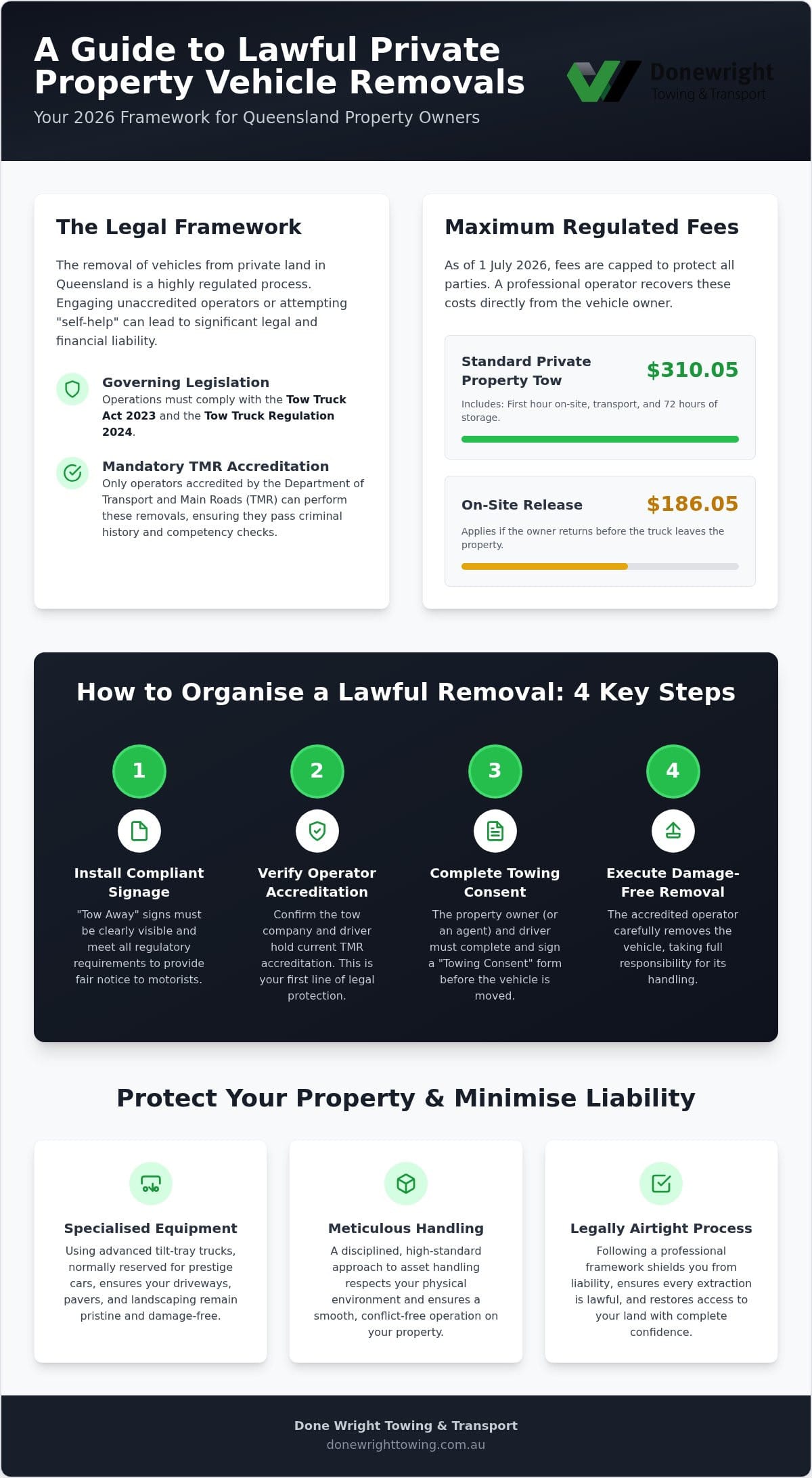
    The removal of a vehicle from private land is not a simple matter of logistics; it’s a highly regulated procedure governed by the Tow Truck Act 2023 and the Tow Truck Regulation 2024. In Queensland, these laws ensure that landowners can manage their property while protecting the rights of motorists from predatory practices. Under this framework, private property removals are strictly defined as the towing of a vehicle from private land in a regulated area without the owner’s express request. This applies across key South East Queensland regions, including Logan and the Gold Coast. These areas are designated to ensure that high-density parking zones are managed with professional oversight rather than arbitrary decisions.

    Attempting “self-help” removals or engaging an unaccredited operator is a recipe for significant legal liability. If a vehicle is moved without following the specific vehicle towing regulations, the property owner may face heavy fines or civil claims for damages. The Department of Transport and Main Roads (TMR) serves as the industry’s overseer, ensuring that only qualified, accredited professionals handle these sensitive extractions. This oversight is vital because it guarantees that the equipment used is safe and the operators are accountable for their actions on your land.

    Accreditation and Authorisation Requirements

    Before any vehicle is touched, you must verify the operator’s TMR accreditation. It’s the only way to ensure the driver and the business have passed the necessary criminal history and competency checks. Central to this process is the “Towing Consent” form. This document acts as your legal shield; it must be completed by the property owner and the tow truck driver before the tow commences. Done Wright maintains a disciplined adherence to these protocols, providing fully licensed and insured services from our Stapylton hub to ensure your property management is legally airtight and your liability is minimised.

    Maximum Regulated Fees and Who Pays

    Queensland law provides clear protections regarding costs to prevent exploitation. As of 1 July 2026, the maximum fee for a standard private property tow is capped at $310.05, which covers the first hour at the scene, transport to a holding yard, and 72 hours of storage. If the vehicle owner returns before the truck has left the premises, a capped on-site release fee of $186.05 applies. These regulated amounts provide transparency for all parties involved. Professional operators manage the financial logistics by recovering these fees directly from the vehicle owner, provided the landowner has met all signage and contractual obligations. This methodical approach ensures the process remains professional and avoids unnecessary conflict on-site.

    Common Scenarios for Authorised Vehicle Removals

    Managing unauthorised vehicles requires a nuanced understanding of different property types and the unique pressures they face. Whether you are a residential homeowner or a commercial facility manager, the need for private property removals usually arises from a disruption to your daily operations or a breach of safety protocols. In South East Queensland, abandoned vehicles frequently appear on large residential blocks or within commercial precincts, creating eyesores and potential fire hazards. Illegally parked cars in assigned bays or private car parks are equally problematic, as they deprive legitimate tenants of the spaces they pay for. This isn’t just about moving a car; it’s about restoring the integrity and functionality of your private space.

    Strata and Body Corporate Challenges

    High-density living in Logan and Gold Coast high-rises presents specific logistical hurdles for building managers and Body Corporate committees. Visitor parking abuse is a persistent issue where non-residents occupy limited bays for extended periods, often leading to frustration among residents who value their privacy and security. We work closely with building managers to implement bypass protocols that ensure unauthorised vehicles are removed with minimal disruption to the community. Clear, compliant signage is the foundation of this process; it provides the necessary fair notice to motorists while protecting the building’s legal standing. By treating every removal as a precision task, we help maintain the elite standard of service expected in premium residential complexes, ensuring that every resident’s right to their assigned space is respected.

    Commercial and Industrial Site Clearing

    In industrial hubs like Stapylton, the presence of an unauthorised vehicle can bring a project to a standstill. These obstructions often prevent the timely arrival of machinery transport or the placement of essential site sheds and containers. Business continuity relies on keeping loading zones and heavy-vehicle access paths clear at all times. We specialise in extracting vehicles from tight industrial spaces where traditional towing might risk damage to expensive equipment or infrastructure. Our team understands the financial stakes involved in site delays, which is why we prioritise swift, methodical extractions that safeguard your assets.

    If you’re currently facing an obstruction that threatens your operational efficiency, it’s worth consulting a professional removal specialist to discuss a tailored solution. Our methodical approach ensures that industrial yards remain functional and safe, allowing your team to focus on their core objectives without the distraction of abandoned or illegally parked assets.

    The Importance of Specialised Equipment and Meticulous Handling

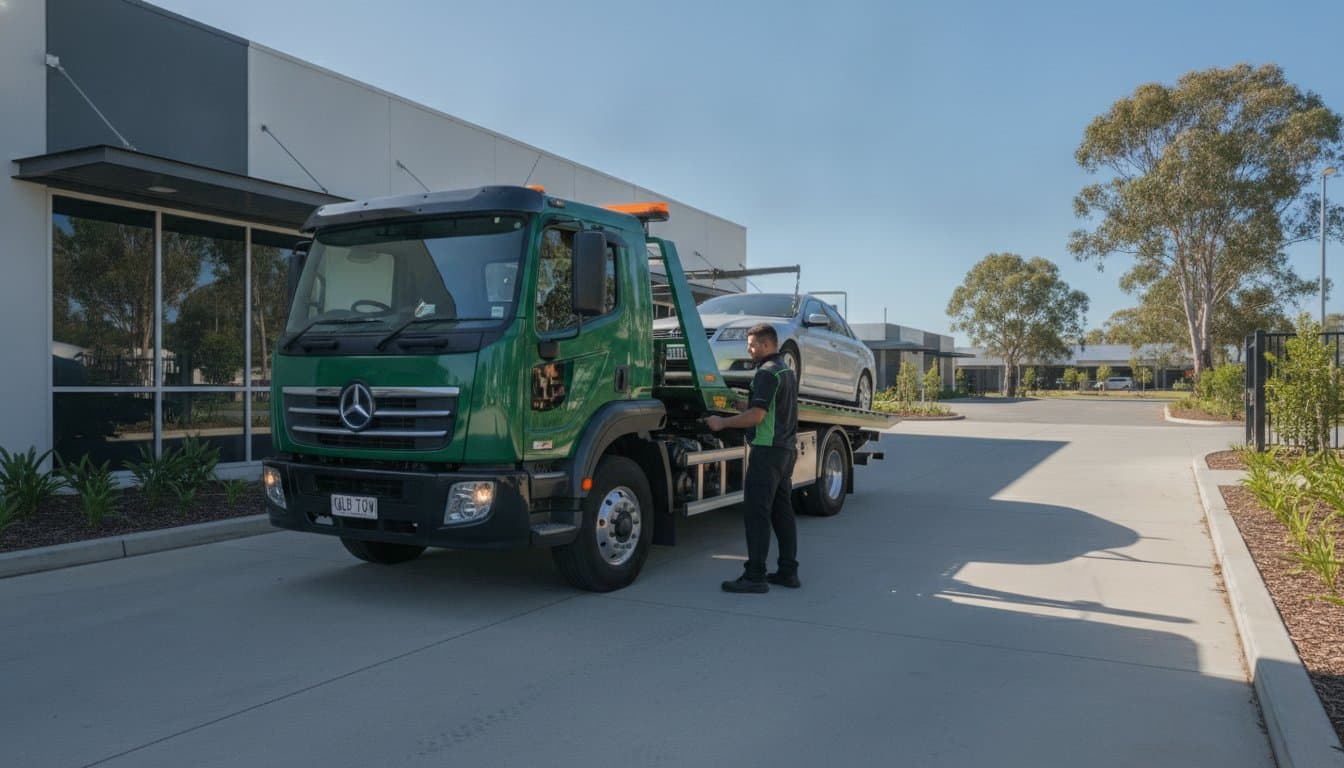
    Many generalist towing services treat private property removals as a low-priority task, often resulting in avoidable damage to the very land they are trying to clear. Rough handling or the use of outdated “wheel-lift” tow trucks can lead to cracked decorative pavers, gouged concrete driveways, and destroyed landscaping. These physical assets are often more valuable than the vehicle being removed, making it essential to choose an operator that prioritises property protection. We utilise specialised tilt-tray trucks equipped with low-angle loading capabilities, which ensure the vehicle is lifted smoothly without scraping the ground or placing unnecessary stress on your property’s infrastructure.

    Our team applies the same prestige car transport standards to every removal job we undertake. Whether the vehicle is a late-model sedan or an abandoned utility van, treating the asset with respect is essential for protecting the property owner from potential liability claims. If a vehicle is damaged during an unauthorised removal, the resulting legal and financial headaches can be substantial. Our meticulous approach ensures that the vehicle’s integrity is maintained throughout the entire extraction process, shielding you from the risk of litigation while restoring access to your land.

    Non-Abrasive Loading Techniques

    Our team employs soft-tie straps and precision winching systems that eliminate metal-on-metal contact. This non-abrasive methodology is a hallmark of our “Expert Guardian” philosophy. We specialise in handling low-clearance vehicles that often become an obstruction in tight residential car parks. By using synthetic slings and careful weight distribution, we ensure the vehicle’s undercarriage remains untouched. This provides peace of mind to the landowner that the removal won’t trigger a dispute over vehicle damage, as every step is executed with surgical precision.

    Navigating Tight SE QLD Property Layouts

    South East Queensland properties, from narrow Gold Coast driveways to compact Logan commercial yards, require a high degree of operational precision. Multi-level car parks and underground facilities often have height restrictions and tight corners that baffle standard tow operators. We pride ourselves on executing private property removals in these challenging environments with zero impact on surrounding structures or adjacent parked vehicles. This level of care is what defines a “Done Wright” extraction; it’s a planned, methodical movement rather than a rushed task. Our operators are trained to navigate these layouts with the utmost control, ensuring your property remains pristine.

    2026 Guide: Authorised Vehicle Removals in SE QLD

    How to Organise a Lawful Removal: Steps for Property Owners

    Executing private property removals requires a disciplined adherence to a specific sequence of actions to ensure the process is legally airtight. You must first confirm your legal authority over the land where the vehicle is parked. This means you are the registered owner, a tenant with specific parking rights, or a formally appointed building manager. Without this established authority, any request for a vehicle extraction lacks a legal foundation. Once your right to manage the space is confirmed, your focus should shift to meticulous documentation. Capture high-resolution photographs of the unauthorised vehicle, ensuring the number plate, its exact position relative to your property boundaries, and any pre-existing damage are clearly visible. These timestamps serve as an irrefutable record of the event, protecting you from future disputes.

    The Towing Consent form is the final procedural hurdle before the extraction begins. You must sign this document before the tow truck operator touches the vehicle. It’s a non-negotiable requirement under the Tow Truck Regulation 2024. This form acts as your formal authorisation, detailing the vehicle’s description, the specific reason for its removal, and the address of the approved holding yard. By signing, you are activating a regulated process that shields you from liability, provided all other conditions, such as signage, have been met. If you need to establish a formal towing arrangement for your premises, you can contact our Stapylton-based team to discuss compliant protocol implementation.

    Signage Requirements in Queensland

    Signage is the most critical legal measure for any landowner. In Queensland, a “Tow Away” sign isn’t merely a warning; it functions as a contract between the property owner and the motorist. To be legally binding, signs must be displayed prominently at every entry point and at regular intervals within the parking area. The sign must clearly state that vehicles parked in contravention of the conditions may be towed at the owner’s expense. It must also include the name and contact telephone number of the authorised towing operator. This level of transparency ensures motorists are given fair notice, which is the primary defence against claims of “predatory” towing. When signage is executed correctly, it provides the clear, legal mandate required for a swift removal.

    Notifying the Authorities

    Once the vehicle has been successfully extracted, the process moves into a mandatory administrative phase. Queensland law requires the towing operator to notify the Queensland Police Service as soon as practicable, and no later than one hour after the vehicle is secured in a holding yard. This notification is typically performed via the Policelink app, ensuring that if the vehicle owner reports it as stolen, the police can immediately identify its location. As the property owner, you should retain a copy of the Towing Consent form to maintain a transparent paper trail for all towing services conducted on your land. This methodical record-keeping is the hallmark of a professional property management strategy, ensuring every action taken is defensible and documented.

    Partnering with Done Wright for Secure Property Management

    Choosing a local Stapylton-based specialist provides South East Queensland property owners with a level of accountability that national generalists simply cannot match. At Done Wright Towing & Transport, we’ve built our reputation since 2017 on the principle that every task must be executed with surgical precision. Our brand name is more than just a title; it’s a verbal promise of perfection and a commitment to correct execution. When you engage us for private property removals, you aren’t just hiring a truck; you’re securing a partner that understands the emotional and financial stakes involved in maintaining a premium premises. We treat your land and the vehicles we extract with the same meticulous care, ensuring the entire process reflects the high standards of your own business or residential complex.

    Our “Expert Guardian” philosophy means we approach every extraction as a disciplined, detail-oriented operation. We provide comprehensive support for property managers and business owners who require a rapid, reliable response to urgent property clearing. Whether it’s a single vehicle blocking a loading dock or a recurring issue in a high-density residential car park, our team delivers a high-standard service that values precision and safety above all else. If it’s not done right, it’s not done at all.

    A Professional Extension of Your Management Team

    We deliberately move away from the rugged or aggressive tone often found in general logistics services, instead adopting a premium, service-oriented atmosphere. Our operators function as a professional extension of your management team, maintaining the reputation of your property through elite conduct and methodical operations. We don’t just clear the obstruction; we provide long-term solutions for recurring parking issues by helping you establish compliant protocols. This elite handling appeals to property owners who are protective of their investments and require a partner that understands the nuances of high-end asset management.

    Contacting Our SE QLD Dispatch Centre

    Our dispatch centre is strategically positioned to serve Logan, Stapylton, and the North Gold Coast with unmatched efficiency. We apply the same technical safeguards and specialised equipment to property clearing as we do for complex caravan recovery and prestige car transport. This consistency ensures that every client receives a premium level of care, regardless of the task’s complexity. If you are ready to restore the integrity of your land and ensure your parking areas remain secure and accessible, contact our expert team today to arrange a professional assessment and experience the “Done Wright” difference.

    Restore Access and Integrity to Your Private Land

    Managing unauthorised vehicles requires a blend of legal precision and physical care. You now understand that successful private property removals are built on a foundation of compliant signage, formal Towing Consent, and a disciplined adherence to the Tow Truck Act. By following these methodical steps, you protect your property from both legal disputes and physical damage to your landscaping or driveways. It’s about more than just moving a car; it’s about maintaining the elite standards of your premises with the help of a partner you can trust.

    As a local SE QLD family business, we are fully TMR accredited and insured, ensuring every extraction is handled with the highest degree of professionalism. We utilise specialised tilt-tray equipment and non-abrasive techniques to guarantee a damage-free result for your property. Don’t let an unauthorised vehicle disrupt your operations or compromise your security any longer. Secure your property and organise an authorised removal with Done Wright Towing today. We look forward to helping you reclaim your space with the quiet confidence that comes from a task done right.

    Frequently Asked Questions

    Can I legally tow a car off my private property in Queensland?

    Yes, you can legally remove a vehicle if you follow the Tow Truck Act 2023 and Tow Truck Regulation 2024. This requires you to have a valid contract with an accredited operator and clear signage displayed on your premises. You must also sign a Towing Consent form for each specific extraction to ensure the process remains lawful and protects your property rights.

    Do I have to pay for the removal of an unauthorised vehicle from my land?

    No, the property owner generally does not pay the towing fee for private property removals. Under Queensland law, the maximum regulated tow fee of $310.05 is recovered from the vehicle owner when they collect their asset from the holding yard. You are responsible for ensuring your site meets the legal requirements, such as signage, to allow the operator to recover these costs legally from the motorist.

    What kind of signage do I need to display before towing a car away?

    Your signage must be displayed prominently at every entry point and within the parking area to provide fair notice. It must clearly state that vehicles parked in breach of conditions are liable to be towed at the owner’s expense. Additionally, the sign must include the authorised towing company’s name and a contact telephone number. Without this specific information, the removal may be deemed unlawful under current TMR regulations.

    What happens to the vehicle after it has been removed from my property?

    The vehicle is transported to the nearest approved holding yard where it is stored securely. The towing operator is legally required to notify the Queensland Police Service within one hour of the vehicle being secured. The owner can then reclaim their vehicle by paying the regulated fees, which include the standard tow and any storage charges accrued after the initial 72-hour period.

    Can a tow truck driver refuse to remove a vehicle from my site?

    Yes, a tow truck driver can refuse to perform a removal if the legal requirements are not met. If there is no signed contract, inadequate signage, or if the Towing Consent form is incomplete, an accredited driver will decline the job to avoid legal repercussions. They may also refuse if the vehicle’s position poses a significant safety risk that cannot be managed with their specialised equipment.

    Is the property owner liable for damage during a private property removal?

    You may be held liable if you arrange a removal that doesn’t comply with the Tow Truck Act 2023. However, if you partner with an accredited operator and follow the correct procedures, the risk is minimised. For physical damage during the tow, the accredited towing company’s insurance typically covers the asset, provided you have engaged a professional service that utilises damage-prevention technologies like tilt-trays.

    How do I know if a towing company is accredited for private property removals?

    You can verify a company’s status by checking the Queensland Department of Transport and Main Roads (TMR) register of accredited operators. Every driver and assistant must also carry a TMR-issued accreditation card. Professional providers will always be transparent about their licensing and insurance, as these credentials are the backbone of a legally compliant and secure property management service in South East Queensland.

    What should I do if an abandoned vehicle is left on my commercial site in Logan?

    If an abandoned vehicle is obstructing your Logan commercial site, first document the event with photos and timestamps. Ensure your “Tow Away” signage is clearly visible and compliant with 2026 regulations. Once documented, contact an accredited specialist to execute the private property removals process. This ensures the vehicle is cleared swiftly while maintaining a transparent paper trail for the Queensland Police Service and TMR.

  • Professional Car Towing SE QLD: Safe Transport Guide

    Professional Car Towing SE QLD: Safe Transport Guide

    Imagine standing on the shoulder of the M1 as traffic thunders past, watching a tow operator reach for abrasive chains that threaten your prestige paintwork. It’s a moment of pure anxiety that no enthusiast or daily driver should have to endure. Whether you’re facing a sudden mechanical failure or require a planned relocation, the stress of emergency car towing gold coast often stems from the fear that your asset won’t be treated with the respect it deserves. We understand that your vehicle is more than just a mode of transport; it’s a significant investment that requires an expert guardian to ensure its safety.

    This guide reveals how professional car towing protects your investment, from rapid emergency breakdown recovery to specialised prestige transport across South-East Queensland. You will learn how to identify licensed operators who prioritise non-abrasive equipment and transparent communication over hidden fees. We will explore the technical safeguards that ensure your vehicle arrives safely at its destination, giving you total peace of mind that your asset is insured and handled with meticulous care. From the precision of tilt tray loading to the logistics of interstate backloads, discover the difference that a detail-oriented specialist makes in your transport experience.

    Key Takeaways

    • Understand why specialised tilt tray technology is the essential standard for protecting low-clearance suspension and delicate undercarriages during every transport.
    • Learn the critical safety protocols to follow while awaiting emergency car towing gold coast on high-speed motorways like the M1 or Logan Motorway.
    • Discover the specific white-glove standards required to safely relocate prestige, classic, and performance vehicles without risking cosmetic or structural damage.
    • Verify the necessary licensing and insurance credentials to ensure your high-value assets are fully protected under 2026 Queensland transport regulations.
    • Explore how to leverage interstate backload opportunities for secure, cost-effective long-distance vehicle relocation across South-East Queensland and beyond.

    Understanding Car Towing: More Than Just a Lift and Shift

    Car towing is often misunderstood as a simple act of dragging a vehicle from point A to point B. In reality, modern automotive standards define it as the professional relocation of a vehicle using specialised equipment to ensure zero road contact. This distinction is vital for anyone requiring emergency car towing gold coast services, as the shift from ‘salvage’ to ‘transport’ reflects a deeper commitment to vehicle integrity. Gone are the days when a tow meant a rough hook-up and a bumpy ride to the nearest yard. Today’s industry treats every vehicle as a high-value asset that demands precision handling and meticulous care.

    The role of the Expert Guardian is central to this philosophy. When your vehicle is immobilised, you aren’t just looking for a lift; you’re seeking a partner who understands the emotional and financial stakes involved. This is especially true for modern electronic drivetrains and low-profile tyres. Many contemporary vehicles, particularly electric models and performance cars, can sustain significant internal damage if towed incorrectly. Professional transport ensures that these sensitive components remain undisturbed during transit. It’s about protecting the engineering and craftsmanship of your investment through every kilometre of the journey.

    The Evolution of Towing Technology

    The industry has undergone a radical transformation in recent decades. We have seen a steady move away from the traditional hook-and-chain methods that often resulted in scratched bumpers and strained suspension. Modern operators, like those at Done Wright Towing & Transport, utilise hydraulic tilt trays to provide a seamless loading experience. Understanding the different types of tow trucks available is crucial for owners who value their vehicle’s condition. Non-abrasive soft straps have replaced heavy metal chains for wheel securing, effectively eliminating the risk of rim damage. These straps work in tandem with weight-rated winches to ensure every movement is controlled and safe. This methodical approach reflects a disciplined focus on safety that generalist logistics providers often overlook.

    When Do You Need Professional Towing?

    While emergency car towing gold coast is frequently associated with sudden breakdowns on major arterials like the M1 or Logan Motorway, professional transport serves a much broader purpose. It provides a reliable solution for several scenarios:

    • Immediate recovery following mechanical failure in high-traffic zones where safety is paramount.
    • Planned transport for meticulous project cars and high-end restorations that cannot be driven on public roads.
    • Relocating non-running auction purchases where undercarriage integrity must be preserved.

    Choosing a specialist ensures that whether your car is a daily driver or a rare performance marque, it receives the same level of security-focused attention. By prioritising precision over speed, professional towers de-risk the relocation process and provide the peace of mind that your asset will arrive in exactly the same condition it was collected.

    Specialised Equipment: Why Tilt Tray Towing is the Gold Standard

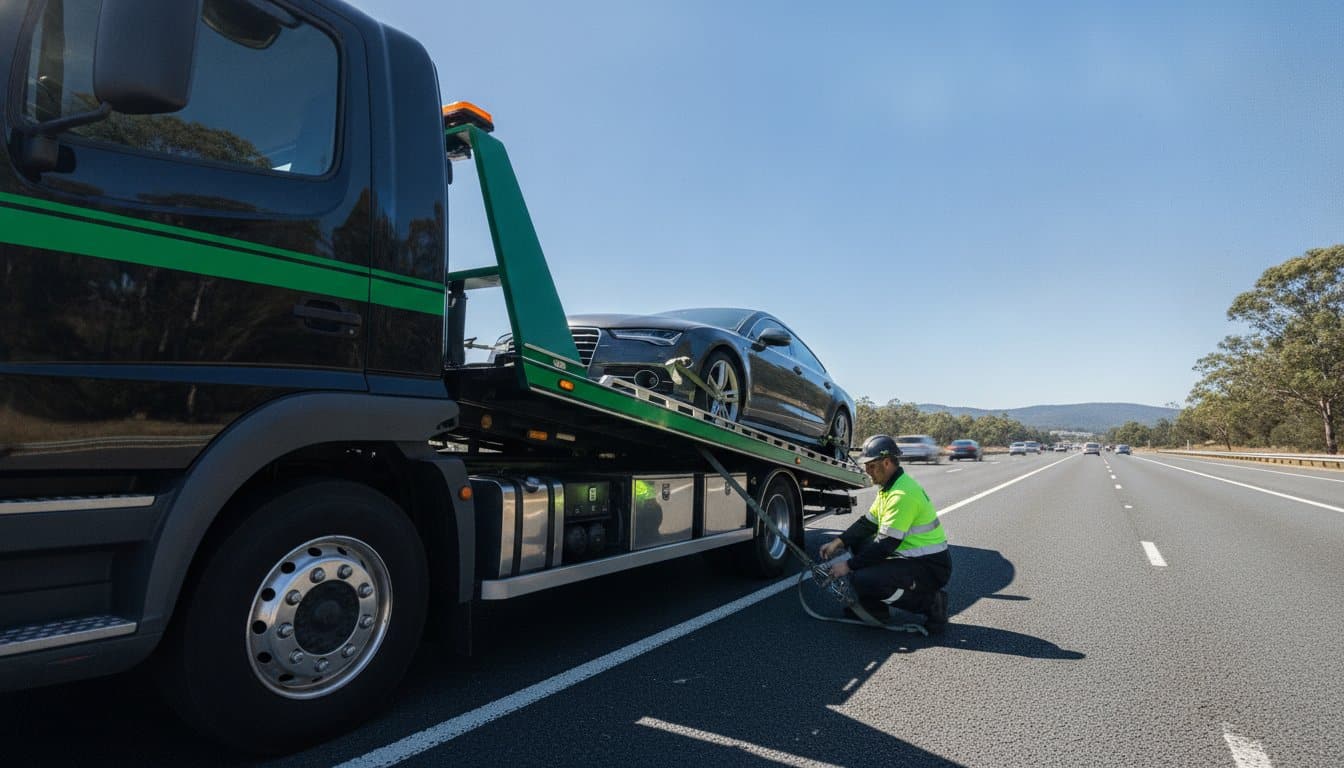
    Tilt tray towing represents the pinnacle of modern vehicle logistics, offering a level of security that old-school “spectacle” or “hook-and-chain” trucks simply cannot match. By hydraulically lowering the entire bed to the ground, these specialised trucks create a low-angle ramp that allows for the gentle, controlled loading of any vehicle. This zero-contact transport method is essential for preserving the condition of your tyres, suspension, and bodywork. When you require emergency car towing gold coast, the priority is to ensure the recovery process doesn’t introduce new mechanical issues. This is particularly critical for All-Wheel Drive (AWD) and 4WD vehicles. Towing these with wheels on the road can cause catastrophic gearbox and differential damage, making a tilt tray the only safe choice for modern drivetrains.

    Adhering to safe towing practices is not just a regulatory requirement; it’s a commitment to the longevity of the vehicle. Done Wright operates from a central Stapylton hub, maintaining a modern, well-maintained fleet designed specifically for the diverse needs of South-East Queensland drivers. Our disciplined approach means we never settle for “good enough.” We treat every vehicle as a prized possession, ensuring that the equipment used is as sophisticated as the engineering of the car itself. This professional authority ensures your asset is handled with the meticulous care it deserves.

    Loading Low-Clearance Performance Vehicles

    Performance cars often feature delicate front splitters and custom body kits that sit just millimetres above the bitumen. The traditional “undercarriage scrape” during loading is a constant fear for enthusiasts. We solve this through precision winching techniques and specialised ramps that extend the approach angle for a flawless transition. Understanding the nuances of prestige car transport means knowing exactly how to handle these low-clearance assets without a single touch to the undercarriage. It is a methodical process that prioritises safety above all else, ensuring that your investment remains pristine from collection to delivery.

    Securing the Load for SE QLD Roads

    Once the vehicle is on the tray, the focus shifts to maximum stability during transit. We employ a science-based four-point tie-down system, securing the vehicle by its wheels rather than the chassis. This avoids putting unnecessary stress on the unibody frames of modern cars, which aren’t designed to be pulled from structural points. This method ensures a smooth ride across the Logan and Gold Coast regions, protecting your investment from the vibrations and shifts of motorway travel. If you value precision, it’s worth seeing how we can organise your next vehicle relocation with this level of expert care.

    Prestige vs. Standard Towing: Protecting Your High-Value Assets

    Standard towing often prioritises speed and volume over the specific requirements of the vehicle. Prestige care, however, adopts a white-glove approach tailored specifically to classic, luxury, and performance marques. Choosing a provider based solely on the lowest quote is a significant risk for high-value investments. Cheap operators often rely on abrasive equipment or lack the specific training required for delicate assets. A single scratched rim or a stressed chassis can cost thousands in repairs, far outweighing any initial saving on the tow itself. Even in a stressful situation requiring emergency car towing gold coast, a collector should never compromise on the calibre of the provider or the equipment used.

    This principle of vetting a provider for quality and safety applies to all forms of transport; for those travelling internationally, SPS Car Hire offers essential advice for navigating the rental market in regions like Pattaya safely and affordably.

    Accountability is the cornerstone of our Expert Guardian philosophy. Every relocation begins and ends with a meticulous documentation process, capturing the vehicle’s condition in detail before it even touches the tilt tray. This level of transparency ensures total peace of mind for the owner. Coupled with this, being fully insured is a non-negotiable standard for serious enthusiasts. We ensure that every asset is covered by comprehensive protection that respects both the market value and the rarity of the vehicle. It’s a disciplined, detail-oriented approach that generalist logistics services often fail to replicate.

    Classic Car Relocation Standards

    Vintage chrome and original paintwork require a level of meticulous care that generalists cannot provide. We consider climate and weather patterns during open transport, as older seals and finishes are often more vulnerable to the elements. Managing the unique logistics of non-running classic car finds or barn discoveries requires patience and specialised winching to prevent further deterioration of a fragile frame. This methodical process ensures the vehicle is treated as a prized possession rather than just another task on a list.

    Luxury and Supercar Logistics

    Owners of supercars often have a deep emotional connection to their vehicles, representing years of hard work or a lifelong passion. Discretion and security are paramount during every move. Our specialised towing services in Logan focus on these elite requirements, providing a secure environment for high-end assets. Whether you’re facing a breakdown or a scheduled relocation, our role as an Expert Guardian is to maintain the vehicle’s pristine condition. We focus on precision and safety above all else, ensuring the asset arrives at its destination exactly as it left the showroom floor.

    Professional Car Towing SE QLD: Safe Transport Guide

    Emergency Breakdowns in SE QLD: Step-by-Step Response

    A mechanical failure on a high-speed arterial like the M1 or the Logan Motorway is a high-stakes event that demands immediate, disciplined action. When you require emergency car towing gold coast, your first priority is to secure the safety of all passengers while awaiting professional assistance. Our strategic hub in Stapylton is specifically positioned to provide rapid response times across the Logan and North Gold Coast regions, ensuring that you aren’t left vulnerable on the shoulder for longer than necessary. Having your precise location, vehicle model, and intended destination ready allows our team to deploy the correct equipment with precision and speed.

    It’s vital to understand your legal rights under Queensland legislation. Unless a police officer directs otherwise for immediate traffic clearance or public safety, you generally have the right to choose your own towing provider. You aren’t obligated to accept the first truck that arrives on the scene, especially if they don’t meet your standards for insurance or specialised equipment. Choosing a specialist you trust ensures that your vehicle is treated as a prized possession from the moment it’s secured, rather than just another salvage task. This professional authority allows you to maintain control over your asset even in a stressful roadside scenario.

    Safety Protocols for Roadside Assistance

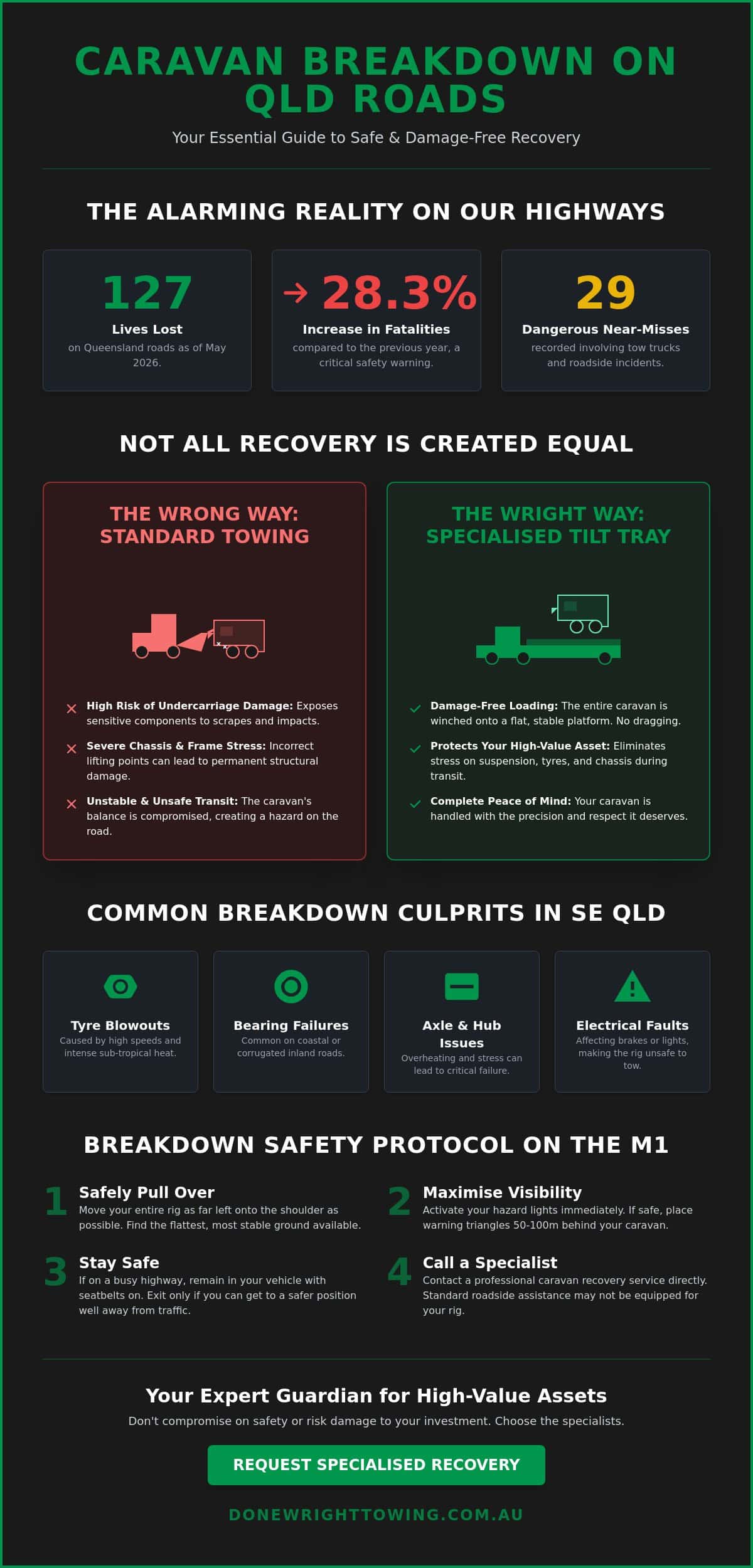
    Immediate visibility is your best defence. Activate your hazard lights immediately and, if it’s safe to do so, exit the vehicle through the passenger side to stay clear of live traffic lanes at all times. We recommend keeping safety vests in your vehicle for such occasions. While you might communicate with emergency services for traffic control, contacting a private towing specialist directly ensures a more meticulous handling of your asset. Preparing the vehicle by clearing any loose items and having your keys ready will significantly minimise the roadside loading time, reducing the risk to both you and the operator.

    Caravan and Boat Recovery Specifics

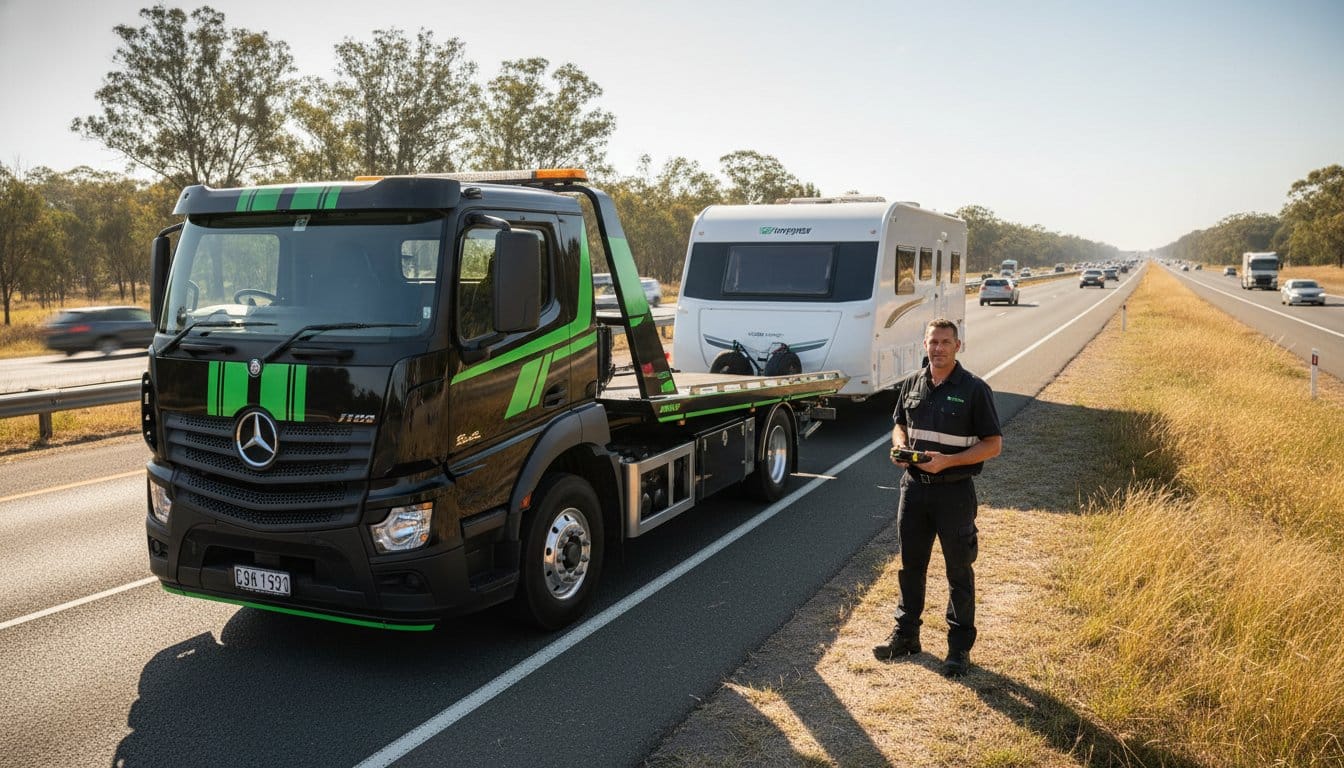
    Recovering a combined rig introduces unique logistical challenges that generalists often struggle to manage effectively. Professional caravan recovery requires a deep understanding of weight distribution and dual-vehicle transport requirements. Whether it’s a mechanical failure of the tow vehicle or an issue with the trailer itself, we coordinate the safe relocation of both assets to a secure destination. Our expertise extends to large vessels and trailers, ensuring they are navigated safely across regional roads and coastal areas without compromising the integrity of the hull or the trailer frame. If you find yourself stranded or need to plan a secure relocation, contact Done Wright Towing today for an elite response.

    Why Choosing the ‘Wright’ Towing Partner Matters

    Selecting a towing provider is a decision that directly impacts the safety and longevity of your most significant investments. The Done Wright promise of perfection isn’t merely a slogan; it’s a disciplined operational standard where professional authority meets meticulous care. Whether you require emergency car towing gold coast or a pre-planned relocation, the difference lies in the detail. We treat every vehicle as a prized possession, ensuring that our technical proficiency and respect for craftsmanship are evident in every interaction. Our team operates with a quiet confidence, knowing that our methodical processes de-risk the transport experience for every client.

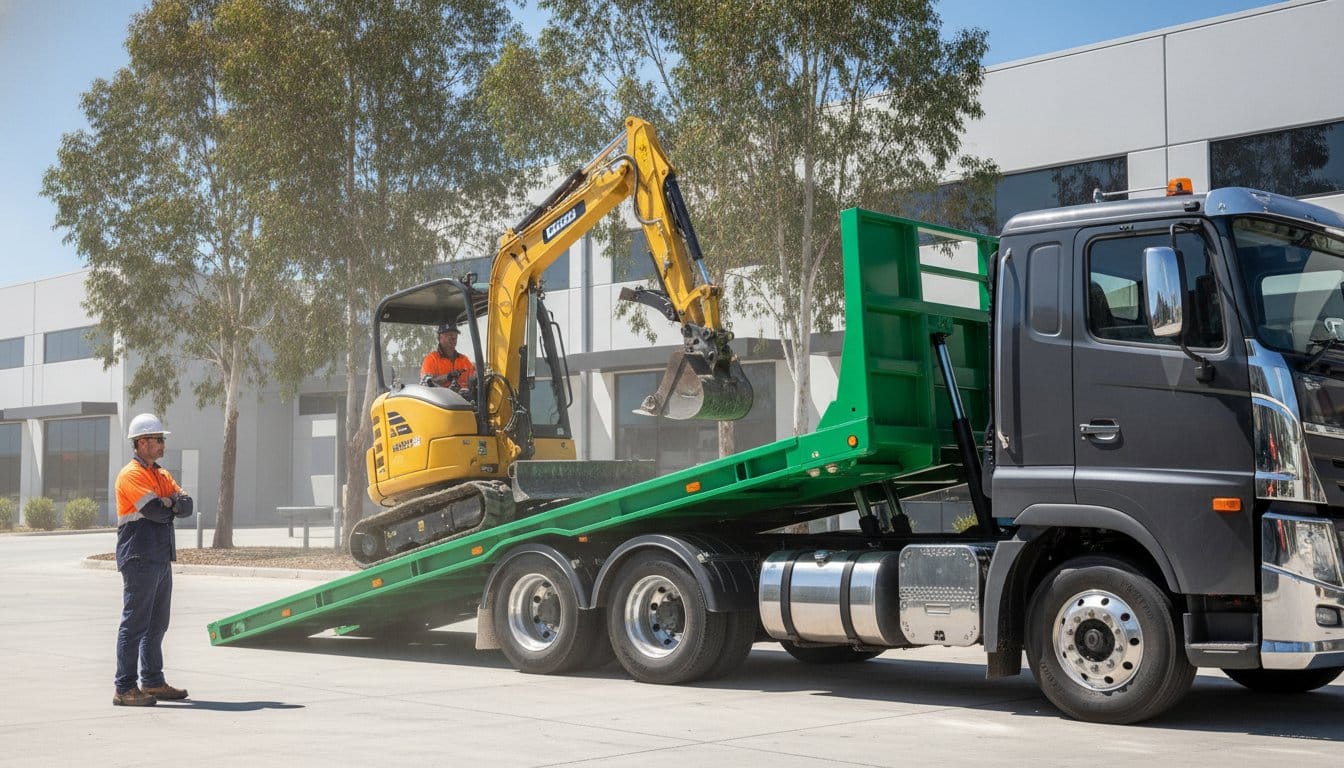
    In the current regulatory environment, verifying a provider’s credentials is essential for your protection. We strictly adhere to the standards set by the Tow Truck Act 2023 and the Tow Truck Regulation 2024, ensuring that our licencing and insurance are always current for 2026 requirements. This commitment to compliance provides a foundation of trust, allowing you to rest easy knowing your asset is handled by a fully insured professional. Our expertise also extends far beyond standard vehicles. We provide specialised machinery transport, alongside the relocation of site sheds and containers, demonstrating a versatility that generalist towers cannot match.

    Interstate Backloads and Long-Distance Transport

    Long-distance relocation doesn’t have to be a source of financial or logistical stress. Professional backloading offers a cost-effective solution for interstate car moves by utilising available space on return journeys. This method significantly reduces costs without compromising the high standard of care your vehicle requires. We maintain the same rigorous safety protocols and damage-prevention technologies across state borders as we do for local jobs. Planning your transport schedule in advance allows us to secure the best rates and ensure efficient delivery times. We are currently verifying our backload schedule availability for 2026 to provide even greater reliability for our long-distance clients.

    The Local Stapylton Advantage

    Based in our Stapylton hub, we are a family-owned Australian business with an intimate knowledge of the Logan, Gold Coast, and Brisbane transport routes. This local expertise allows us to navigate the region’s arterials with precision, providing faster and more reliable service when you need emergency car towing gold coast. We take pride in being a reliable partner for enthusiasts and commercial clients alike, valuing safety and precision above all else. If you demand a service that treats your vehicle with the respect it deserves, contact Done Wright Towing for a precision quote today and experience the peace of mind that comes with expert handling.

    Secure Your Automotive Investment with Precision Handling

    Navigating the complexities of vehicle transport requires more than just a truck; it demands a disciplined commitment to safety and engineering integrity. We have explored how specialised tilt tray equipment serves as the essential standard for protecting low-clearance assets and sensitive modern drivetrains. By choosing fully licensed and insured operators, you ensure that your vehicle is treated with the meticulous care of an Expert Guardian rather than just another task in a logistics queue.

    Whether you are facing the immediate stress of emergency car towing gold coast or coordinating a long-distance prestige relocation, the right partner provides total accountability from the moment of collection. Since 2017, our family-owned and operated team has delivered this elite level of service across South-East Queensland, utilising specialised equipment to guarantee damage-free results. Your vehicle represents a significant financial and emotional investment, so it’s vital to choose a provider that respects its value.

    Request a Professional Towing Quote from Done Wright to ensure your asset is moved with the expert care it deserves. We look forward to providing you with the peace of mind that comes from a job done correctly.

    Frequently Asked Questions

    How much does car towing cost in South-East Queensland for 2026?

    Regulated towing charges in Queensland are set by the government and saw a 3.4% indexation increase on July 1, 2026. For crash towing in regulated areas like the Gold Coast, the maximum fee is A$447.90 for the first 50 kilometres, which includes one hour of work on-site and 72 hours of storage. Private property towing is capped at A$310.05 for a yard release or A$186.05 for an on-site release after the vehicle is secured.

    Breakdown and trade towing services are not subject to these government-regulated maximums. Because these relocations are market-based, we provide tailored quotes based on the specific vehicle type, distance, and equipment required. This ensures you only pay for the precise level of expert care your asset needs without hidden incidental charges.

    Can you tow a car with a very low ground clearance without damaging the undercarriage?

    Yes, we utilise specialised tilt tray trucks designed specifically to handle low-clearance performance and prestige vehicles. These trucks allow the entire tray to be lowered to a shallow angle, creating a seamless ramp that eliminates the risk of undercarriage scrapes or front splitter damage. We prioritise a methodical loading process that respects the engineering of your investment.

    What is the difference between a tilt tray and a standard hook-and-chain tow truck?

    A tilt tray truck provides zero road contact by carrying the entire vehicle on its bed, whereas a standard hook-and-chain truck lifts only one end. Modern automotive standards favour tilt trays because they prevent drivetrain stress and suspension wear. This is particularly critical for All-Wheel Drive and electric vehicles, which can sustain internal damage if their wheels rotate while the engine is off.

    Is my vehicle insured while it is being transported by Done Wright?

    Your vehicle is fully protected by our comprehensive transport insurance throughout the entire relocation process. We maintain high-level coverage that meets 2026 industry standards, providing total peace of mind for owners of classic, luxury, and performance cars. This insurance forms the backbone of our Expert Guardian promise, ensuring your financial investment is as secure as the vehicle itself.

    How long does it typically take for a tow truck to arrive in Logan or Stapylton?

    Response times vary based on traffic conditions on major arterials like the M1, but our central hub in Stapylton allows for a rapid response across Logan and the North Gold Coast. We prioritise clear communication and will provide a realistic estimated time of arrival when you call. Our disciplined logistics planning ensures we reach your location as quickly as safety allows.

    Can you transport a car interstate if it isn’t currently running?

    We specialise in the relocation of non-running vehicles, including project cars and auction purchases, across state borders. Using powerful weight-rated winches and non-abrasive soft straps, we can safely load an immobilised vehicle onto our tilt trays without causing further mechanical damage. You can also take advantage of our interstate backload opportunities to make these long-distance moves more cost-effective.

    What should I do if my car breaks down on a busy motorway like the M1?

    If you experience a mechanical failure on the M1, your first priority is to stay clear of live traffic lanes while awaiting emergency car towing gold coast. Activate your hazard lights and, if safe, move the vehicle onto the shoulder before exiting through the passenger side. Stay behind a safety barrier or well away from the road surface while our operator navigates to your precise location.

    Do you offer specialised towing for heavy machinery or site sheds as well as cars?

    Our fleet is highly versatile and equipped to transport heavy machinery, site sheds, and shipping containers in addition to prestige cars. We understand the unique weight distribution and securing requirements for industrial assets and construction equipment. This breadth of expertise ensures that every item, regardless of its size or purpose, is handled with the same meticulous care and professional authority.

  • 2026 Guide to Moving Shipping Containers in SE QLD

    2026 Guide to Moving Shipping Containers in SE QLD

    A shipping container is far more than a simple steel box; it is a high-value asset that requires the same level of meticulous care as a prestige vehicle. In the diverse terrain of South East Queensland, a successful container relocation depends on far more than just a heavy-duty engine. You likely worry about a multi-tonne rig getting bogged in soft Logan soil or the hidden costs associated with navigating tight overhead clearances and power lines. These are not just minor inconveniences; they are significant logistical risks that require a disciplined, expert approach to manage effectively.

    We agree that the safety of your property and your cargo should never be left to chance. This guide promises to equip you with the professional clarity needed to master the logistics of your move, ensuring a seamless, damage-free result for both your container and the ground it sits on. We will examine the critical differences between tilt tray and side loader equipment, clarify the 2026 council placement regulations for the Gold Coast and Logan, and provide a methodical framework for site preparation that removes all uncertainty from your next transport project.

    Key Takeaways

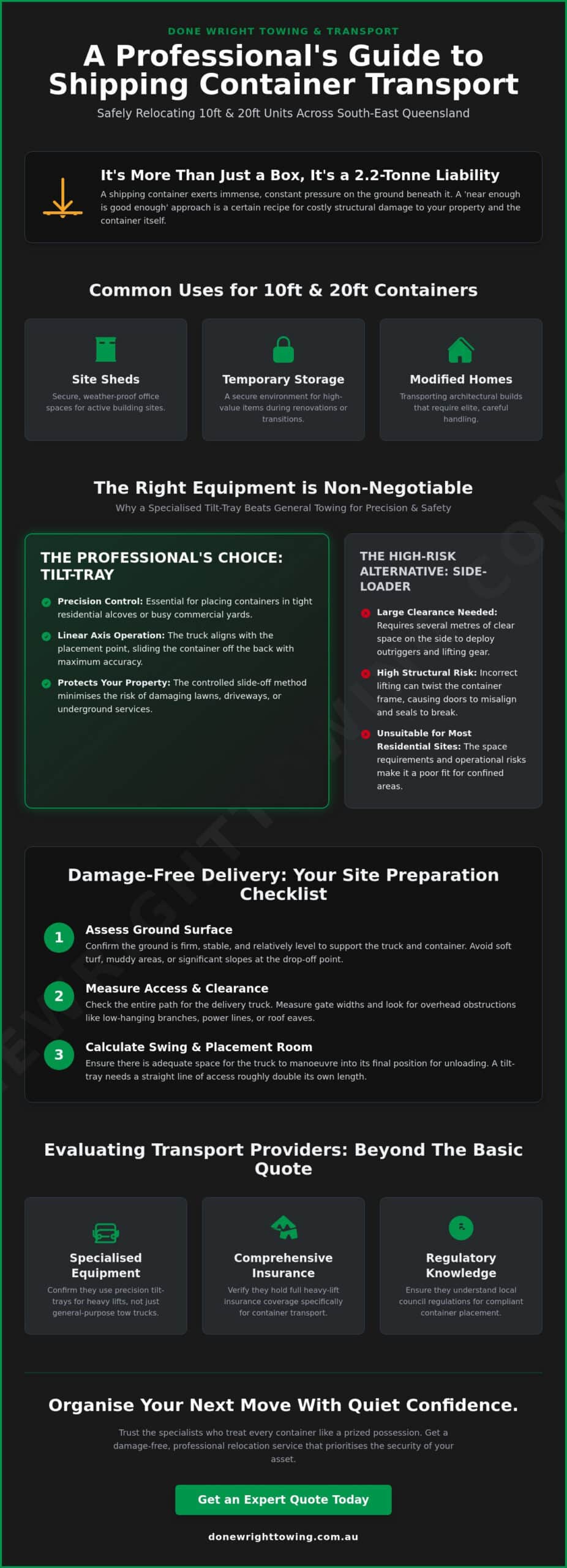
    • Discern the critical differences between tilt tray and side loader footprints to ensure your property can safely accommodate the selected transport method.
    • Master the technical logistics of a damage-free container relocation by identifying site-specific risks such as soft ground or low-hanging overhead wires.
    • Ensure full compliance with 2026 Logan and Gold Coast council regulations regarding temporary container placement and local permit requirements.
    • Implement the “Done Wright” site preparation strategy to protect both your high-value asset and the long-term integrity of the ground it sits on.
    • Learn how to coordinate your transport schedule to avoid peak-hour congestion on major SE QLD arterials like the M1 and Logan Motorway.

    What is Professional Container Relocation?

    Professional container relocation is the disciplined, technical process of moving heavy-gauge steel structures, specifically ISO shipping containers and modified site sheds, across the diverse landscapes of South East Queensland. While many view these units as mere industrial boxes, a specialised transport provider recognises them as high-value assets that require meticulous handling. This service involves more than just transit; it encompasses a comprehensive logistical plan that accounts for structural integrity, weight distribution, and the delicate nature of internal modifications. Relying on standard towing equipment for such a task is a significant risk. Conventional tow trucks often lack the hydraulic precision and the specific tray length required to manage the immense footprint and torsional stress of 20ft or 40ft units without causing structural damage.

    At Done Wright Towing & Transport, we approach every container relocation with the same level of security-focused care typically reserved for prestige classic cars. Whether the unit is destined for a construction site in Logan or a residential block on the Gold Coast, the objective remains a damage-free execution. This requires a deep understanding of Intermodal container standards, which dictate how these units must be supported and secured during transit to maintain their engineering specifications. Treating industrial equipment with this calibre of respect ensures that doors remain aligned and corner castings stay true, preserving the long-term utility of your investment.

    Standard ISO Containers vs. Modified Site Sheds

    The structural requirements for moving a standard sea container differ vastly from those of a modified site office or portable building. A basic ISO unit is designed for rugged durability, yet it still requires precise placement to prevent warping. Conversely, modified units often feature fragile internal fittings, electrical wiring, and glass windows. These elements are highly susceptible to damage during the loading and unloading process. Utilising specialised shipping container transport methods is essential for these units, as the tilt angle must be managed with extreme care to avoid internal load shifts or structural cracking of non-steel components.

    Relocating Full vs. Empty Units

    The complexity of a move increases significantly when relocating a “loaded” container. Safety protocols must be strictly followed to mitigate the risks associated with internal weight shifts. It is a fundamental rule of transport that the heavy end of the cargo must be positioned correctly on the truck, typically towards the front, to maintain axle balance and braking efficiency. In Queensland, legal weight limits and height restrictions for “high-cube” containers are strictly enforced by the Department of Transport and Main Roads. Every container relocation involving contents must be meticulously planned to ensure the load is secured against lateral movement, protecting both the cargo and other road users on the M1 or Logan Motorway.

    Selecting the Correct Transport Method: Tilt Tray vs. Side Loader

    Choosing the right vehicle for your container relocation is a technical decision that impacts both the safety of your asset and the total project cost. In South East Queensland, the two primary options are tilt tray trucks and side loaders, each offering distinct operational advantages based on your site’s physical constraints. While side loaders are often associated with heavy port logistics, tilt trays are frequently the more versatile and budget-friendly choice for local moves between Logan and the Gold Coast. Successfully managing these units requires the same level of precision found in specialised machinery transport, ensuring every odd-sized or modified unit is handled with technical proficiency and care.

    The “footprint” of the truck during the loading and unloading phase is the most critical factor to consider. A mismatch between the equipment and the site often leads to property damage or the truck getting bogged. Before booking, you must assess whether your site offers a long, straight approach or if the unit needs to be placed parallel to the transport vehicle. If you’re unsure which method suits your property, consulting with a specialist who understands secure container logistics can prevent costly site delays and equipment mismatches.

    The Versatility of Tilt Tray Trucks

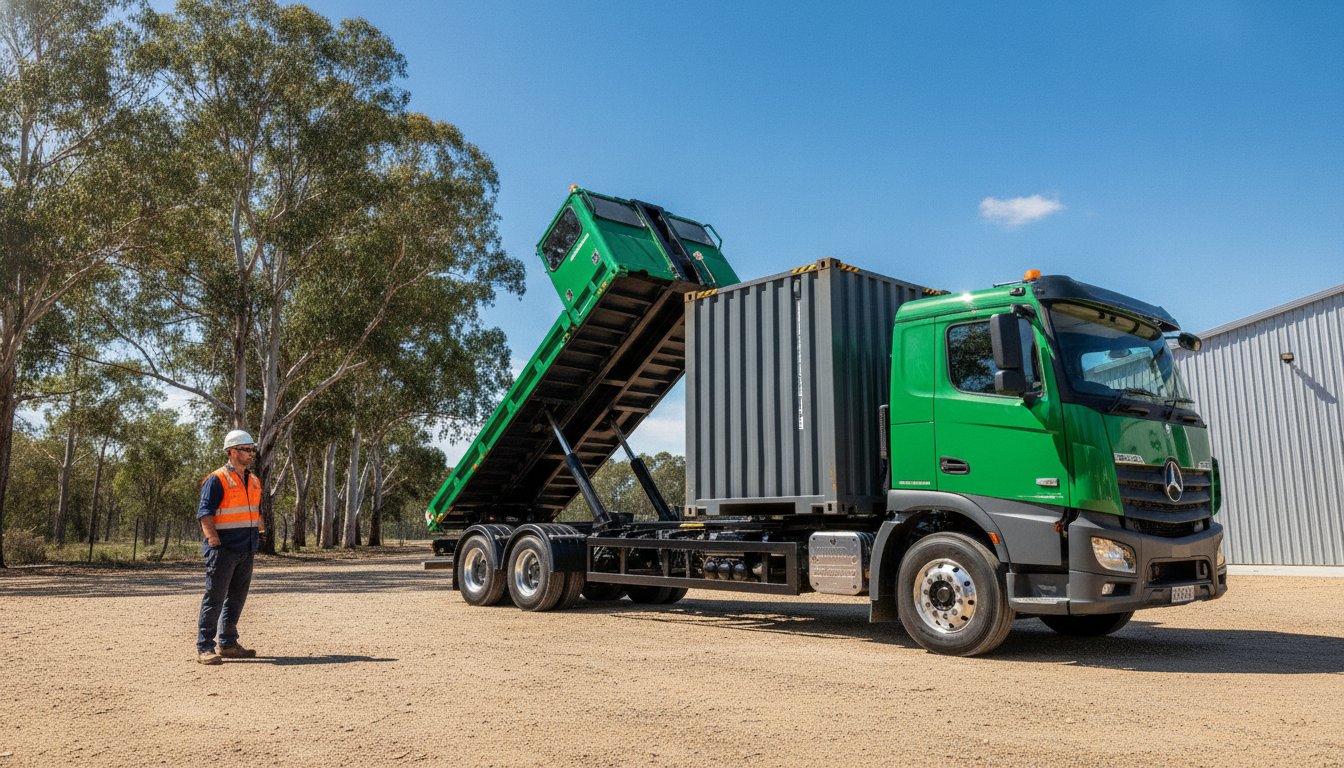
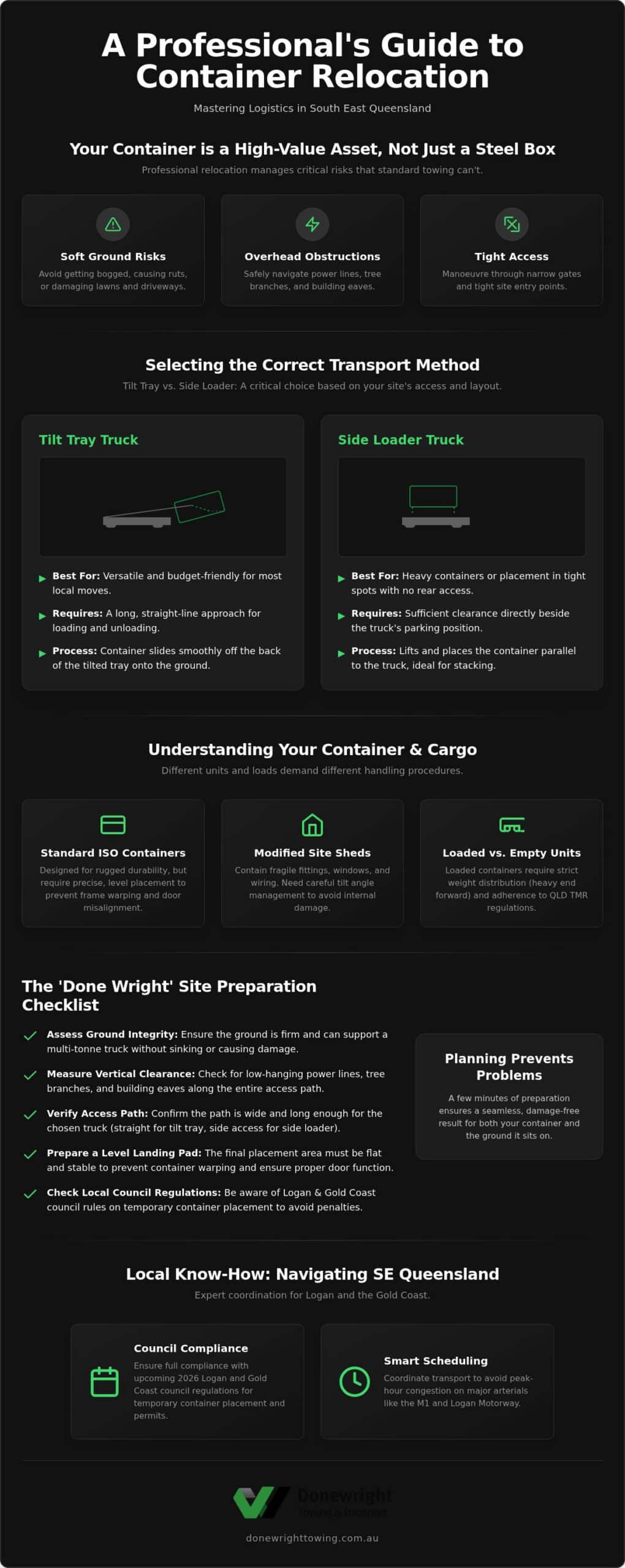
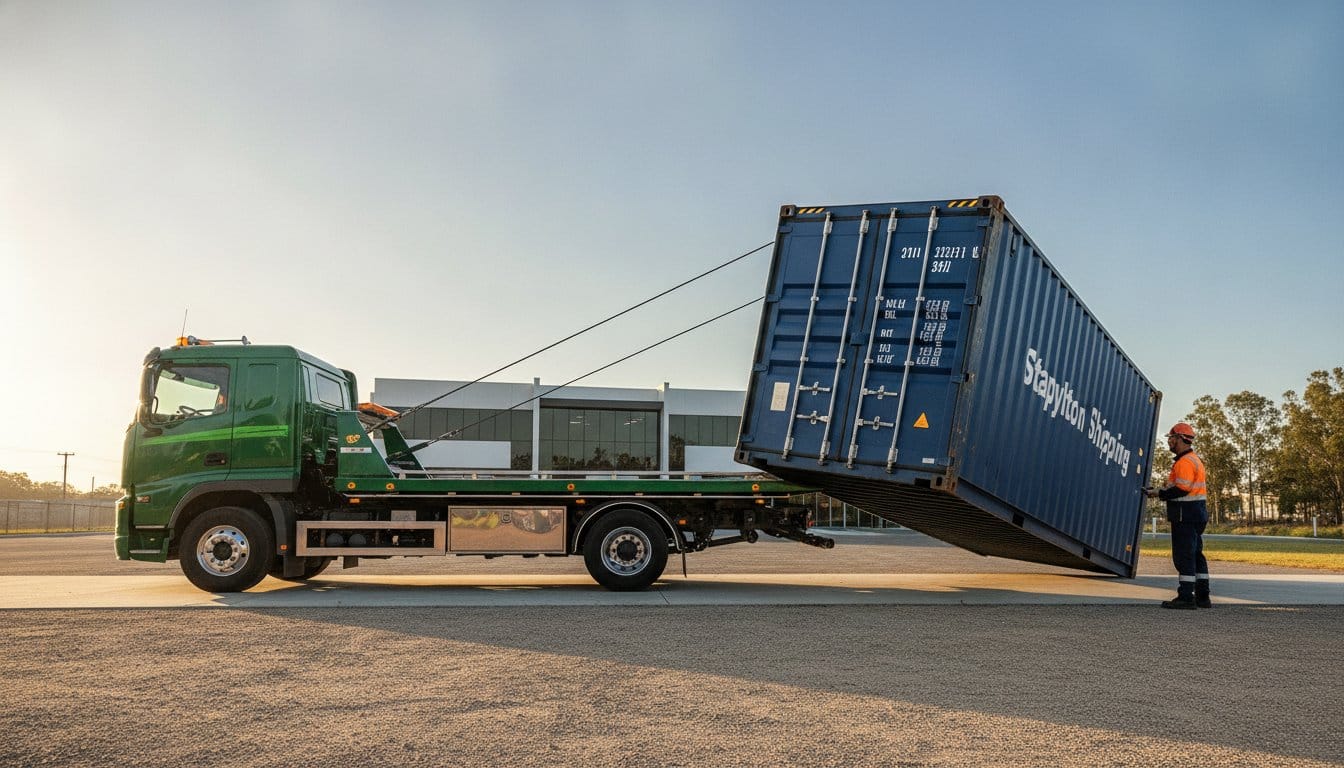
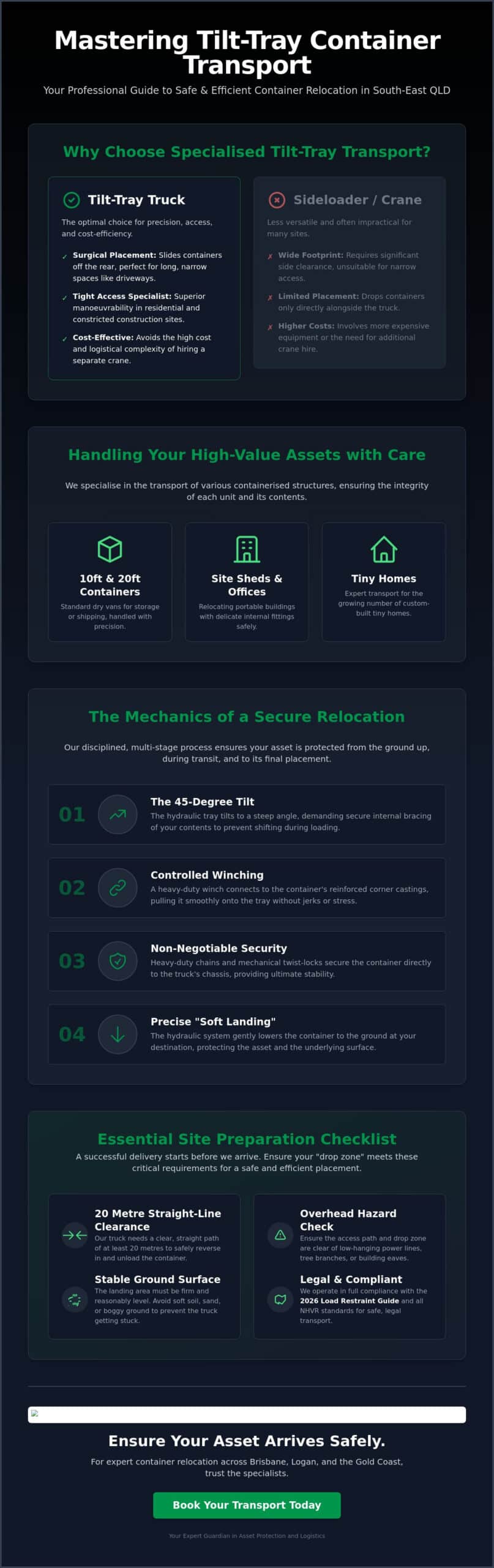
    A tilt tray is a specialised transport vehicle with a hydraulic bed that inclines to ground level. This mechanism allows the truck to slide the container onto the ground with surgical precision, making it the preferred method for residential deliveries and site shed placement. These trucks are ideal for sites with limited side clearance, such as a narrow driveway flanked by fences or foliage. However, they require a significant “runway” space in front of the drop-off point. Typically, you’ll need at least 20 to 30 metres of straight, clear space to allow the driver to pull forward as the container gently makes contact with the surface.

    When to Use a Side Loader

    Side loaders operate via a “parallel park” manoeuvre, lifting the unit directly to the side of the truck using dual hydraulic cranes. This is the superior method when you need to drop a container in a tight spot between two existing structures or along a narrow boundary where a long runway isn’t available. It’s important to remember that side loaders require a level, hard-stand surface to operate safely. They utilise heavy stabiliser legs to balance the weight during the lift. If the soil is soft or the ground is uneven, there’s a high risk of the stabiliser legs sinking, which can jeopardise the structural integrity of the container or the safety of the operator.

    Essential Site Preparation Checklist for a Smooth Move

    The “Done Wright” philosophy dictates that 90% of a successful container relocation occurs before our specialised tilt tray even leaves the Stapylton hub. Meticulous site preparation is the single most effective way to de-risk your project and ensure the safety of your property. In the diverse geology of South East Queensland, from the reactive clays of Logan to the sandy loams of the Gold Coast hinterland, assuming the ground is stable is a costly mistake. A poorly prepared site often results in the truck sinking or, once placed, the container settling unevenly. This lack of balance places undue torsional stress on the steel frame, which inevitably leads to the container doors jamming or failing to seal correctly.

    To facilitate a precision landing, we recommend marking the four corners of the drop zone with high-visibility stakes or spray paint. This provides the operator with a clear visual target and ensures the unit is positioned exactly where you intended. If you’re planning to place the container on a specific foundation, such as concrete pads or piers, these must be perfectly level and structurally sound before the transport vehicle arrives. Taking the time to survey your entry point is an act of expert guardianship over your investment. We treat every delivery with the same technical proficiency used for high-end machinery transport, but our precision is limited by the site’s readiness.

    By following a methodical checklist, you transform a potentially stressful logistical task into a controlled, professional operation that respects both the craftsmanship of the container and the integrity of your land. This disciplined approach eliminates the uncertainty that often plagues difficult sites, leading to a state of confidence in the final result. Every container relocation we undertake is a partnership between our technical skill and your site readiness, ensuring the long-term protection of your high-value asset.

    Ground Conditions and Drainage in SE QLD

    Identifying “soft spots” is vital, especially after the heavy rainfall common in Logan and the Gold Coast. A 10-tonne truck carrying a container can easily penetrate waterlogged soil, leading to expensive recovery costs. We advise using timber dunnage or concrete sleepers at each corner to elevate the unit. This creates a protective barrier against ground moisture, prevents rust, and ensures adequate drainage to stop water pooling beneath the floor.

    Clearance and Access Requirements

    Precision requires space. For a standard 20ft container relocation, you must provide at least 20 metres of straight-line approach to allow the tilt tray to manoeuvre safely. Always look up; “silent killers” like low-hanging power lines, tree branches, and residential eaves pose significant risks. Ensure your entry gate is at least 3.5 metres wide to accommodate heavy rigid trucks without risking damage to your fencing or the vehicle’s mirrors.

    2026 Guide to Moving Shipping Containers in SE QLD

    Executing a seamless container relocation in South East Queensland requires a sophisticated understanding of both regional traffic patterns and local government frameworks. From our strategic hub in Stapylton, we observe how the logistics of the Gold Coast and Logan corridors demand precise timing. To ensure a disciplined delivery, we meticulously plan routes that avoid the heavy congestion of the M1 and Logan Motorway during peak periods. Coordinating a move between 10:00 am and 2:00 pm is often the most reliable way to maintain our schedule and protect your asset from the risks associated with stop-start heavy traffic. This level of local knowledge is a hallmark of a professional towing service that prioritises security over speed.

    For those managing long-distance or interstate projects, “backloading” offers a highly efficient logistical solution. By utilising the empty return leg of a previous journey, we can significantly reduce the financial investment required for your move without compromising our high standards of care. This methodical approach to resource management ensures that even complex, multi-state relocations are handled with technical proficiency and elite handling. Whether you are moving a single unit or an entire construction site office, our Stapylton base serves as the perfect launch point for expansive regional reach.

    If you require expert guidance on navigating these complex transport frameworks, contact our specialist team for a detailed logistics assessment today.

    Council Permits and Road Restrictions

    Regulatory compliance is a critical component of the “Expert Guardian” personality we bring to every task. In the Gold Coast City Council region, a shipping container can typically remain on a private property for up to 30 days without formal building approval. Logan City Council maintains a similar 30-day window for household goods, though placement on a footpath is strictly limited to 14 days and requires a specific local law permit. Beyond council rules, all transport must strictly adhere to the Heavy Vehicle National Law (HVNL). This ensures that load restraint and height clearances for high-cube units meet rigorous safety standards before we enter any public roadway.

    Coordination and Site Communication

    The final stage of a successful container relocation depends on clear, disciplined communication between the client and the transport coordinator. We highly recommend appointing a dedicated on-site “spotter” to assist the driver during complex hydraulic manoeuvres. This individual serves as a vital set of eyes, monitoring for property hazards that may not be visible from the truck cabin. Effective coordination also involves managing site access for construction projects to ensure our specialised tilt tray does not cause downtime for other trades. By identifying all potential hazards before booking, you allow us to maintain the steady, structured rhythm that defines our operational excellence.

    The Done Wright Approach: Protecting Your High-Value Assets

    At Done Wright Towing & Transport, we don’t view a shipping container as just a utilitarian industrial vessel. We treat it as a high-value asset, applying the same meticulous care and security-focused protocols we use for prestige classic cars. As an independently owned Australian family business, we provide a level of personalised service that large-scale logistics firms often lack. Our commitment to “Correct Execution” is a verbal promise that we refuse to cut corners on safety, timing, or specialised equipment. From our central Stapylton hub, we offer a rapid and reliable response across Logan, the North Gold Coast, and the wider South East Queensland region, ensuring every container relocation is conducted with disciplined, technical precision.

    The personality we bring to every project is that of the “Expert Guardian.” We understand that the emotional and financial stakes of moving a site office or a modified container are significant. By maintaining a steady, structured rhythm throughout the transport process, we de-risk the decision-making process for our clients. Whether you are moving a basic 20ft unit or a complex portable building, our approach remains methodical and planned. This elite handling ensures that your investment is respected and that the logistics are executed with a focus on long-term reliability and safety.

    Precision Handling for Site Sheds and Offices

    Modified units such as tiny homes, portable lunchrooms, and site offices require an “Expert Guardian” approach to transport. Standard logistics methods often ignore the risk of internal vibration and torsional stress, which can easily dislodge electrical fittings, damage cabinetry, or crack internal linings. We focus on minimising jarring during the hydraulic loading process to protect these intricate internal fit-outs from structural fatigue. By utilising non-abrasive securing methods and specialised damage-prevention technologies, we ensure that custom paintwork and corporate signage remain pristine throughout the journey. You can see our technical proficiency in action by reviewing our site shed relocation case study, which demonstrates our ability to handle complex, high-value assets with elite care.

    Fully Insured and Licensed Peace of Mind

    Trust in the transport industry is built on the backbone of verifiable protection and elite credentials. When we state that our operations are “fully insured,” it means your asset and its specific contents are covered by comprehensive policies designed for high-value transport, providing a level of security that generalists cannot match. Our drivers are not merely operators; they are highly experienced specialists who understand the intricate engineering and weight distribution requirements of heavy-gauge steel structures. This non-negotiable standard of licensing and experience ensures your container relocation is fully compliant with all Queensland transport regulations and HVNL standards. Operating from our Stapylton hub allows us to maintain a structured, professional response that gives our clients total confidence in our methodical execution.

    Secure the Future of Your High-Value Asset

    A successful transport project is the result of disciplined planning and technical expertise. By mastering the differences between tilt tray and side loader footprints, you’ll ensure your property remains undamaged while your asset is placed with surgical accuracy. A level, stable site is the foundation of a trouble-free delivery; it prevents structural stress and ensures your container remains functional for years to come. Whether you’re navigating the regulatory landscape of the Gold Coast or the reactive soils of Logan, this methodical approach removes the risk of costly site delays.

    Done Wright Towing & Transport operates from a strategic hub in Stapylton, providing family-owned care for every high-value asset we handle. We’re fully licensed and insured for QLD-wide moves, specialising in the prestige-level handling of containers and site sheds. Trusting your container relocation to a specialist who values engineering and craftsmanship is the final step in ensuring a damage-free result.

    Get a Professional Container Relocation Quote from Done Wright and move your asset with total confidence.

    Frequently Asked Questions

    Do I need a permit to move a shipping container in Logan or the Gold Coast?

    Both Gold Coast and Logan City Councils allow the temporary placement of a container on private property for up to 30 days without a formal permit. However, if you intend to place the unit on a nature strip or road reserve, you must obtain a local law permit. Logan typically restricts these roadside placements to a maximum of 14 days. It is essential to distinguish between temporary storage for a move and permanent structural placement, as the latter requires building approval.

    Can a tilt tray truck move a 40ft container, or do I need a side loader?

    While a standard tilt tray is the preferred vehicle for 20ft units, a 40ft container relocation typically requires a side loader or a specialised “super-tilt” trailer. The immense length and weight of a 40ft unit exceed the capacity of most rigid tilt tray trucks. We recommend assessing your site’s access carefully, as a side loader lifts from the side, whereas a super-tilt requires a very long, straight approach to slide the unit into position.

    Does the container need to be empty before relocation?

    A container does not necessarily need to be empty, but it must be packed with a focus on weight distribution and load restraint. Every container relocation involving contents carries the risk of internal shifting during the tilt process. To ensure your items are packed securely, you can learn more about Non Stop Furniture Removals for professional moving support. You must ensure the heavy end of the cargo is identified so the driver can position the unit correctly on the truck, ensuring the vehicle remains within legal axle weight limits and maintains stability on the M1 or Logan Motorway.

    How much space does a truck need to drop off a 20ft shipping container?

    To safely deliver a 20ft container via tilt tray, you need approximately 20 metres of straight-line space in front of the drop-off point. This “runway” allows the truck to pull forward as the container slides off the hydraulic bed. Additionally, you must ensure a minimum gate width of 3.5 metres and an overhead clearance of 4.8 metres. This prevents the vehicle from making contact with residential eaves, low-hanging tree branches, or power lines during the manoeuvre.

    What happens if the truck gets stuck on my property during the move?

    If a transport vehicle becomes bogged, the responsibility for recovery costs and any property damage generally rests with the site owner. This highlights the critical importance of assessing ground stability before the truck arrives. If your property in the Gold Coast hinterland or Logan has experienced recent heavy rain, the soil may be too soft to support a 10-tonne laden vehicle. We advise rescheduling the move if the ground cannot support the weight without sinking.

    Can you move a modified container that has glass windows and doors?

    Yes, we specialise in the precision transport of modified site sheds and portable offices that feature fragile glass components. These assets require a disciplined, “prestige” level of care to minimise vibration and jarring during transit. Our operators use specialised hydraulic controls to manage the tilt angle with extreme precision, ensuring that internal fit-outs and external glass remain intact. We treat these modified units as high-value investments rather than simple industrial cargo.

    Do you offer interstate container relocation from Queensland?

    How do I level the ground before the container arrives?

    The most reliable way to level your site is by installing concrete pads, piers, or treated timber sleepers at the four corner points where the container will sit. A level foundation is essential because any twist in the steel frame will cause the doors to jam and compromise the unit’s seal. Elevating the container on dunnage also facilitates airflow beneath the floor, which is a vital step in preventing rust and protecting the long-term integrity of your asset.

  • Cost to Transport a Small Excavator: SE QLD 2026 Logistics Guide

    Cost to Transport a Small Excavator: SE QLD 2026 Logistics Guide

    Attempting to save a few hundred dollars by towing a mini digger on an undersized trailer can lead to a $10,000 penalty under the Heavy Vehicle National Law updates commencing 1 August 2026. When calculating the total cost to transport a small excavator, many operators overlook the financial risks of non-compliance or the potential for expensive hydraulic damage caused by unqualified hauliers. You’ve invested significant capital into your machinery, and the fear of hidden site access fees or uninsured mishaps is a valid concern for any professional in South East Queensland.

    We understand that you need a transparent breakdown of logistics pricing without the risk of safety compromises. This guide identifies the specific factors that influence transport rates, from the precision of specialised tilt tray logistics to the stringent requirements of the new General Safety Accreditation. By understanding these variables, you can ensure your machinery arrives at the job site safely and on schedule. We’ll explore the regional price drivers across the Stapylton and Logan corridor, the importance of auditable Safety Management Systems, and how to verify that your transport partner treats your equipment with the meticulous care it deserves.

    Key Takeaways

    • Learn how specific tonnage and operational distance determine the total cost to transport a small excavator across South East Queensland.
    • Discover why hydraulic tilt tray systems are the superior choice for loading mini diggers with surgical precision and zero abrasive damage.
    • Identify how site-specific variables like steep inclines and muddy terrain in the Logan-Gold Coast corridor can impact your final logistical quote.
    • Master a professional preparation checklist to secure your machine and protect its delicate hydraulics before the transport vehicle arrives.
    • Gain the confidence to partner with a Stapylton-based specialist that prioritises meticulous care and technical proficiency for every machinery relocation.

    Calculating the Cost to Transport a Small Excavator: Key Pricing Factors

    Determining the exact cost to transport a small excavator requires more than a simple distance calculation. It is a precise equation involving machine weight, logistical timing, and the specific route requirements of South East Queensland. While a budget operator might offer a flat rate, these quotes often exclude essential protections like comprehensive transit insurance or the specialised equipment needed for damage-free handling. Choosing the lowest price often results in hidden fees or, worse, an inadequately secured load that risks your hydraulic systems. We view every machine as a high-value asset that demands a premium, service-oriented approach to logistics.

    Weight and Dimensions: The Tonnage Factor

    The physical profile of heavy construction equipment dictates the type of transport vehicle required for a safe journey. A 1.5 tonne mini digger possesses a significantly different footprint compared to a 5 tonne model. This tonnage threshold is critical because it determines whether a standard tilt tray is sufficient or if a larger truck with specific axle ratings is necessary. Width also plays a vital role in loading complexity. If a machine’s tracks exceed the standard 2.5-metre trailer width, it may require specialised over-width permits and specific loading protocols to remain legal on Queensland roads. Providing accurate machine specifications during the quoting process ensures you receive an honest price that reflects the actual logistical effort involved.

    Time and Urgency: Scheduled vs Emergency Relocation

    Strategic scheduling is a hallmark of our Expert Guardian approach to machinery transport. Booking your relocation a week in advance allows for better route planning and the potential for cost-saving backloads. These backloads occur when a transport vehicle is already travelling a specific route, allowing us to pass on the efficiency savings to the client. In contrast, emergency site moves or “need it now” requests require immediate asset deployment, which can increase the cost to transport a small excavator compared to a planned move.

    We also account for regional variables such as fuel levies and the frequent toll road charges on the Logan and Gateway Motorways. These factors are calculated transparently to ensure there are no surprises when your excavator arrives at its destination. Precision in timing isn’t just about speed; it’s about the methodical execution of a safe delivery. By coordinating your transport requirements early, you gain the peace of mind that comes from a structured and highly organised logistics plan.

    Selecting the Right Equipment: Why Tilt Trays Rule Small Machinery Transport

    Selecting the appropriate vehicle for machinery relocation is a decision that balances engineering necessity with financial prudence. While heavy-duty low loaders are essential for massive earthmovers, they are often cumbersome and cost-prohibitive for smaller assets. In Australia, the specialised tilt tray truck has emerged as the gold standard for transporting mini diggers. When evaluating the cost to transport a small excavator, the choice of equipment is the most critical variable. A tilt tray offers a level of precision and stability that traditional plant trailers simply cannot match, providing a secure platform that treats your machinery as a prized investment rather than just another load.

    The primary advantage lies in the hydraulic tilt system, which allows the entire tray to slide back and angle towards the ground. This creates a shallow, consistent approach angle that is far safer than using steep, narrow ramps. This controlled environment significantly reduces undercarriage wear and prevents the jarring impact often associated with loading onto a fixed trailer. By maintaining total control over the centre of gravity during the transition, professional operators ensure the machine’s delicate hydraulics and tracks remain protected from unnecessary stress.

    The Tilt Tray Advantage for Tight Access

    Suburban job sites in the Logan and Gold Coast regions often present significant spatial challenges, including narrow driveways and overhanging trees. Tilt trays excel in these environments because they require minimal clearance to deploy their payload. This versatility allows for direct delivery onto the specific area of the site where the machine is needed, saving you time and track wear. For machines experiencing mechanical failure, the integrated winch system enables “zero-drive” loading, ensuring even a stationary excavator can be recovered with meticulous care. A hydraulic tilt tray mechanism is the safest and most efficient method for transporting 1-5 tonne excavators in residential or confined commercial zones.

    The Risks of DIY Trailer Transport

    Many owners consider using a standard tandem-axle trailer towed by a utility vehicle to save on costs, yet this often leads to severe legal and mechanical complications. Standard utes frequently lack the braked towing capacity required for a 3.5 or 5 tonne machine plus the weight of the trailer itself. Under the Heavy Vehicle National Law (HVNL), improper load restraint or exceeding mass limits carries heavy penalties that far outweigh any initial savings. Investing in professional machinery transport ensures your asset is fully insured and compliant with all Queensland safety regulations. If you value precision and want to ensure the job is handled by local specialists, choosing a dedicated transport partner is the most secure path forward.

    Logistics in Logan and the Gold Coast: Distance and Site Access

    The Stapylton-Logan-Gold Coast corridor represents one of the most active construction zones in Australia, demanding a logistical approach that balances speed with absolute precision. Within this high-demand region, the physical distance between your pickup point and the job site is only one component of the final quote. We adopt the role of an Expert Guardian, conducting meticulous route pre-checks to identify potential hazards before the truck even leaves the depot. This disciplined planning phase is essential because the cost to transport a small excavator is often influenced by the complexity of the journey and the readiness of the destination.

    South-East Queensland Route Planning

    Navigating the M1 and Logan Motorway requires an intimate understanding of local traffic patterns and height clearances. Our drivers are well-versed in the specific bottlenecks that can delay a delivery, ensuring that your machinery doesn’t spend unnecessary time idling in transit. When moving equipment to the steeper gradients of Mount Tamborine or the rural expanses of the Scenic Rim, the logistical requirements shift significantly. High-quality towing services in the Logan area rely on this local knowledge to select the most stable routes, avoiding narrow backroads that might compromise the safety of a 5 tonne payload. This methodical selection of the path forward ensures your asset remains secure throughout the entire South-East Queensland network.

    Managing Difficult Site Access

    The final few hundred metres of any transport operation are often the most challenging. Muddy terrain, soft sand, or steep residential inclines can complicate the unloading process and potentially increase the total cost to transport a small excavator if the site isn’t properly prepared. Providing clear information about the drop-off zone helps avoid the “waiting time” trap, where transport vehicles are delayed because a site hasn’t been marshalled or cleared.

    Cost to Transport a Small Excavator: SE QLD 2026 Logistics Guide

    Preparation Checklist: Ensuring a Safe and Secure Relocation

    Preparing your mini digger for relocation is a shared responsibility that ensures the safety of the driver, the public, and your valuable investment. While our team handles the technical complexities of load restraint and transit, your role in preparing the machine creates the essential foundation for a damage-free journey. This collaborative approach reflects our Expert Guardian philosophy, where every detail is managed with meticulous care to avoid the complications of “cowboy” operators. By following a structured checklist, you help mitigate risks that could otherwise increase the total cost to transport a small excavator due to avoidable delays or safety interventions. This focus on meticulous preparation is shared by leading international firms; to learn more about professional standards in construction and maintenance, visit Cardwell Property Services Inc.

    Mechanical and Exterior Prep

    High-friction contact between the machine’s tracks and the steel tray of the transport vehicle is vital for stability. Removing heavy mud, clay, and debris from the undercarriage isn’t merely an aesthetic choice; it’s a safety requirement that prevents loose material from becoming a road hazard or reducing the effectiveness of tie-down points. Once the machine is cleaned, the boom and bucket should be lowered into the designated transport position to achieve the lowest possible centre of gravity. A clean machine allows for a more thorough pre-transport damage inspection, providing immediate clarity and peace of mind regarding the asset’s condition before the journey begins.

    Securing Attachments and Accessories

    Additional buckets, augers, or hydraulic hammers require specific attention to ensure they don’t shift during transit. These attachments should be positioned according to a pre-arranged load plan, often nestled in a way that balances the weight across the truck’s axles. Loose items within the cab, such as grease guns, hand tools, or operator manuals, must be removed or secured. These objects can become projectiles during transit, damaging the interior glass or delicate control levers.

    Before the transport vehicle arrives, ensure the cab is locked and the battery isolator is activated to prevent accidental electrical drainage. It is also critical to verify that all fluid caps for fuel and hydraulic oil are tightened to their maximum capacity. This prevents environmental spills that can lead to significant cleanup costs and regulatory fines. If you are ready to partner with a team that treats your machinery with the respect it deserves, you can request a professional machinery transport quote here to get started with our Stapylton-based specialists.

    The Done Wright Difference: Expert Machinery Transport Across SE QLD

    Done Wright Towing & Transport functions as the Stapylton-based specialist for those who value precision and engineering integrity above all else. Our operational philosophy is encapsulated in our name: if it isn’t done right, it isn’t done. While some providers view the cost to transport a small excavator as a simple transactional figure, we see it as a commitment to the absolute protection of your capital investment. We deliberately move away from the rugged, indifferent approach of general logistics, instead adopting a premium, service-oriented atmosphere where every machine is treated as a prized possession rather than just a task.

    Our fleet utilizes modern hydraulic tilt trays specifically designed for the delicate loading of 1-5 tonne machinery. We employ specialised, non-abrasive tie-down equipment to secure your asset, ensuring that paintwork and hydraulic lines remain free from friction damage. This level of prestige-level care is standard across our operations, whether we are moving a vintage tractor or a brand-new mini digger. By combining technical proficiency with a disciplined, detail-oriented mindset, we provide the security-focused handling that enthusiasts and professionals in the Logan corridor demand.

    Fully Licensed and Insured Protection

    The peace of mind that comes from knowing your asset is fully protected cannot be overstated. As an independently owned Australian family business, we take personal responsibility for the safety of every load we carry. We provide comprehensive transit insurance, ensuring that your machinery is covered from the moment it is winched onto our tray until it is safely deployed at your destination. This meticulous standard of care is the same reason we are trusted for prestige car transport across South East Queensland. We understand the emotional and financial stakes involved in high-end transport, and we apply those same elite handling methods to our machinery logistics division.

    Get a Professional Quote Today

    Securing a transparent and accurate cost to transport a small excavator is a straightforward process when you deal with an organised logistics hub. To help our team provide a rapid and methodical response, please have your machine’s make, model, and approximate operating weight ready for our consultants. Providing the specific pick-up and drop-off suburbs within the Stapylton, Logan, or Gold Coast regions allows us to conduct the necessary route pre-checks for height and weight clearances. Our Stapylton hub is the central point for our regional operations, ensuring we can respond to your needs with quiet confidence and reliability. You should contact Done Wright Towing & Transport for a meticulous machinery relocation quote to ensure your next site move is executed with the precision it deserves.

    Securing Your Machinery’s Future with Professional Logistics

    Effective machinery relocation in 2026 doesn’t just happen; it requires a disciplined approach to safety and a deep understanding of South East Queensland’s evolving regulatory landscape. By prioritising specialised tilt tray equipment and adhering to a rigorous preparation checklist, you protect both your hydraulic systems and your bottom line. While the initial cost to transport a small excavator is a vital consideration, the true value lies in partnering with a provider that treats your equipment with meticulous care and professional authority.

    Based in Stapylton and serving the entire Logan and Gold Coast corridor, our team offers the security-focused handling your assets deserve. We are fully licensed and insured for high-value machinery, utilising a specialised tilt tray fleet to ensure every loading sequence is executed with surgical precision. If you are ready to experience the Done Wright promise of perfection, we invite you to Request a Meticulous Machinery Transport Quote today. We look forward to ensuring your next project begins with a safe, on-schedule delivery.

    Frequently Asked Questions

    How much does it cost to transport a 1.5-tonne mini excavator in Brisbane?

    The total cost to transport a small excavator of 1.5 tonnes within the Brisbane metropolitan area is determined by several specific variables, including the distance between sites and the complexity of access at both ends. While base rates reflect the use of a specialised tilt tray, additional factors such as toll road charges or peak-hour transit times may influence the final quote. We provide transparent, itemised pricing to ensure you understand every component of the logistical investment.

    Do I need special permits to move a small excavator on a tilt tray?

    For most mini excavators under 5 tonnes, special permits are rarely required as they typically fall within standard width and weight limits for Queensland roads. However, if your machine is fitted with wide tracks or specific modifications that exceed 2.5 metres in width, our team manages the necessary over-width permit applications on your behalf. This methodical approach ensures your relocation remains fully compliant with all Department of Transport and Main Roads regulations.

    Is my machinery insured while it is on the back of your truck?

    Every asset we transport is covered by comprehensive transit insurance, providing you with absolute peace of mind during the relocation process. We treat your machinery with the same meticulous care as a prestige vehicle, ensuring that our protection policies reflect the high financial and operational value of your equipment. This security-focused framework is a core pillar of our service, de-risking the transport process for contractors and private owners alike.

    Can you deliver an excavator to a residential site with limited access?

    Our specialised tilt tray fleet is specifically chosen for its ability to navigate the tight access challenges common in residential Gold Coast and Logan suburbs. Unlike larger heavy-haulage vehicles, a tilt tray can often deliver your excavator directly into narrow driveways or onto specific landscaping zones. We conduct a preliminary site assessment via your provided information to ensure the drop-off point is safe, stable, and accessible for our precision handling equipment.

    What is the difference between a tilt tray and a lowloader for small diggers?

    A tilt tray is the superior choice for small machinery relocation because it uses a sliding hydraulic bed to create a shallow loading angle, eliminating the need for steep ramps. Lowloaders are generally reserved for heavy earthmovers exceeding 10 tonnes that require a lower centre of gravity for bridge clearances. For 1-5 tonne excavators, the tilt tray provides a more efficient, agile solution that is better suited for urban and suburban environments.

    How much notice do I need to give for a machinery transport booking?

    We recommend providing at least 48 to 72 hours of notice to ensure your preferred time slot is secured and to allow for meticulous route planning. While we often accommodate urgent site moves depending on our current fleet deployment, advance booking facilitates the coordination of backloads which can optimise the cost to transport a small excavator. This structured scheduling ensures our high standards of care are maintained for every client across South East Queensland.

    Can you transport extra attachments like augers and buckets with the excavator?

    We frequently transport additional buckets, augers, and hydraulic hammers alongside the primary machine, provided these items are declared during the initial quoting phase. Each attachment is meticulously secured using dedicated load restraint systems to prevent movement and potential damage during transit. This integrated approach allows you to move your entire operational kit in a single journey, ensuring you are ready to begin work immediately upon delivery.

    What happens if the weather is bad on the day of the transport?

    Safety remains our primary objective, and we monitor local South East Queensland weather patterns closely to identify potential risks like extreme rainfall. If a site becomes too muddy or unstable for safe loading or unloading, we coordinate a disciplined rescheduling plan to protect your machinery and our equipment. This transparent communication ensures that no asset is ever put at risk due to compromised environmental conditions or hazardous terrain.

  • Shipping Container Towing in Stapylton & SE QLD: The 2026 Professional Guide

    Shipping Container Towing in Stapylton & SE QLD: The 2026 Professional Guide

    What if the most precarious moment of your relocation isn’t the highway transit, but the final ten metres of the “drop zone” on a soft Logan site? You likely recognise that professional shipping container towing is a disciplined engineering task, not just a simple haulage job. It’s natural to feel concerned about a heavy truck getting bogged in South-East Queensland’s unpredictable soil or your valuable contents shifting during the steep tilt-loading process. These are valid anxieties for anyone who treats their assets with the care and security they deserve.

    We’re here to provide the meticulous clarity you need for a seamless, damage-free transition. By following this 2026 professional guide, you’ll master the logistics of container relocation with expert advice on tilt-tray transport and rigorous site safety standards. We’ll examine the cost-efficiency of tilt-trays versus crane hire, detail the essential requirements for a stable landing area, and show you how to keep your site works perfectly on schedule through methodical, elite handling. From Stapylton to the coast, we’ll ensure your assets arrive with the precision that modern logistics demands.

    Key Takeaways

    • Learn why specialised tilt-tray transport is the superior choice for precise, ground-level placement of 10ft and 20ft containers.
    • Understand the technical physics of the 45-degree winching process and the critical role of heavy-duty twist-locks in asset security.
    • Master site preparation by identifying the 20-metre straight-line clearance required for a safe “drop zone” and assessing ground stability.
    • Ensure your project adheres to the 2026 Load Restraint Guide and NHVR standards for compliant and legal shipping container towing.
    • Leverage the expertise of a Stapylton-based specialist to coordinate complex logistics across Brisbane, Logan, and the Gold Coast.

    Understanding Shipping Container Towing & Transport Logistics

    Shipping container towing involves more than simply moving a steel box from one location to another. It is a specialised logistical operation utilising tilt-tray trucks designed for ground-level loading and unloading without the need for external lifting equipment. An intermodal container is a robust piece of engineering, yet it requires delicate handling to prevent structural stress or internal damage. In regions like Stapylton and Logan, this service is essential for those who value precision and asset protection over basic haulage.

    Our “Expert Guardian” approach defines every relocation we undertake. We don’t view a unit as mere cargo; we treat it as a high-value asset that demands meticulous care. Whether we are positioning a site shed in a bustling Stapylton industrial hub or delivering a private storage unit to a Logan backyard, our focus remains on security and disciplined execution. This methodical mindset ensures that your investment remains in the same condition it was in before the winching process began.

    Tilt-Tray vs. Sideloader: Which Do You Need?

    Choosing the right equipment is vital for a successful delivery. Tilt-trays offer superior manoeuvrability in tight residential spaces compared to sideloaders. While a sideloader requires significant width to drop a container alongside the truck, it often fails in narrow Gold Coast driveways or restricted construction sites. A tilt-tray slides the unit off the rear of the bed, allowing for surgical placement in long, thin spaces. This method also provides a significant cost-benefit by avoiding expensive external crane hire for standard 20ft units. It’s the most efficient way to achieve ground-level access without the logistical headache of multiple machines on site.

    Container Types We Specialise in Moving

    We specialise in moving standard 10ft and 20ft dry vans, but our expertise extends to more complex structures. We frequently relocate modified site sheds, portable offices, and the growing number of “tiny homes” appearing across South-East Queensland. These modified units often have delicate internal fittings that require a steady, level transport process. Handling high-cube or refrigerated (reefer) units also requires specific weight considerations and a deep understanding of the load’s centre of gravity. This level of technical proficiency is also applied to our machinery transport services, where protecting the engineering integrity of the asset is the primary objective. We ensure every unit is secured with heavy-duty chains and twist-locks, regardless of its size or purpose.

    The Mechanics of Tilt-Tray Container Relocation

    The transition from ground to deck is the most technically demanding phase of shipping container towing. During this process, the hydraulic bed of a specialised tilt-tray truck reaches a significant incline, often approaching a 45-degree angle. This steep elevation requires a disciplined approach to ensure the structural integrity of the unit is maintained and any internal contents remain secure. While the steel exterior of an intermodal unit is designed for durability, the forces exerted during a tilt-load can be substantial if not managed by a specialist with an “Expert Guardian” mindset.

    To mitigate the risk of internal shifting, we advise clients to implement rigorous internal bracing before the truck arrives on site. Items should be strapped to internal lashing points or packed tightly to prevent movement when the unit is tilted. Once the container is successfully loaded, securing the load becomes a matter of strict compliance. We utilise heavy-duty chains and mechanical twist-locks as non-negotiable safeguards. These components lock the container directly to the chassis of the truck, providing a level of security and peace of mind that simple straps cannot match.

    The Winching Process Explained

    Our operators connect directly to the reinforced corner castings of the unit to ensure maximum structural integrity during the lift. A steady, controlled hydraulic pull is essential; sudden jerks or uneven winching can cause the container to rack or twist. A standard tilt-tray utilised for container transport typically maintains a maximum payload capacity of 10 tonnes to ensure structural safety and vehicle stability during the winching phase. This controlled power allows for a “soft landing” at the destination, where the hydraulic bed gently lowers the unit back to the ground with surgical precision, protecting both the asset and the underlying surface.

    Equipment Standards at Done Wright Towing & Transport

    We maintain a modern fleet specifically outfitted to navigate the M1 and the demanding local corridors of Logan and Stapylton. Our commitment to elite handling includes the use of non-abrasive techniques and specialised equipment designed to preserve the exterior finish of your asset. The “Done Wright” promise is built on the foundation of meticulous care, ensuring every relocation is executed with a focus on engineering precision rather than just speed. If you require this level of disciplined service, you can contact Done Wright Towing & Transport to discuss your specific site requirements. This methodical approach ensures your asset remains a prized possession throughout its journey across South-East Queensland.

    Essential Site Preparation for Successful Container Delivery

    Site preparation is the critical bridge between a successful relocation and a logistical stalemate. To facilitate professional shipping container towing, you must calculate the “Drop Zone” with engineering accuracy. A standard 20ft container requires at least 20 metres of straight-line clearance. This space allows the tilt-tray truck to align perfectly and slide the unit off the rear without the risk of impacting nearby structures or vehicles. Without this linear path, the operator cannot achieve the surgical placement your asset deserves.

    In South-East Queensland, particularly across the soft alluvial soils of Logan and the northern Gold Coast, ground stability is a non-negotiable factor. A laden truck can easily become bogged in damp earth, which is why we insist on a firm, compacted surface before arrival. You must also identify and mark underground services, such as septic tanks, drainage pipes, or telecommunications cables. These hidden hazards often lack the structural integrity to support the concentrated weight of a heavy vehicle. Similarly, look up to identify low-hanging branches or power lines that could obstruct the tray during its 45-degree tilt.

    Long-term placement requires a level foundation to prevent the container from “racking.” If the ground is uneven, the doors may become difficult to operate or the structural seals could fail over time. We recommend using timber sleepers or concrete pads at each corner to distribute the weight evenly and provide a stable base that resists sinking during the wet season. This methodical approach ensures your unit remains functional and secure for years to come.

    Access Requirements for Heavy Tilt-Trays

    Our specialised transport fleet requires specific clearances to operate safely. Typically, you should ensure a minimum width of 3 metres and a height clearance of 4.5 metres along the entire access path. Turning circles are equally important; the truck needs enough room to manoeuvre and exit the site once the container is on the ground. If your property features a steep driveway, please inform us during the planning stage. These scenarios often transition from a standard relocation into a complex recovery task that requires additional winching equipment and a higher level of technical discipline.

    The “Last Mile” Checklist

    Effective pre-delivery communication is the hallmark of a professional move. Our Stapylton-based team requires a site briefing at least 24 hours prior to confirm the orientation of the unit. You must decide whether you want the doors to face the truck cabin or the rear of the tray, as this determines how the container is loaded and ultimately dropped. For more detailed insights on managing these logistics, you can read our guide on shipping container transport in SE QLD. This meticulous checklist ensures that the final ten metres of the journey are as secure as the first.

    Shipping Container Towing in Stapylton & SE QLD: The 2026 Professional Guide

    Adhering to the legal framework for shipping container towing is a matter of public safety and professional discipline. In Queensland, operations are governed by the Tow Truck Act 2023 and the Tow Truck Regulation 2024, which mandate strict accreditation for drivers and specific vehicle standards. Beyond these state laws, we ensure full compliance with the National Heavy Vehicle Regulator (NHVR) protocols for oversized or heavy loads. Following the 2026 Load Restraint Guide is non-negotiable for our team; the “she’ll be right” attitude has no place in a high-stakes logistical environment where precision is the only acceptable standard.

    Local council regulations also play a vital role in a successful delivery. If you intend to place a container on a road verge or nature strip in Logan or the Gold Coast, you will likely require a temporary occupation permit. These permits ensure that the placement doesn’t obstruct visibility for motorists or damage underground council infrastructure. Engaging a fully licensed transporter provides the peace of mind that all regulatory boxes are ticked, shielding you from potential liability or municipal fines. If you are unsure about the specific requirements for your suburb, you can request a compliant transport quote from Done Wright Towing & Transport to ensure your project stays within legal boundaries.

    Weight Limits and Road Safety

    The distinction between moving an empty unit and a loaded one is significant for road safety. While an empty 20ft container weighs approximately 2.3 tonnes, a loaded unit can approach the maximum payload capacity discussed in earlier sections. We meticulously calculate axle weights to stay within legal limits, particularly when navigating the M1 or the Gold Coast Highway, where weighbridges and transport inspectors are active. This technical foresight is essential for long-distance transport and interstate backloads, where varying road conditions and steep gradients demand a perfectly balanced load to maintain vehicle stability.

    The Importance of Specialised Licensing

    General towing operators often lack the specific endorsements and equipment required for the unique demands of container transport. Our Stapylton-based operators undergo ongoing training to master the nuances of hydraulic winching and high-centre-of-gravity haulage. Professional container movers in Australia are required to maintain specific transit insurance and public liability coverage to ensure the protection of the asset throughout the entire loading and transport sequence. This “Expert Guardian” approach ensures that every driver behind the wheel of a Done Wright Towing & Transport vehicle is technically proficient and deeply respectful of the engineering standards required for a damage-free arrival.

    Why Done Wright is the Expert Guardian for Your Container

    Our operational hub in Stapylton serves as the strategic heart of our South-East Queensland network. This prime location allows us to provide rapid, disciplined shipping container towing across the industrial corridors of Logan, Brisbane, and the North Gold Coast with unparalleled efficiency. We don’t view ourselves as a mere haulage company; we are the Expert Guardian of your most significant investments. Whether we are moving a standard dry van or a complex site shed, our team applies the same meticulous care and engineering precision that defines our reputation in the region.

    Our expertise extends far beyond standard units. We possess the technical proficiency required for high-end machinery transport and the relocation of specialised portable offices. We understand that these assets often contain sensitive equipment or custom modifications that cannot withstand the rugged handling typical of general logistics providers. By choosing a partner that values craftsmanship and security, you eliminate the risks associated with shifting loads or structural stress. Every item is treated as a prized possession rather than just another task on the schedule.

    Transparent communication forms the backbone of our service. We provide clear logistical planning that de-risks the decision-making process for our clients. By offering a methodical approach to every task, we foster a sense of trust that is rare in the heavy transport industry. We understand the financial stakes involved in your relocation, and we ensure that our pricing and operational processes are as clear and reliable as the equipment we operate.

    Serving South-East Queensland and Beyond

    Local knowledge is a vital component of our service. Our operators are intimately familiar with the logistical challenges of the M1 and the specific access requirements of Stapylton’s industrial estates. For those moving further afield, we offer robust capabilities for interstate backloads and long-distance relocations, ensuring your asset receives premium care regardless of the distance. If you require a comprehensive towing service in Logan & Stapylton, our fleet is equipped to handle the task with quiet confidence and technical mastery.

    Book Your Container Relocation Today

    To provide an accurate quote, we require detailed information regarding your container type and the specific conditions of your delivery site. Clear logistical planning ensures there are no surprises on delivery day. We pride ourselves on providing a structured timeline and a firm understanding of the safety protocols involved in every shipping container towing project. Experience the Done Wright Towing & Transport difference, where prestige service standards meet heavy transport. You can Request a Quote from Done Wright Towing & Transport today to secure your relocation with the region’s premier specialists.

    Securing Your Logistical Success in 2026

    Navigating the complexities of shipping container towing requires a disciplined blend of engineering knowledge and local expertise. We have examined the vital importance of rigorous site preparation, from calculating the twenty-metre straight-line clearance to assessing ground stability across the Logan and Gold Coast corridors. By prioritising technical standards and NHVR compliance, you ensure that your asset remains a prized possession throughout every stage of the transition. Our Stapylton-based team stands ready to provide the professional authority and meticulous care your project demands.

    As a fully licensed and insured provider, we specialise in prestige-level care for all industrial assets, including containers, site sheds, and heavy machinery. We treat every task with the quiet confidence of an “Expert Guardian,” ensuring that your delivery is executed with surgical precision and transparent communication. Get your shipping container moved the right way by the experts at Done Wright Towing. We look forward to helping you achieve a seamless, secure relocation that keeps your site works perfectly on schedule.

    Frequently Asked Questions

    Can you move a shipping container that is still full of my belongings?

    You can move a container with contents inside, provided every item is rigorously secured and braced against internal lashing points. Because the unit tilts at a 45-degree angle during the loading phase of shipping container towing, loose items will shift and potentially cause structural damage or unbalance the vehicle. We recommend a full inventory check to ensure weight is distributed evenly before the winch process begins; to help with this preparation, you might explore LabelWriter 5XL for professional asset tagging and organisation.

    How much space does a tow truck need to drop off a 20ft container?

    A standard 20ft container requires a minimum of 20 metres of straight-line clearance for a successful delivery. This “drop zone” allows the tilt-tray truck to align perfectly and slide the unit off the rear without impacting fences or buildings. You must also ensure a minimum width of 3 metres and a height clearance of 4.5 metres to accommodate the truck’s hydraulic bed as it elevates during the unloading sequence.

    Do I need a crane to lift a shipping container onto a tow truck?

    You do not require a crane for most standard 10ft and 20ft relocations when utilising a specialised tilt-tray truck. These vehicles are designed to load and unload units at ground level using a high-tension winching system and a hydraulic bed. This method is significantly more cost-efficient and less logistically complex than coordinating an external crane hire for standard site shed or storage unit placements across South-East Queensland.

    What is the maximum weight a tilt-tray can tow for a container?

    The maximum payload capacity for a standard tilt-tray engaged in shipping container towing is typically 10 tonnes. This limit ensures the structural safety of the vehicle’s hydraulic system and maintains stability during the steep winching phase. If your unit exceeds this weight, or if you are moving a 40ft container, alternative heavy-haulage configurations may be required to remain compliant with Queensland transport regulations and axle weight limits.

    Will the tow truck damage my lawn or driveway during the delivery?

    While our operators exercise meticulous care, a heavy truck can damage soft lawns or thin decorative driveways, especially after heavy rain. We recommend assessing ground stability and using timber sleepers to distribute the weight at the final “drop zone” location. Our Stapylton-based team utilises non-abrasive techniques, but the sheer mass of a laden container requires a firm, compacted surface to prevent sinking or cracking during the delivery process.

    Are there any items that cannot be inside the container during transport?

    Certain hazardous materials and perishable goods are prohibited from being inside the container during transport for safety and compliance reasons. Items such as gas cylinders, flammable liquids, and explosive materials pose a significant risk during the tilt-loading process and may violate our insurance protocols. It is essential to declare any specialised cargo or dangerous goods before the truck arrives to ensure the safety of our operators and the public.

    How much does shipping container towing cost in Brisbane and the Gold Coast?

    The investment for container relocation varies based on the distance travelled, site accessibility, and the specific size of the unit. Factors such as steep driveways or the need for complex recovery winching can also influence the final logistical requirements. We recommend requesting a detailed quote to receive a transparent breakdown of the costs specific to your property and the current Queensland transport standards, ensuring there are no surprises on delivery day.

    Can you relocate a shipping container from a site with limited access?

    We can often relocate containers from sites with limited access, though these scenarios require advanced logistical planning and an “Expert Guardian” mindset. If a property features narrow gates or sharp corners, we may employ specialised recovery techniques or smaller tilt-tray configurations to achieve a successful drop. Providing our team with photos or a site briefing 24 hours prior allows us to prepare the necessary equipment for a disciplined, damage-free arrival.

  • Caravan Roadside Assistance: The 2026 Guide to Breakdown Recovery in SE QLD

    Caravan Roadside Assistance: The 2026 Guide to Breakdown Recovery in SE QLD

    With 127 lives lost on Queensland roads as of May 2026, a 28.3% increase over last year, the highway shoulder is no place for a vulnerable caravan. Recent data showing 29 dangerous near-misses involving tow trucks highlights the urgent need for a disciplined, rapid response when you face a mechanical failure. It’s a daunting moment that often brings up a familiar set of worries. Many owners find themselves wondering if a standard recovery vehicle will damage their caravan’s undercarriage, or if their current roadside policy actually covers a heavy, high-spec rig. Securing a professional caravan breakdown recovery is about more than just a tow; it’s about protecting a high-value asset from further harm.

    You’ve worked hard to secure your piece of the Australian dream, and we believe that asset deserves meticulous care even in a crisis. This guide provides a clear safety protocol for breakdown situations in South East Queensland, ensuring you know exactly how to protect your investment and your family. We will explore the 2026 RACQ coverage tiers, such as the specialised $464 RV policy, while explaining why specialised tilt tray recovery is essential for modern caravans. Whether you’re stuck near Logan or Stapylton, you’ll discover how to find a recovery partner who treats your caravan with the precision and respect it deserves.

    Key Takeaways

    • Understand the vital distinction between standard vehicle assistance and specialised recovery designed for the unique weight and balance of a caravan rig.
    • Discover how specialised tilt tray trucks and non-abrasive soft straps ensure a damage-free caravan breakdown recovery for your high-value investment.
    • Compare the potential limitations of standard insurance-led towing against the efficiency and technical proficiency of private local recovery specialists.
    • Learn the immediate safety protocols required to secure your position on the M1 or other busy SE QLD highways while waiting for professional assistance.
    • Identify the hallmarks of elite handling and expert guardianship for your prestige caravans, boats, and trailers in the South East Queensland region.

    What is Caravan Roadside Assistance and Why is it Essential?

    Caravan roadside assistance is a specialised technical service designed to provide secure recovery for both the towing vehicle and the caravan in the event of a mechanical failure. Unlike basic roadside assistance, which typically focuses on passenger vehicles, this service accounts for the unique weight distribution and towing dynamics of a combined rig. It’s a comprehensive solution that ensures no part of your setup is left behind on a dangerous highway shoulder. For long-haul Australian travellers, it represents a critical safety net that protects both their financial investment and their personal safety during a crisis.

    Standard car assistance often fails because it lacks the heavy-duty equipment required to manage the Gross Vehicle Mass (GVM) of a modern, high-spec caravan. Attempting to recover a heavy rig with an under-rated vehicle can lead to chassis strain or catastrophic equipment failure during transit. A dedicated caravan breakdown recovery specialist understands these engineering constraints and uses purpose-built machinery to ensure the entire assembly is transported without compromising its structural integrity. This methodical approach provides immediate peace of mind, knowing that the recovery is being handled by professionals who respect the engineering and craftsmanship of your vehicle.

    The Difference Between Car and Caravan Recovery

    A standard 20-foot caravan presents significant challenges regarding weight and dimensions that a general-purpose tow truck simply cannot accommodate. These rigs often feature dual axles, complex electric braking systems, and specialised hitching mechanisms that require technical proficiency to handle safely. We adopt an “Expert Guardian” approach, treating every caravan as a prized possession rather than just a task. This means meticulous attention is paid to the hitching points and undercarriage. It ensures that the recovery process itself does not introduce new damage to the caravan’s sophisticated engineering or delicate exterior finishes.

    Common Causes of Caravan Breakdowns in Queensland

    The harsh South East Queensland environment places immense stress on caravan components, particularly during the peak summer months. High highway speeds combined with intense sub-tropical heat frequently lead to tyre blowouts or overheating hubs. On coastal or corrugated inland roads, bearing failures and axle issues are common occurrences that can leave a traveller stranded in a vulnerable position. Additionally, electrical faults in the braking or lighting systems often occur, making the rig illegal and unsafe to tow. Identifying these risks early is part of a disciplined maintenance routine, yet having a reliable caravan breakdown recovery plan remains essential for those unforeseen mechanical failures that happen despite the best preparations.

    Specialised Equipment for Safe Caravan Breakdown Recovery

    The technical capabilities of the recovery vehicle dictate the success of any caravan breakdown recovery. Standard wheel-lift tow trucks often lack the necessary stability and weight capacity for modern, heavy-set caravans. A tilt tray truck is the gold standard for this task. It allows the entire rig to be pulled onto a flat, stable platform, eliminating the risk of dragging components or putting undue stress on the caravan’s suspension system. By keeping the caravan entirely off the road surface, we prevent additional wear on tyres and bearings that may already be compromised by highway heat or mechanical failure.

    Rigging must be levelled correctly during transit to prevent sway or structural stress. An uneven load can lead to dangerous handling characteristics on the highway, especially when passing large commercial vehicles at speed. High-capacity winches are utilised for heavy off-road or luxury models, providing a smooth and controlled ascent onto the tray. This precision prevents the jerky movements that can cause internal fittings to shift or break. While regular caravan maintenance and safety checks can mitigate some risks, the presence of the right equipment is the only way to ensure a secure outcome once a failure occurs.

    The Advantage of Tilt Tray Technology

    Low-angle tilt trays are essential for caravans with minimal ground clearance or those fitted with low-slung grey water tanks and plumbing. Loading a dual-axle rig requires extreme precision to ensure the weight is distributed evenly across the tray without straining the individual axles. Our methodical approach focuses on security-first loading. We ensure the rig is perfectly aligned before the winch is even engaged. This disciplined process is why Done Wright Towing & Transport specialises in this methodical, security-focused loading style, ensuring your asset is handled with elite care.

    Protecting High-Value Assets and Prestige Rigs

    Luxury and custom-built caravans represent a significant financial investment and require more than generic securement methods. We use non-abrasive soft straps specifically designed to protect the chassis and undercarriage from scratches or structural deformation. Technical safeguards include using specialised securement points rather than generic chains that can mar the finish of a prestige rig. The Done Wright Towing & Transport promise is a commitment to correct execution and perfection in every haul. If you find yourself in need of assistance, you can trust our team for professional breakdown towing that prioritises the safety of your high-value asset.

    Caravan Roadside Assistance: The 2026 Guide to Breakdown Recovery in SE QLD

    Caravan Insurance vs. Private Recovery: Which Do You Need?

    Choosing between a standard insurance policy and a private recovery specialist is a decision that directly impacts the safety of your asset. While insurance provides a broad safety net, its effectiveness often diminishes when faced with the technical demands of a heavy, high-value rig. Many enthusiasts who invest in prestige car transport for their classic collections apply the same logic to their caravans. They prefer the certainty of a private specialist over the unpredictable wait times and varied equipment quality associated with insurance-led contractors. Call centres act as intermediaries, whereas a private local specialist acts as a direct responder.

    Weight limits represent a significant hurdle in standard insurance cover. If your modern off-road caravan exceeds the Gross Vehicle Mass (GVM) specified in your policy’s fine print, the insurer may refuse to facilitate a caravan breakdown recovery. This leaves you in a vulnerable position on the highway shoulder. Cost transparency is another factor to consider. Annual premiums are a sunk cost, whereas private recovery fees are transparent and based on the specific requirements of the job. For those who travel infrequently, an on-demand service often provides better value and a higher standard of technical proficiency than a generic annual subscription.

    When Insurance Roadside Assistance Isn’t Enough

    The limitations of standard cover often become apparent in the most inconvenient moments. Some policies contain clauses that only cover the towing of the lead vehicle, leaving the caravan stranded at the roadside until a second truck can be organised. Additionally, remote area surcharges can apply even in regions that feel accessible. Choosing a local Stapylton-based expert ensures that the operator is familiar with the Logan and Gold Coast highway networks. This local knowledge allows for faster response times and a more disciplined approach to logistical challenges. Common insurance pitfalls include:

    • Restrictive recovery distances that don’t reach your preferred repairer.
    • Equipment that is under-rated for heavy dual-axle caravans.
    • Contractors who lack specialised experience in damage-prevention for luxury rigs.

    The Benefits of On-Demand Private Towing

    Direct communication is the hallmark of a premium service-oriented provider. You won’t be trapped in a call centre queue; you speak directly with the professional who will handle your asset. This allows for the precise relay of technical details regarding your rig’s hitching system or braking setup. Private recovery also gives you the freedom to choose your destination, whether it’s a specific specialist workshop or your home. This elite handling extends to other high-value assets, including specialised boat towing and machinery transport. It is an organized, methodical approach that replaces the uncertainty of a breakdown with the confidence of expert guardianship.

    Steps to Take During a Caravan Breakdown on the M1 or Highway

    A breakdown on a high-speed motorway like the M1 requires immediate, disciplined action to ensure the safety of your family and your asset. The priority is to move the rig as far onto the shoulder as possible, ideally on a straight stretch with clear visibility for oncoming traffic. Once stationary, engage the hazard lights immediately. This signals to other motorists that your vehicle is an incident vehicle, which is a critical step in alerting passing traffic to slow down and move over. It’s a daunting moment, but maintaining a calm and methodical approach is the first step toward a secure resolution.

    Preparing for a caravan breakdown recovery involves more than just waiting for help to arrive. You must ensure the rig is stable and that all internal and external loads are secured. This prevents items from shifting during the loading process on a tilt tray. By following a structured safety protocol, you de-risk the situation for yourself and the recovery specialist. This professional coordination ensures that the recovery is executed with the precision and care that a high-value asset deserves, transforming a stressful incident into a managed logistical task.

    Immediate Roadside Safety Protocol

    Place warning triangles at least 50 metres behind the caravan to provide advance notice to high-speed drivers. It’s vital to exit the vehicle from the passenger side and stay well clear of the road, preferably behind a safety barrier if one is available. Never attempt a DIY repair on the driver’s side while exposed to live traffic. Assessing the terrain is also crucial. Soft or sandy shoulders can cause a heavy caravan to sink, which can complicate the recovery process. Note the ground condition and relay this information to your specialist so they can prepare the appropriate equipment.

    Information Your Recovery Specialist Needs

    Accurate data is the foundation of an organised recovery. Provide your exact GPS coordinates or the name of the nearest M1 exit or landmark to ensure the operator can locate you without delay. Be specific about the caravan’s make, model, and estimated weight, as this dictates the caliber of recovery equipment required. Mention if you are using an off-road hitch or if there are mechanical locks on the wheels that might hinder a damage-free load. This level of detail allows the operator to implement technical safeguards before they even arrive on site. For immediate, professional assistance that prioritises your security, contact us for expert breakdown towing in South East Queensland.

    Done Wright Towing: Your Expert Guardian for Caravan Recovery

    Done Wright Towing operates as a disciplined, detail-oriented specialist in the South East Queensland transport sector. We understand that your caravan is not merely a load; it is a prized possession representing years of hard work and future memories. Our commitment to elite handling and damage-prevention technology ensures that every caravan breakdown recovery is conducted with surgical precision. Based in Stapylton, we provide a rapid, professional response to the Logan and North Gold Coast regions, offering a level of security that generalist providers simply cannot match. This methodical approach de-risks the recovery process for enthusiasts who are protective of their investments.

    As a family-owned business, we value your asset as much as you do. We deliberately move away from the rugged, aggressive tone of general logistics to provide a premium, service-oriented atmosphere. Our team is technically proficient and deeply respectful of the engineering found in modern luxury rigs. We don’t just tow; we guard your investment through every stage of the journey. This quiet confidence stems from years of niche expertise and a refusal to use anything less than the best non-abrasive equipment and specialised tilt trays. It is a promise of perfection that appeals to collectors and travellers alike.

    Comprehensive Transport Solutions in Stapylton

    Our capabilities extend well beyond emergency roadside assistance. We provide meticulous caravan recovery for owners requiring safe relocations or transport for private sales. Because we also specialise in heavy-duty machinery transport, we possess the heavy-lift capacity and technical safeguards required for even the largest off-road rigs or building site sheds. Every operation is fully licensed and insured, providing total peace of mind for our clients across Queensland. We maintain a steady, structured rhythm in our logistics, ensuring your asset arrives in the same condition it left. This versatility makes us a reliable partner for construction transport, site sheds, and boat towing.

    Contact the Experts Today

    Securing professional assistance is a straightforward, de-risked process with our team. Whether you require a quote for a scheduled interstate backload or immediate caravan breakdown recovery on the M1, we are ready to assist. Our coverage area spans from the heart of Brisbane down to the Gold Coast, with the capacity for long-distance transport as required. We take pride in our ability to lead you from a state of concern for your asset to a state of confidence in our capabilities. Our rhythmic progression from initial contact to safe delivery mirrors our operational excellence. When you choose us, you are choosing a partner who promises to do it “Wright” the first time.

    Secure Your Journey with Expert Caravan Recovery

    Navigating the complexities of a mechanical failure on a busy Queensland highway requires more than just a tow truck. It demands a methodical plan that respects the sophisticated engineering of your rig. By prioritising specialised tilt tray technology and following disciplined safety protocols, you ensure that your high-value asset remains protected throughout the transport process. The distinction between a generic tow and a professional caravan breakdown recovery is the difference between a managed logistical task and a potential financial loss.

    As a family-owned and operated specialist since 2017, Done Wright Towing provides the elite handling and expert guardianship your investment deserves. We are fully licensed and insured to manage prestige assets, utilising specialised equipment designed for damage-prevention. Whether you are planning a relocation or require immediate assistance, our team is committed to correct execution every time. Get a Professional Caravan Recovery Quote from Done Wright Towing to secure your next trip. Travel with the quiet confidence that your caravan is in the hands of a partner who values perfection as much as you do.

    Frequently Asked Questions

    Does standard roadside assistance cover my caravan?

    Standard roadside assistance policies often contain restrictive clauses that exclude heavy caravans or only cover the tow vehicle itself. You should verify your policy’s Gross Combination Mass (GCM) limits and recovery distance caps. If your rig exceeds these specifications, a specialised caravan breakdown recovery service is necessary to ensure your entire assembly is not left stranded on the roadside.

    What is the maximum caravan size you can recover?

    We possess the technical capacity to recover a wide range of caravan sizes, including large dual-axle off-road models and high-spec luxury rigs. Our high-capacity tilt trays are designed for heavy-lift tasks that standard tow trucks cannot manage. This ensures even 20-foot plus caravans are transported with the precision and care required for high-value assets.

    Can you tow my caravan if the tow vehicle has also broken down?

    Yes, we can recover both your tow vehicle and your caravan simultaneously using our specialised transport fleet. This comprehensive approach prevents the logistical nightmare of having your car towed while your caravan is left vulnerable on the highway shoulder. We treat both items as prized possessions, ensuring a secure and methodical transit process for your entire setup.

    How much does caravan recovery cost in South-East Queensland?

    Pricing for recovery in South-East Queensland is provided on a per-quote basis to ensure accuracy and fairness for every client. Factors such as the dimensions of the rig, your specific location, and the final destination determine the total fee. This transparency allows us to maintain a premium service level and elite handling without the uncertainty of hidden costs.

    Do you offer interstate caravan transport if I break down far from home?

    We provide professional interstate backloads for caravans that require transport across state borders. If you experience a mechanical failure far from your home base, we can organise a secure relocation back to your preferred repairer or residence. This service provides a disciplined solution for long-haul travellers facing complex logistical setbacks outside of the local region.

    Is my caravan insured while it is being towed by Done Wright?

    Your caravan is fully protected by our comprehensive insurance and professional licensing while it is under our expert guardianship. We understand the financial and emotional stakes involved in transporting prestige assets and maintain high-standard coverage for your total peace of mind. This commitment to security is a hallmark of our disciplined, detail-oriented operations.

    What equipment do you use to ensure my caravan isn’t damaged during the tow?

    We utilise low-angle tilt tray trucks and specialised non-abrasive soft straps to ensure your caravan remains damage-free throughout the journey. These technical safeguards prevent the scratches or structural deformation that generic chains and older recovery methods can cause. Every caravan breakdown recovery is executed with a focus on protecting the sophisticated engineering and craftsmanship of your rig.

    How long does it usually take for a tow truck to arrive on the M1?

    Response times to the M1 and other major highways depend on current traffic conditions and demand within the Logan and Stapylton corridors. While we prioritise a rapid response for highway incidents to ensure your safety, factors like peak-hour congestion can influence the arrival window. We maintain direct communication with you to provide realistic updates and immediate reassurance while you wait.

  • Shipping Container Transport in SE QLD: The 2026 Professional Guide

    Shipping Container Transport in SE QLD: The 2026 Professional Guide

    A 2.2-tonne steel box does not simply sit on your property; it exerts constant, uncompromising pressure on the surface beneath it, making a “near enough is good enough” approach a certain recipe for structural damage. You likely recognise that professional shipping container transport across South-East Queensland requires far more than basic haulage. It demands a disciplined, expert guardian who understands the delicate balance between heavy machinery and residential site constraints. Whether you are navigating the tight suburban streets of Brisbane or the expansive properties of the Hinterland, the security of your asset depends on meticulous planning and high-end equipment.

    We understand the anxiety that comes with tight site access and the legitimate fear of a heavy vehicle sinking into soft turf. This professional guide promises to provide the technical clarity you need to achieve a damage-free relocation every time. We will outline the critical site preparation steps for 10ft and 20ft units, explain why tilt-tray precision often outweighs side-loader convenience, and navigate the specific 2026 council regulations for Logan, the Gold Coast, and the Sunshine Coast. From understanding the latest Port of Brisbane terminal access charges to mastering secure handling techniques, you’ll gain the specialised knowledge required to organise your next move with quiet confidence.

    Key Takeaways

    • Learn how to differentiate between tilt-tray and side-loader mechanisms to select the safest equipment for your specific site constraints.
    • Master the technical requirements for shipping container transport, including ground surface assessment and calculating the precise swing room needed for a seamless delivery.
    • Understand the 2026 regulatory landscape across Brisbane, Logan, and the Gold Coast to ensure your container placement remains fully compliant with local council laws.
    • Gain insights into evaluating transport providers based on their commitment to protective handling methods and comprehensive heavy-lift insurance coverage.
    • Discover a service-oriented approach that treats every 10ft or 20ft unit as a prized possession rather than a simple logistics task.

    Understanding Shipping Container Transport Logistics in South-East Queensland

    Local shipping container transport across South-East Queensland is a precision operation that requires the steady hand of a disciplined specialist. Moving 10ft and 20ft units through our region isn’t merely a matter of haulage; it is a meticulous process of protecting a significant investment. Whether the container is destined for a construction site in Brisbane or a private property in the Gold Coast Hinterland, the logistics must be planned with professional authority. A standard tow truck lacks the specialised engineering required to safely manage the concentrated weight of these steel structures, which can easily exceed two tonnes even before they are loaded.

    Our operations frequently revolve around the Stapylton industrial precinct. This area acts as the vital logistics heart for the Gold Coast and Logan, allowing for a highly organised flow of equipment and assets. This strategic location is essential for clients who require reliable delivery for various applications, including:

    • Site Sheds: Essential for secure, weather-proof office space on active building sites.
    • Temporary Storage: Providing a secure environment for high-value items during renovations or property transitions.
    • Modified Container Homes: Transporting architectural craftsmanship that requires elite handling to maintain structural integrity.

    By maintaining a steady, structured rhythm from this central hub, we ensure that every relocation is executed with the elite handling that collectors and enthusiasts expect for their high-value assets. We treat every item as a prized possession rather than just another task on a manifest.

    The Difference Between Local and Interstate Relocation

    Local relocation focuses on the “last mile” of delivery, where precision and site-specific knowledge are paramount. While interstate transport often incorporates various modes of Understanding Shipping Container Transport Logistics, such as rail or coastal shipping, local moves are strictly road-based operations. A local specialist must account for low-hanging branches, narrow residential gates, and the specific council regulations of South-East Queensland for shipping container transport. This level of detail-oriented service moves away from the aggressive tone of general logistics, offering a premium, service-oriented atmosphere that provides immediate clarity and peace of mind.

    Why Weight and Structural Integrity Matter During Transit

    The engineering of a shipping container relies on its four corners to bear the entire load. If a container is lifted or transported incorrectly, the structural frame can twist, leading to doors that won’t close or compromised seals. Our security-focused methodology ensures that every unit is treated with meticulous care, using damage-prevention technologies that generalists often overlook. We maintain a steady pace and a balanced load to protect the craftsmanship of modified units, ensuring they arrive in the same condition they left. This methodical approach is what defines an expert guardian in the heavy-lift industry.

    The Right Equipment: Why Specialised Tilt Trays Beat General Towing

    The selection of machinery defines the safety of the entire relocation process. While general towing services might attempt to move a steel unit using standard recovery gear, professional shipping container transport requires a more disciplined approach. The specialised tilt-tray is the preferred instrument for local movements because it offers a level of control that side-loaders simply cannot replicate in confined spaces. This precision is essential when placing 10ft or 20ft units into tight residential alcoves or busy commercial yards where lateral clearance is restricted.

    A side-loader requires several metres of clear space on the driver’s side to deploy its hydraulic outriggers and lifting chains. In contrast, a tilt-tray operates on a linear axis. The operator aligns the truck with the final placement point and slides the container off the rear of the bed. This “straight-line” delivery method is far more forgiving for South-East Queensland properties with narrow driveways or established landscaping. It ensures that the heavy unit is placed with millimetre-perfect accuracy without the risk of swinging or uncontrolled movement during the transition. Understanding the full mechanics behind a container tow truck and its tray system is essential for property owners who want to avoid costly delivery errors.

    Safety on high-speed transit routes like the M1 or the Gateway Motorway is governed by strict legislative frameworks. Following the NHVR container transport safety guide, professional operators implement redundant securement protocols. This includes the use of twist-locks or heavy-duty rated chains that prevent any lateral or longitudinal shifting during transit. Choosing a provider that invests in specialised container transport equipment is the most effective way to safeguard your property and your asset simultaneously.

    Advantages of the Tilt-Tray for Residential Placements

    Residential deliveries often present unique challenges such as low-hanging power lines, overhanging eaves, and soft garden edges. The tilt-tray mechanism allows for a lower profile during the unloading process compared to a crane or side-loader. By maintaining a shallow angle, the operator can slide the container beneath obstacles that would otherwise halt a delivery. This methodical approach reduces the physical footprint of the operation, ensuring that your driveway and lawn remain undisturbed by unnecessary heavy vehicle manoeuvring. The same operator expertise that protects your property during a container delivery is equally critical for owners seeking caravan towing Gold Coast services, where precision handling of high-value assets on tight residential sites is equally non-negotiable.

    Load Ratings and Capacity: What Your Transport Provider Must Have

    Not all trucks are engineered to handle the concentrated weight of a shipping container. A professional provider must utilise vehicles with specific Gross Vehicle Mass (GVM) ratings that exceed the weight of both the truck and the fully laden unit. We utilise heavy-duty winch systems and reinforced sub-frames designed specifically for the rigours of shipping container transport. This technical proficiency ensures that the structural integrity of your container is never compromised by inadequate support or uneven weight distribution during the lift.

    Shipping Container Transport in SE QLD: The 2026 Professional Guide

    Site Preparation: Ensuring a Seamless Container Delivery in Logan and the Gold Coast

    Successful shipping container transport depends entirely on the meticulous preparation of the destination site. In regions like Logan and the Gold Coast, soil density varies significantly, from the reactive clays of the inland valleys to the sandy loams of the coastal strip. A site that appears firm during a dry spell can quickly become a liability after a typical Queensland downpour. Assessing whether your surface is reinforced concrete, compacted gravel, or soft turf is the first step in ensuring a secure and damage-free placement. We treat the ground beneath your asset with the same level of care as the container itself, recognising that stability is the foundation of long-term security.

    Calculating clearance involves more than just measuring the container’s physical dimensions. A standard tilt-tray truck requires approximately 3.5 metres of width and 4.8 metres of height clearance to navigate safely. However, the “swing room” is often the most overlooked factor in residential deliveries. To unload a 20ft container, an operator needs roughly 20 metres of straight-line space. Without this distance, the truck cannot align perfectly, which increases the risk of ground disturbance or asset damage. Before the truck departs, you must confirm the orientation of the doors to ensure they face the correct direction upon arrival. For a comprehensive checklist, consult our container towing service guide to perform final site checks.

    The “Door End” Dilemma: Planning Your Load and Unload

    Planning your load requires a logical, benefit-driven approach that considers how you will use the space. If you intend to use the container for site storage or a workshop, ensure the doors face the most accessible path. Reversing a truck into a tight corner only to realise the doors are blocked by a fence or building is a costly oversight. We recommend physically marking the “door end” on your property with a stake or spray paint to provide immediate clarity to our operators, ensuring the unit is placed correctly the first time.

    Managing Overhead Obstacles: Power Lines and Eaves

    Overhead safety is a non-negotiable priority for professional shipping container transport. Power lines, overhanging eaves, and established tree canopies represent significant hazards during the tilt-tray’s lifting phase. Because the tray rises to a steep angle during deployment, the total height required can exceed 6 metres. Identifying these obstacles early allows us to plan a safer approach or recommend a more suitable placement zone that respects the engineering of the vehicle and the safety of your property.

    Ground Levelling and Support: Using Sleepers or Footings

    Never place a container directly onto raw earth if long-term storage is the goal. Moisture trapped beneath the steel floor leads to accelerated corrosion and structural decay. Using treated timber sleepers or concrete footings at each of the four corners provides the necessary ventilation and level support. This methodical preparation ensures the container remains square, preventing the doors from jamming due to ground subsidence or uneven weight distribution over time.

    Evaluating Transport Providers: Beyond the Basic Quote

    Selecting a partner for shipping container transport based solely on the lowest dollar figure is a high-risk strategy that often results in hidden costs. A cut-price quote typically indicates a compromise in one of three critical areas: equipment quality, operator experience, or comprehensive insurance coverage. In the specialised world of heavy-lift logistics, the cost of a single error far outweighs the marginal savings of a budget provider. You deserve a partner that acts as an expert guardian, treating your 10ft or 20ft unit with the same meticulous care reserved for prestige vehicles and rare machinery. Elite handling is not an optional extra; it is the standard required to protect your investment.

    Verification is the cornerstone of trust. Before committing your asset to a carrier, you must ensure they possess the specific heavy-vehicle licensing and public liability insurance required for complex urban and rural operations. Local knowledge is equally vital. For example, a provider familiar with South-East Queensland will understand the nuances of the 2026 council regulations, such as the 30-day placement limits in Logan and the Gold Coast. This regional proficiency prevents legal complications and ensures your project remains compliant with local laws. To ensure you’ve covered every detail, we recommend using our container relocation checklist to vet your provider thoroughly.

    Questions to Ask Your Transport Specialist Before Booking

    A professional provider welcomes technical scrutiny. Ask specifically about the age and maintenance schedule of their tilt-tray fleet. Inquire whether their operators are trained in non-abrasive loading techniques, which are essential for modified containers with external fittings. You should also confirm whether they offer a dedicated point of contact at their Stapylton hub. These details provide the immediate clarity and peace of mind necessary for a stress-free relocation. For a service that prioritises precision and safety above all else, book your professional container transport with a team that understands the stakes.

    Understanding the Impact of “Backloads” on Your Delivery Schedule

    Backloading is an efficient logistical solution where a truck uses its return journey to transport your container. While this offers an economical path, particularly for interstate backloads, it requires a degree of flexibility in your schedule. If your project has a strict deadline, such as a construction site opening or a property settlement, you must weigh the cost benefit against the potential for timing shifts. A disciplined specialist will always be transparent about these variables, ensuring your delivery is planned with the methodical reliability your investment demands. This honest communication is what separates a premium service provider from a general freight carrier.

    The Done Wright Approach to Secure Container Relocation

    Our “Expert Guardian” philosophy represents a fundamental shift away from standard haulage toward a premium, security-focused service. We recognise that your unit is more than just a steel box; it is a high-value asset that demands meticulous care and professional authority. By treating every shipping container transport task as a mission to protect a prized possession, we ensure that the financial and emotional stakes of your move are respected. This disciplined approach is built on a foundation of technical proficiency and a deep respect for the engineering of your asset. When we commit to a relocation, we provide a verbal promise of perfection, ensuring the job is done right the first time.

    Our specialised tilt-tray fleet is specifically engineered for the precise handling of 10ft and 20ft containers. Unlike general logistics providers who use oversized or ill-suited equipment, our vehicles are scaled for the unique challenges of South-East Queensland. Operating from our central hub in Stapylton, we provide a localized yet expansive service reach that covers Logan and the North Gold Coast with methodical reliability. As a family-owned business, we value direct communication. When you organise a move with us, you speak directly with the specialists who understand the mechanics of the lift, providing immediate clarity and peace of mind throughout the process.

    From Site Sheds to Storage: Our Versatile Transport Capabilities

    The versatility of our fleet allows us to manage a diverse range of high-end transport needs. We possess the specialised, non-abrasive equipment required to relocate site sheds, temporary storage units, and modified container structures without compromising their exterior finish or structural integrity. Our team is accustomed to handling the three pillars of our premium service: prestige assets, specialised machinery, and heavy-lift containers. This rhythmic brand of excellence ensures that whether you are moving a basic storage unit or a fully fitted-out container tow truck delivery, the execution remains steady, structured, and highly organised.

    Book Your Local Container Move with Confidence

    Choosing a partner for shipping container transport should be a decision that de-risks your entire project. We lead our clients from a state of concern regarding site access and asset safety to a state of absolute confidence in our capabilities. By combining our technical safeguards with a service-oriented atmosphere, we provide a level of elite handling that generalists simply cannot match. We invite you to experience a relocation process that is planned with precision and executed with quiet confidence. Secure your next move with a reliable, high-standard partner that understands the value of craftsmanship and the importance of secure, damage-free delivery.

    Secure Your Asset with Professional Precision

    Mastering the intricacies of shipping container transport requires a disciplined focus on technical detail and local expertise. By prioritising specialised tilt-tray equipment over general haulage and ensuring meticulous site preparation, you safeguard both your property and your investment. You now have the clarity to navigate the 2026 regulatory landscapes of Logan and the Gold Coast with confidence, ensuring your project remains compliant and secure. Professional relocation is not merely a task; it is a methodical process that demands the steady hand of an expert guardian.

    Our team remains a reliable, high-standard partner for all your heavy-lift requirements. We are fully licensed and insured for the most complex moves, utilising a specialised tilt-tray fleet designed for damage-free placement across Stapylton and the broader South-East. We treat every unit with the same meticulous care reserved for prestige assets, ensuring your relocation is executed with absolute reliability. When you’re ready to move, Get a Professional Quote for Your Container Transport and experience the peace of mind that comes with elite handling. We look forward to ensuring your next delivery is performed with the precision your asset deserves.

    Frequently Asked Questions

    How much space does a tilt-tray truck need to drop off a 20ft container?

    A standard tilt-tray truck requires approximately 20 metres of straight-line clearance to safely deploy a 20ft unit. This distance allows the vehicle to align perfectly with the placement point and slide the container off the rear without lateral shifting. You should also ensure a minimum height clearance of 4.8 metres to accommodate the tray as it rises during the unloading phase.

    Can you move a shipping container that is still fully loaded?

    Relocating a fully loaded container is possible provided the total weight remains within the vehicle’s Gross Vehicle Mass (GVM) and the load is legally secured. It’s essential that the contents are packed to prevent shifting during transit, as internal movement can compromise the structural integrity of the unit. We recommend discussing the specific weight and nature of the contents with our specialists to ensure a safe relocation.

    What is the difference between a tilt-tray and a side-loader for container transport?

    The primary difference lies in the delivery axis and the space required for operation. A tilt-tray slides the container off the rear in a straight line, making it the superior choice for narrow driveways and tight residential sites. A side-loader lifts the container laterally using hydraulic arms, requiring several metres of clear space on the driver’s side. For most shipping container transport tasks in suburban South-East Queensland, the tilt-tray offers greater precision.

    Do I need a council permit to place a shipping container on my property in Logan?

    In Logan City Council, you can place a shipping container on a residential property for a maximum of 30 days without a permit as of May 2026. If you intend to keep the container for a longer period or use it as a permanent structure, you must obtain building approval from a private certifier. Placement on a public footpath is more restricted, generally requiring a permit and limited to a 14-day duration.

    Can you transport modified containers or site sheds with windows and glass doors?

    Yes, we specialise in the transport of modified units, including site sheds and container homes with delicate glass fittings. These assets are treated as prized possessions, using non-abrasive equipment and steady handling to protect windows and doors from stress during transit. Our methodical approach ensures that the structural craftsmanship of your modified unit is preserved throughout the entire relocation process.

    What happens if the ground is too soft for the truck on delivery day?

    If the ground is too soft on delivery day, the truck risks sinking or becoming bogged, which can lead to property damage or asset instability. Our operators will perform a site assessment upon arrival; if the surface is unsuitable, we will work with you to find a safer alternative placement zone. To avoid delays, it’s best to monitor ground conditions after heavy rain and consider using sleepers for added stability.

    Do you provide interstate shipping container transport from Stapylton?

    We provide interstate backloads from our central hub in Stapylton to major centres like Sydney and Melbourne. This service offers an efficient logistical solution for long-distance shipping container transport while maintaining our high standards of security and elite handling. Because these moves rely on return journeys, we recommend contacting our team early to align your move with our structured delivery schedules.

    How should I prepare the ground before my container arrives?

    Effective site preparation begins with ensuring the ground is level and well-compacted to prevent subsidence under the container’s weight. You should place treated timber sleepers or concrete footings at each of the four corners to elevate the unit off the raw earth. This elevation provides essential ventilation, preventing moisture buildup beneath the steel floor and protecting the asset from long-term corrosion.