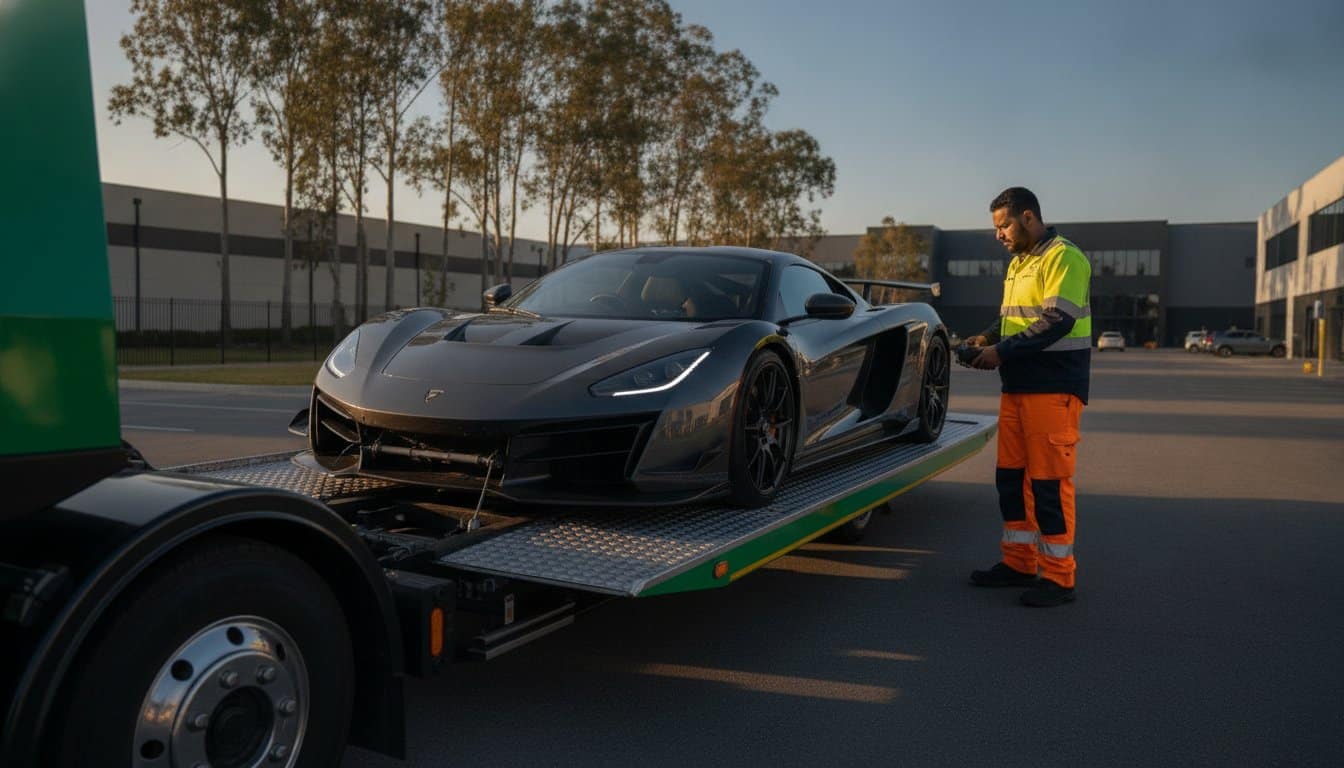
Tag: performance car towing

  • Safe Performance Car Towing: 2026 Low-Clearance Guide

    Safe Performance Car Towing: 2026 Low-Clearance Guide

    Transporting a lowered performance vehicle is never just a routine haul; it’s a high-stakes exercise in geometry and engineering. If you own a prestige or performance car, you understand that every millimetre of ground clearance matters when it comes to performance car towing. You’ve likely felt that sharp anxiety watching a generic tow truck arrive, fearing steep approach angles might ruin your front splitter or that abrasive straps could mar your custom paintwork.

    We agree that your investment deserves more than just brute force logistics. This 2026 guide explains the professional techniques and specialised equipment, including zero-degree tilt trays and non-abrasive tie-downs, that ensure the job is done right every time. You’ll gain a clear understanding of the loading process and the confidence to verify a provider’s licensing and insurance. We will preview the essential safety protocols and the latest 2026 standards that define elite handling for the modern enthusiast. By prioritising precision over speed, you can ensure your vehicle arrives in showroom condition, regardless of how low it sits to the bitumen.

    Key Takeaways

    • Understand why generic recovery methods fail and how specialised performance car towing protects low-clearance splitters and undercarriages from catastrophic damage.
    • Learn how modern tilt tray technology and precise approach angles eliminate the risk of scraping during the loading and unloading process.
    • Discover the importance of using non-abrasive soft tie-downs to ensure your forged alloy wheels and prestige bodywork remain unmarked throughout the journey.
    • Master the essential pre-transport checklist, including clearance measurements and high-resolution documentation, to ensure a seamless transit.
    • Find out why choosing a provider with a strategic Stapylton hub ensures efficient, expert handling across Logan and the Gold Coast.

    Why Performance Car Towing Requires a Specialist Approach

    Specialist performance car towing is a niche logistics discipline designed for vehicles where every millimetre of ground clearance is critical. Unlike standard recovery, this service prioritises the preservation of high-value components and complex engineering over simple relocation speed. For owners of prestige or track-focused builds, the “she’ll be right” approach used by many generalist operators is a recipe for expensive repairs. This field requires a deep understanding of vehicle geometry and a commitment to meticulous care.

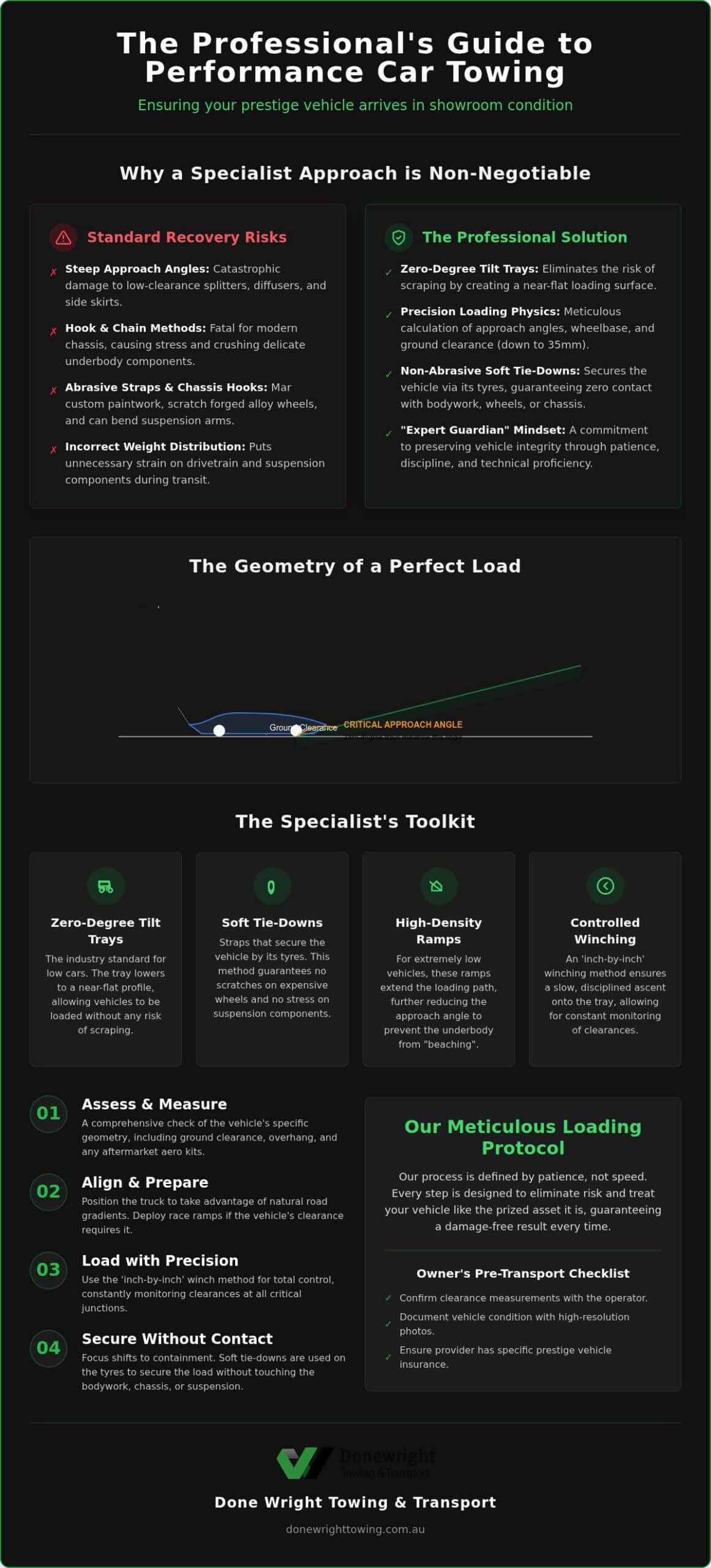
    Traditional methods, such as the outdated hook and chain, are essentially fatal for modern performance cars. These systems put immense stress on the chassis and can easily crush delicate underbody panels or damage active aero components. Instead, the industry standard for safe transport involves a specialised flatbed tow truck, often equipped with a tilt tray that can achieve near-zero approach angles. This equipment ensures the vehicle remains level and secure, treating it as a prized asset rather than just another task on the daily schedule.

    The Vulnerability of Modern Performance Aero

    Front splitters, side skirts, and rear diffusers are the primary casualties of poor loading. High-end automotive engineering often relies on carbon fibre or lightweight composites for these aerodynamic parts. A single scrape on a steep tilt tray can result in a replacement bill that dwarfs the cost of a specialist transport service. When you factor in aftermarket suspension setups that lower the centre of gravity even further, the margin for error disappears. Precision loading isn’t a luxury; it’s a financial necessity for protecting your investment.

    Mechanical Risks Beyond the Bodywork

    Beyond the bodywork, the mechanical risks are significant. Low-hanging exhaust systems and sensitive drivetrain components are easily damaged if a vehicle isn’t positioned correctly on the tray. A specialist operator understands the importance of perfect weight distribution to prevent unnecessary strain on the car’s suspension during transit. Adopting an “Expert Guardian” mindset means the provider respects the craftsmanship of the build. They use non-abrasive soft tie-downs that secure the vehicle via the tyres rather than the chassis, ensuring that even the most fragile components arrive exactly as they left. Reliability in this sector is built on discipline and technical proficiency.

    The Physics of Loading: Approach Angles and Clearance

    The geometry of a successful load depends on three variables: the front overhang, the wheelbase, and the ground clearance. In the context of performance car towing, even a minor miscalculation of the approach angle can result in a fractured splitter or a crushed diffuser. Professional operators mitigate this risk by using advanced tilt tray technology, such as specialised zero-degree trays. These systems allow the loading incline to be reduced to a near-flat profile, which is essential for vehicles with as little as 35mm of clearance. This technical precision ensures the car transitions from the road to the tray without the bodywork ever making contact with the steel surface.

    Operators must also conduct rigorous vehicle safety and operational checks before any movement begins. This ensures that the winch, braking systems, and hydraulic trays are functioning at peak capacity. When the incline of the tray isn’t sufficient on its own, we employ high-density race ramps or wooden blocks to extend the approach path. This effectively lengthens the transition from the bitumen to the tray, preventing the underbody from “beaching” at the breakover point. Every millimetre of height is accounted for before the winch is even engaged.

    Step-by-Step: The Precision Loading Process

    A methodical approach is the only way to guarantee a damage-free result. The process begins with a comprehensive assessment of the vehicle’s specific geometry, including any aftermarket aero kits. We position the truck to take advantage of natural road gradients whenever possible. Once aligned, the ‘inch-by-inch’ winch method is used to maintain total control. This slow, disciplined ascent allows the operator to monitor clearance at every critical junction, ensuring the front lip and side skirts remain clear of the tray surface. It is a process defined by patience rather than speed.

    Securing the Load Without Surface Damage

    Once the car is positioned, the focus shifts to containment without contact. Standard transport often relies on chassis hooks, which can bend suspension arms or damage delicate aluminium frames. Instead, we utilise “over-the-tyre” soft tie-downs. These specialised straps secure the vehicle by its rubber, allowing the car’s own suspension to work naturally during transit. This method prevents “strap rub” on custom paintwork or expensive forged alloy wheels. For those seeking this level of meticulous care, choosing a provider that understands prestige car transport is the most reliable way to protect your asset.

    Essential Equipment for Damage-Free Prestige Transport

    Precision in performance car towing is as much about the hardware as the operator’s skill. While a standard recovery vehicle might suffice for a daily driver, prestige assets require a suite of specialised tools designed to manage tight tolerances. High-performance vehicles often feature composite materials and intricate cooling ducts that cannot withstand the lateral forces or abrasive contact common in generic towing. By adhering to rigorous SAE towing performance requirements, professional operators ensure that their equipment is engineered to handle the specific load dynamics of modern sports and luxury cars.

    The transition from the bitumen to the transport deck is the most critical moment of the journey. To manage this safely, we utilise advanced winch tension controllers. These systems provide a smooth, consistent pull that eliminates the sudden jolts or “snapping” motions that can occur with manual winching. This level of control is vital for protecting the car’s frame and ensuring that the tension remains constant as the vehicle’s suspension compresses during the ascent.

    Tilt Tray vs. Traditional Tow Trucks

    A flat platform is the non-negotiable standard for low-clearance transport. Unlike traditional wheel-lift trucks that leave two wheels on the road, a tilt tray brings the entire vehicle onto a level, secure surface. This configuration eliminates the risk of the underbody “bottoming out” over speed humps or uneven road surfaces during transit. Done Wright prioritises the use of modern, well-maintained tilt trays to provide a stable environment for every vehicle. This technical superiority ensures that sensitive suspension components aren’t subjected to the jarring impacts of road debris or potholes, maintaining the car’s alignment and mechanical integrity.

    Specialised Gear for Modified Vehicles

    This level of detail is a direct result of our extensive experience in machinery transport. Handling heavy, high-value industrial equipment has disciplined our team to respect the physics of every load, no matter how delicate or complex. We apply that same rigorous standard to our non-abrasive securing systems. By using soft-webbing straps that anchor only to the tyres, we protect forged alloys and carbon-ceramic brakes from the scratches and chips often caused by metal chains or inferior tie-downs.
    Safe Performance Car Towing: 2026 Low-Clearance Guide

    How to Prepare Your Performance Vehicle for Transit

    Proper preparation is the foundation of a successful transit. In South East Queensland, where high humidity and coastal salt air can affect surfaces, ensuring your vehicle is clean is the first step toward an accurate condition report. A clean exterior allows the operator to identify every minor blemish or stone chip before the loading phase begins. This level of transparency protects both the owner and the provider, establishing a clear baseline for the “Expert Guardian” to maintain. Meticulous documentation is the only way to guarantee peace of mind during the journey.

    Performance car towing requires a data-driven approach rather than guesswork. Documenting existing clearance measurements is essential, particularly for cars with fragile carbon fibre aero bits or custom diffusers. Use a tape measure to record the exact distance from the bitumen to the lowest point of the front splitter and side skirts. Taking high-resolution photos of these areas from multiple angles provides an objective record of the vehicle’s pre-transit state. This is especially important if your car has been lowered for track use or features aggressive aftermarket bodywork.

    For non-running prestige cars or those being collected after a mechanical failure, managing fluid levels and battery health is a priority. Check for any active oil or coolant leaks that could create a slip hazard on the transport deck. If the car is being relocated after a session at Norwell Motorplex or Willowbank Raceway, ensure any loose “marbles” or track debris are cleared from the wheel arches. This prevents debris from vibrating loose on the Logan Motorway or the M1, protecting both your paintwork and other road users.

    The Pre-Towing Checklist for Owners

    • Remove or secure all loose interior items, including garage remotes, sunglasses, and aftermarket dash cameras.
    • Check tyre pressures to ensure the ride height is at its expected level. Even a small drop in PSI can lower the car enough to cause clearance issues on the ramps.
    • Deactivate alarm systems or put them into “transport mode” to prevent battery drain and unnecessary noise during the journey.

    Communicating with Your Specialist Towie

    Clear communication is the final safeguard in the transport process. Disclose any aftermarket suspension settings or specific quirks of your air-ride system before the truck arrives at your door. Providing accurate “lowest point” measurements in advance allows the specialist to prepare the necessary race ramps or timber dunnage required for your specific geometry. Sharing high-quality photos of the front splitter and side skirts helps the operator plan the approach angle before they even reach the site. If you require a partner who understands the nuances of high-value assets, arrange your prestige car transport with a team committed to technical perfection.

    Choosing a Performance Towing Partner in SE Queensland

    Selecting a provider for performance car towing in South East Queensland requires more than a simple search for the nearest truck. It demands a partner who understands the local geography and the specific stressors of our road network. Navigating the M1 or the Logan Motorway with a high-value asset requires discipline and an intimate knowledge of traffic patterns to avoid unnecessary risks. A Stapylton-based hub serves as the ideal operational centre, providing rapid response times to both Logan and the Gold Coast. This strategic location ensures that your vehicle isn’t left waiting on a shoulder or in a public space longer than absolutely necessary.

    Verifying a provider’s credentials is a non-negotiable step in the selection process. A professional operator must be fully licensed and hold comprehensive insurance policies specifically tailored for prestige and performance builds. This protection covers the vehicle from the moment the winch is engaged until the final offload at its destination. At Done Wright, we combine this professional authority with a level of meticulous care that general logistics services rarely offer. We treat every vehicle as a prized possession, applying the same rigorous standards to a modern supercar as we do to a rare classic or a modified track car.

    Serving the South East Queensland Enthusiast Community

    Our presence in the region is defined by our support for the local automotive community. We provide reliable transport to specialised workshops, elite detailing centres, and local racetracks such as Norwell Motorplex and Willowbank. Managing the logistics of prestige car relocation in busy metropolitan areas like the Gold Coast or Logan requires a calm, methodical approach. We prioritise safety over speed, ensuring that every transition through urban traffic is handled with precision. For those located in our primary service areas, our dedicated Prestige Car Transport Stapylton & Logan service offers the highest level of expert care for your pride and joy.

    Interstate and Long-Distance Performance Transport

    When a vehicle needs to travel beyond the South East, the requirements for safety increase significantly. Our expertise in performance car towing extends to interstate routes, where we leverage backloads to provide a cost-effective solution for long-distance moves without compromising our high standards. These journeys involve extra precautions, including more frequent inspections of the tie-down tension and specific weather protection measures. Whether moving a car across state lines or simply across town, Done Wright remains the trusted name for the region’s most valuable cars. Our commitment to the “Expert Guardian” philosophy ensures that distance never dictates a drop in quality or security.

    Securing Your Automotive Investment for the Road Ahead

    Protecting a high-value vehicle requires a transition from standard recovery to a disciplined logistics partnership. You now understand that successful performance car towing is a result of precise geometry, specialised tilt tray equipment, and non-abrasive securing methods. By prioritising meticulous preparation and choosing a provider that operates with an “Expert Guardian” mindset, you eliminate the common risks of underbody scrapes and paintwork damage. This methodical approach ensures your vehicle remains a prized possession throughout its journey rather than just another task on a manifest.

    We remain committed to the highest standards of vehicle security, ensuring every transport is handled by a fully licensed and insured team. Our Stapylton hub provides the perfect operational base for serving the enthusiast community across Logan and the Gold Coast with specialised equipment designed specifically for ultra-low clearance. When you’re ready to relocate your prized asset with total peace of mind, we are here to execute the task with perfection. Get a Meticulous Quote for Your Performance Car Transport and experience a service as refined as your car’s own engineering. Your vehicle’s safety is our highest priority.

    Frequently Asked Questions

    Can you tow a car with a very low front splitter?

    Yes, we can safely tow vehicles with ultra-low front splitters by using specialised zero-degree tilt trays and high-density race ramps. These tools significantly reduce the approach angle, ensuring the bodywork remains clear of the tray during the entire loading process. Our team conducts a thorough assessment of your car’s specific geometry to prevent any contact between the splitter and the transport deck.

    Is my performance car insured while it is on the tow truck?

    Your vehicle is fully protected by our comprehensive insurance policy from the moment we begin the loading process until it is safely offloaded at your destination. We maintain high-level coverage specifically designed for high-value assets and prestige builds. This insurance mandate provides the security and peace of mind necessary for performance car towing, protecting your investment against loss or damage during transit.

    What is the difference between a standard tow and prestige transport?

    Prestige transport is a disciplined service that prioritises damage prevention over simple relocation speed. While standard towing often relies on basic recovery gear, prestige transport utilises specialised equipment like non-abrasive soft tie-downs and level-loading trays. It’s a premium, service-oriented approach that treats every vehicle as a prized possession rather than just another task on a daily manifest.

    Do you use chains or straps to secure performance vehicles?

    We use only non-abrasive soft tie-downs and over-the-tyre straps to secure your vehicle for transport. Chains or chassis hooks can cause structural damage or mar expensive forged alloy wheels and carbon-ceramic brakes. By anchoring the car via the tyres, we allow the vehicle’s own suspension to work naturally while protecting custom paintwork from any risk of strap rub.

    Can you transport a non-running performance car?

    Yes, we have the technical capability to transport non-running performance cars using our precision-controlled winching systems. The process remains methodical and steady, ensuring that even without engine power, the car is loaded with total control. We monitor clearance levels inch-by-inch during the ascent to protect low-hanging exhaust systems and sensitive underbody components from any contact.

    How much notice do I need to give for a specialist car tow?

    We recommend providing at least 24 to 48 hours of notice to ensure our specialised equipment is available for your preferred timeframe. While we strive to accommodate urgent requests, planned transport allows us to better organise the logistics for a damage-free arrival. This lead time ensures we have the correct ramps and spotting personnel ready for your vehicle’s unique geometry.

    Do you service the Gold Coast and Brisbane for performance towing?

    Our Stapylton hub is strategically positioned to serve the Gold Coast, Logan, and the greater Brisbane region. This central location allows for efficient response times and an intimate knowledge of the M1 and local motorway networks. We frequently provide transport to regional racetracks, detailing centres, and specialist mechanical workshops throughout the South East Queensland enthusiast community.

    What details do I need to provide for a performance towing quote?

    To provide an accurate quote, please provide the vehicle’s make and model along with the “lowest point” ground clearance measurement. We also require the specific pickup and delivery addresses and confirmation of whether the vehicle is currently running. Disclosing any aftermarket aero kits or modified suspension settings helps us prepare the right equipment for a perfect execution of the task.
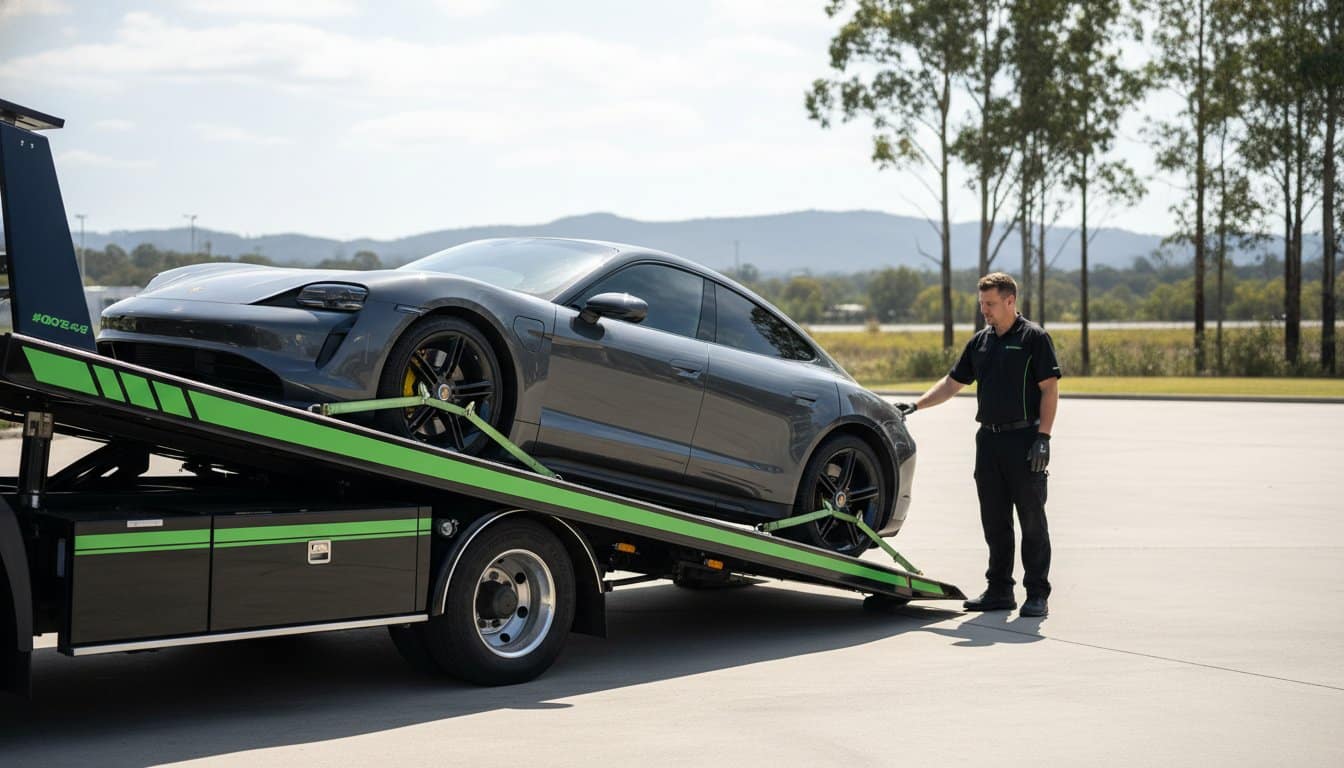
  • Performance Car Towing: The Ultimate Guide to Damage-Free Transport in 2026

    Performance Car Towing: The Ultimate Guide to Damage-Free Transport in 2026

    Your front splitter isn’t just a piece of carbon fibre; it’s a precision-engineered component that sits exactly 100 millimetres from disaster the moment it meets a standard tow ramp. For owners of the 1,241,037 new vehicles sold in Australia during 2025, the stakes for vehicle transport have never been higher. You likely feel a justified sense of dread at the thought of a “cowboy” operator approaching your investment with heavy metal chains or a steep, unforgiving tilt-tray. It’s a common anxiety because most general providers don’t understand the unique technical requirements of performance car towing.

    We agree that your vehicle deserves more than just a simple relocation; it requires an Expert Guardian who treats every asset as a prized possession. This guide will teach you how to secure a professional service that guarantees zero cosmetic or structural damage. With electric vehicles accounting for a record 16.4% of sales in April 2026, understanding specialised equipment like race ramps and soft-strap technology is now essential. We will preview how to navigate insurance requirements and Queensland’s 2026 regulatory environment to ensure your prestige or classic car remains perfectly protected.

    Key Takeaways

    • Understand why traditional hook-and-chain methods are catastrophic for modern suspension and why a non-invasive, engineering-led approach is non-negotiable for high-value assets.
    • Discover how low-angle tilt trays and soft-strap technology define the current gold standard for performance car towing in Australia.
    • Learn the step-by-step loading protocol, including the use of specialised race ramps to safely manage ultra-low ground clearance and delicate front splitters.
    • Identify essential preparation tasks, such as verifying tyre pressures and conducting detailed pre-trip reports, that safeguard your vehicle’s structural and cosmetic integrity.
    • Gain insights into evaluating specialist carriers in South-East Queensland by prioritising accreditation and local logistics expertise over the risks of budget alternatives.

    Why Performance Car Towing Requires a Specialised Approach

    True performance car towing is a discipline of “Expert Guardianship” that prioritises engineering-led protection over simple relocation. It involves transporting high-value, low-clearance, or sensitive vehicles using non-invasive methods that respect the machine’s structural integrity. While a standard tow truck might suffice for a commute-worn hatchback, high-performance assets require specialised recovery vehicles designed for precision. This specialised approach is necessary because modern performance engineering often places vital components, such as oil coolers and sensitive sensors, in areas that traditional equipment simply cannot accommodate.

    Falling into the “standard” towing trap is a common mistake that leads to catastrophic results. Traditional hook-and-chain methods are designed for heavy steel frames, not the sophisticated aluminium alloys or carbon fibre composites found in today’s prestige vehicles. Applying these archaic techniques to a modern suspension system can cause invisible micro-fractures or alignment issues that compromise the car’s handling at high speeds. It’s a risk that isn’t worth taking when you consider the intricate physics of low ground clearance. A standard tilt-tray often has an approach angle of 15 to 20 degrees; however, many supercars require an angle of less than 6 degrees to clear the front splitter safely.

    The financial risk of choosing an unqualified operator is significant. While a base rate for specialised lowered car transport might start around A$132 in South-East Queensland, the cost of repairing a damaged carbon fibre front splitter can easily exceed A$5,000. Cheap towing is often a false economy. Choosing a provider that understands automotive engineering ensures you aren’t paying for bodywork repairs later. Understanding the full scope of vehicle transport security — including the myths that lead owners to trust uninsured or underequipped operators — is essential before you hand over the keys to any carrier.

    The Difference Between General Recovery and Prestige Transport

    General towing services focus on clearance and speed; they want the road cleared as quickly as possible. Prestige transport focuses on preservation. We treat every vehicle as a prized asset rather than just another “load” on the back of a truck. This mindset shift is backed by the use of fully insured, accredited operators who follow methodical loading protocols. By using an “Expert Guardian” service, you de-risk the entire process through technical proficiency and a deep respect for the vehicle’s value.

    Common Risks to Performance Vehicles During Transit

    Damage often occurs before the truck even moves. Front splitters and rear diffusers are frequently sacrificed to steep ramp angles during the loading phase. Once on the tray, rim rash and alloy scoring become the primary concerns if an operator uses metal chains or abrasive, unlined straps. Furthermore, improper tie-down points can cause immense chassis strain. Standard operators often hook into the frame at points not designed for lateral tension, potentially warping delicate components. Using performance car towing techniques, such as soft-strap technology, eliminates these risks by securing the vehicle via its tyres alone. The same non-abrasive equipment and disciplined tie-down protocols that protect modern performance cars are equally critical for classic car towing, where original paintwork and vintage components are irreplaceable.

    Essential Equipment for Damage-Free Performance Transport

    Achieving a damage-free result requires more than just a steady hand; it demands an inventory of specialised hardware that most generalist towers simply don’t carry. For performance car towing, the primary tool is the low-angle tilt tray. While a standard recovery vehicle might use a steep 15-degree ramp, high-end transporters utilise 5-degree ‘low-loaders’ that create a near-level surface. This prevents the heart-stopping sound of a carbon fibre splitter scraping against steel. These units often feature winches equipped with synthetic ropes rather than traditional steel cables. Synthetic lines are lighter and don’t store the same kinetic energy, which eliminates the risk of ‘cable snap’ that can lash back and shatter a windscreen or mar a custom paint job.

    Professional operators employ specialized towing techniques for sports cars that prioritise the vehicle’s unique geometry. Whether moving a vehicle from a showroom in Brisbane or a private collection in Stapylton, using the right gear is the only way to guarantee a result that respects the engineering of the machine. Using the wrong equipment isn’t just a mistake; it’s a liability that can devalue a prestige asset in seconds.

    Tilt Tray Trucks vs. Traditional Tow Trucks

    Traditional tow trucks that lift a vehicle by its axle or chassis are unsuitable for modern performance engineering. A flat platform tilt tray is the only reliable option for long-distance transport because it keeps the vehicle level. This setup is particularly vital for the growing number of electric vehicles in Australia, which reached 16.4% of new sales in April 2026. These vehicles often have heavy, floor-mounted batteries that require a perfectly flat surface to avoid structural stress and ensure the weight is distributed evenly across the truck’s bed.

    Soft-Strap Tie-Downs and Wheel Grids

    The most critical advancement in damage prevention is soft-strap technology. Unlike metal chains that cause rim rash and alloy scoring, soft-straps are made from high-tenacity nylon with protective sleeves. These straps are essential for high-quality performance car towing and are used in conjunction with wheel-only restraint systems. By securing the car solely by its tyres, the vehicle’s suspension is allowed to work naturally during transit. This prevents the ‘chassis binding’ that occurs when a car is winched down too tightly by its frame. If you value your car’s alignment and finish, ensure your prestige car transport provider uses through-the-wheel strapping protocols that isolate the body from the movement of the truck.

    Performance Car Towing: The Ultimate Guide to Damage-Free Transport in 2026

    How to Safely Load and Secure a Low-Clearance Vehicle

    Professional performance car towing relies on a methodical five-step process that eliminates the risk of human error. The loading phase is the most critical window of time for any high-value asset; it’s where the majority of cosmetic damage occurs. To ensure a flawless result, our operators follow a disciplined protocol that treats the vehicle with the respect its engineering deserves. This process begins with a comprehensive pre-loading inspection where we document the existing condition with high-resolution photography. This creates a transparent baseline that gives you total peace of mind before the vehicle even touches a ramp.

    • Step 1: Document Condition. Conduct a detailed pre-trip report to identify any existing stone chips or surface marks.
    • Step 2: Decrease Approach Angle. Utilise specialised composite race ramps or timber extensions to bridge the gap between the road and the tray.
    • Step 3: Controlled Winching. Use a synthetic rope winch to maintain constant, steady tension, ensuring the car doesn’t “roll back” or jerk during the climb.
    • Step 4: Independent Strapping. Apply a four-point “X-pattern” tie-down sequence using soft-straps to lock the vehicle in place without stressing the chassis.
    • Step 5: Clearance Verification. Perform a final manual check of the underbody and front splitter clearance before the truck departs for its destination.

    Adhering to these steps ensures that the physical transit is as smooth as the loading itself. When loading a low ground clearance vehicle, even a minor oversight can lead to a damaged diffuser or a misaligned front bar. Precision is the only acceptable standard.

    Managing the Approach Angle

    Calculating the approach angle is a mathematical necessity for lowered street machines. If your car sits lower than 100 millimetres, it will likely bottom out on a standard tray without assistance. We use specialised composite ramps to artificially extend the loading surface, effectively reducing a 10-degree incline to a safe 3 or 4 degrees. A “spotter” protocol is mandatory during this phase; having a second set of eyes on the front splitter is a hallmark of elite performance car towing services. This ensures that the operator has immediate feedback on clearance as the car transitions onto the platform.

    The Four-Point Securing Method

    Securing each corner of the vehicle independently is the only way to prevent “walking” on the tray during transit. If a car is only secured at two points, the vibration of the road can cause the rear or front to shift laterally, potentially leading to rim damage against the side rails. We follow a specific tensioning sequence that tightens the straps in a diagonal order to ensure the weight is distributed evenly. The X-pattern securing method is the industry standard for high-performance stability because it provides equalised lateral and longitudinal tension to prevent the vehicle from shifting during transit. This method protects your wheel alignment by ensuring no single corner is under disproportionate stress.

    Preparing Your Performance Car for Professional Transport

    Preparation is the foundation of a successful transport experience. While the heavy lifting is handled by the specialist, your role in the process ensures that the “Expert Guardian” approach is executed with maximum efficiency. Cleaning your vehicle thoroughly before the truck arrives is the first essential step. Dust and road grime can easily mask fine scratches or stone chips, making it difficult to establish an accurate pre-trip report. By presenting a pristine car, you allow for a transparent, high-resolution photographic record that protects both you and the carrier.

    Tyre pressure is another critical factor that owners often overlook. A drop of just 10 PSI can lower a vehicle’s ground clearance by several millimetres; this is often enough to cause a front splitter to scrape on a ramp that would otherwise be safe. Check your levels and ensure tyres are inflated to the manufacturer’s recommended settings for a “loaded” state. This small adjustment preserves the calculated approach angles required for safe performance car towing. Additionally, remember to disable aftermarket alarms or place trackers into “transport mode.” The constant vibration of the truck can trigger sensitive sensors, leading to a flat battery upon arrival. It’s a common frustration that’s easily avoided with a few seconds of menu navigation.

    The Pre-Transport Inspection Checklist

    A systematic walk-around is the best way to ensure nothing is missed. When you prepare for performance car towing, use this checklist to streamline the handover:

    • Document Surface Condition: Take high-resolution photos of the rims, underbody, and all panels in bright, natural light.
    • Manage Fuel Levels: Keep the tank at approximately a quarter full. This reduces total weight while ensuring there is enough fuel for loading and unloading.
    • Secure the Cabin: Remove loose items like sunglasses, toll tags, or garage remotes that could shift and cause interior scuffs during transit.
    • Check Fluid Integrity: Ensure there are no active leaks, as fluids can become slippery on a tilt-tray platform and pose a safety risk.

    Communication with Your Transport Specialist

    Open dialogue is vital when handling prestige assets. You should disclose any “hidden” modifications that might affect the transport process, such as air-ride suspension systems that could settle during a long journey or aftermarket splitters that extend further than the factory components. If your vehicle requires a specific “cold start” procedure or has a tricky electronic handbrake, provide these instructions in writing. Confirming the delivery window and providing secondary contact details for the receiving end ensures a seamless door-to-door experience. For a service that understands these intricate requirements, you can book your prestige car transport with a team that prioritises precision and safety above all else.

    Choosing a Specialist Performance Car Carrier in South-East Queensland

    Selecting the right provider for performance car towing is the final safeguard in protecting your automotive investment. In a market where anyone with a truck can claim to be a “tower,” discerning owners must look beyond the surface level of a cheap quote. A low price often indicates a lack of the specialised equipment and comprehensive insurance required to handle a six-figure asset. You should prioritise carriers who are fully insured and accredited, ensuring that your vehicle is covered from the moment it’s winched onto the tray until it’s safely unloaded at its destination. True peace of mind comes from knowing your transporter understands the financial and emotional stakes involved. Before committing to any carrier, it is worth reading up on vehicle transport security myths and facts so you can ask the right questions and identify operators who meet the genuine standard of care your asset demands.

    Reliability in South-East Queensland depends heavily on logistics and timing. Our region’s motorways are notoriously unpredictable, particularly with the ongoing A$1 billion Pacific Motorway (M1) upgrades between Eight Mile Plains and Daisy Hill. A specialist with local knowledge understands how these construction zones and traffic patterns affect transit times. We plan routes that avoid high-risk road surfaces or heavy congestion that could lead to unnecessary delays or debris risks. By choosing a partner who operates daily within these corridors, you ensure your car isn’t just another job on a list, but a priority handled with precision and care.

    The Importance of Local Expertise in Stapylton and Logan

    Navigating the Gold Coast to Brisbane corridor with high-value loads requires more than just a GPS. It demands an intimate understanding of Logan’s logistics hubs and the specific road conditions of the Stapylton industrial precinct. Our strategic base allows for rapid response times and methodical route planning across the entire region. This local focus ensures we’re never “guessing” about access or clearance at your pick-up point. For deeper insights into our regional focus, read more about our Prestige Car Transport Stapylton & Logan: Expert Care for Your Pride and Joy.

    Why ‘Done Wright’ is the Correct Choice for Enthusiasts

    We built Done Wright on the principle that “Performance, Prestige & Classic” cars deserve a higher standard of care. As a family-owned business, we don’t just move vehicles; we act as the “Expert Guardian” for your pride and joy. Our Stapylton base serves as a central hub for specialised performance car towing, allowing us to provide a premium, door-to-door service across Queensland. We use the soft-strap technology and low-angle trays discussed in previous sections to ensure perfection every time. Whether you’re transporting a modern supercar or require specialised classic car towing with the same non-abrasive equipment and protection standards, our approach guarantees your investment arrives in showroom condition. When you’re ready to secure a service that values engineering as much as you do, Contact Done Wright Towing for a Performance Transport Quote and experience the confidence that comes from a job done correctly.

    Securing the Future of Your Vehicle Transport

    Protecting a high-value asset in 2026 requires more than just a truck; it demands a partnership with a specialist who understands the physics of low-clearance engineering. You now have the technical framework to identify a provider that prioritises preservation over speed. From the implementation of soft-strap technology to the disciplined use of 5-degree low-loaders, the standard for performance car towing has evolved into a meticulous science that respects automotive design.

    Done Wright Towing & Transport provides this elite level of handling across Queensland from our Stapylton base. Our fully insured and licensed operators are dedicated specialists in Performance, Prestige & Classic cars, ensuring every job is executed with the “Expert Guardian” mindset. Don’t leave your vehicle’s safety to chance with a generalist provider. You can Get a Premium Performance Transport Quote from Done Wright Towing today to ensure your vehicle arrives in showroom condition. Your investment deserves to be handled correctly every single time.

    Frequently Asked Questions

    Can you tow a car with very low ground clearance?

    Yes, we specialise in transporting vehicles with ultra-low clearance using specialised equipment. We utilise composite race ramps to artificially extend the loading surface, which reduces the approach angle to as little as 3 or 4 degrees. This methodical approach ensures that even vehicles with less than 100 millimetres of ground clearance can transition onto the platform without any underbody contact or splitter damage.

    How do you prevent the straps from scratching my alloy wheels?

    We eliminate the risk of rim damage by using specialised soft-strap technology instead of traditional metal chains. These high-tenacity nylon straps feature protective sleeves that won’t mar expensive paint, polished alloys, or chrome finishes. By securing the vehicle by its tyres alone, we protect the wheel’s cosmetic integrity and allow the suspension to work naturally during transit.

    Is my performance car insured while it is on your tow truck?

    Yes, your vehicle is fully covered by our comprehensive carrier insurance throughout the entire transport process. As a licensed and accredited operator, we provide total financial security for high-value assets from the moment of loading until the final handover. This insurance is a core part of our “Expert Guardian” promise, giving you total peace of mind while your car is in our care.

    Do you use tilt tray trucks for all performance car transport?

    Yes, we utilise specialised low-angle tilt tray trucks for all performance car towing assignments to ensure the vehicle remains level. This equipment is essential for maintaining the structural integrity of prestige vehicles and is particularly vital for the 16.4% of new vehicles sold in April 2026 that are electric. A flat platform prevents the chassis strain and suspension stress associated with traditional wheel-lift recovery methods.

    What happens if my car has a front splitter or aftermarket body kit?

    We follow a strict spotter protocol to protect delicate front splitters and aftermarket body kits during the loading phase. Our operators use specialised ramp extensions to ensure the kit clears the tray with ample room to spare. Having a second set of eyes monitoring every millimetre of movement ensures that sensitive carbon fibre components remain untouched during the transition onto the truck.

    Can you transport my performance car interstate from the Gold Coast?

    Yes, we provide reliable interstate transport services departing from our Stapylton base near the Gold Coast. Whether you require a dedicated direct transport or an interstate backload, we manage the logistics across state lines with meticulous care. Our deep understanding of the M1 corridor and Pacific Motorway conditions ensures that your vehicle is moved safely and efficiently to its interstate destination.

    How much does performance car towing cost compared to a standard tow?

    Specialised performance car towing involves a higher base rate than standard recovery due to the advanced equipment and expertise required. In South-East Queensland, while a general local tow might start from A$99, a specialised lowered car service typically begins at A$132. This investment covers the use of race ramps and soft-straps, which prevent thousands of dollars in potential damage to low-profile components.

    Do I need to be present during the loading and unloading process?

    Your presence is highly recommended during the loading phase to facilitate the pre-trip inspection and condition report. This allows us to walk you through the high-resolution documentation of your vehicle’s condition and sign off on the handover together. If you can’t be there, we can arrange a digital handover process with detailed photography to maintain our high standards of transparency and care.