Tag: chain of responsibility

  • Professional Scissor Lift Transport Service: SE QLD’s Reliable Machinery Relocation Guide

    Professional Scissor Lift Transport Service: SE QLD’s Reliable Machinery Relocation Guide

    What if the safety of your next Gold Coast project depended less on your site crew and more on the legal compliance of your transport provider? With the mid-2026 amendments to the Heavy Vehicle National Law now in effect across Queensland, choosing a scissor lift transport service has become a critical matter of risk management and Chain of Responsibility. You likely understand that a single delay or a scratched machine doesn’t just hurt your bottom line; it disrupts a carefully planned schedule in a construction market where materials costs have risen by up to 50 per cent. This guide will show you how to organise machinery relocation with the same meticulous care and precision handling usually reserved for prestige vehicles.

    We’ll preview the essential safety protocols required for narrow site access in Logan and Stapylton while explaining how a documented Safety Management System protects your business from increasing penalties. You’ll learn how to ensure on-time, damage-free delivery that meets the highest Australian transport standards, giving you total peace of mind for your high-value assets. By the end of this guide, you’ll know exactly what to look for to ensure your machinery arrives ready for work without the stress of logistical failures.

    Key Takeaways

    • Understand the inherent risks of DIY machinery relocation, focusing on how improper weight distribution and centre of gravity issues can compromise site safety.
    • Learn why low-angle tilt trays are the superior choice for handling machines with minimal ground clearance to prevent costly undercarriage damage during loading.
    • Discover the financial advantages of engaging a professional scissor lift transport service over a generalist carrier to avoid project delays and equipment downtime.
    • Identify the essential site preparation steps, from assessing ground stability to clearing narrow access paths, required for a seamless equipment pickup.
    • Explore how a dedicated machinery transport specialist provides the meticulous care and local knowledge needed for reliable transit across Stapylton, Logan, and the Gold Coast.

    Why Professional Scissor Lift Transport Service is Essential for Site Safety

    Scissor lift transport is a specialised logistics category that requires a sophisticated understanding of machinery physics. It’s not just about moving a machine from point A to point B; it’s about protecting a high-value asset that is essential to your project’s timeline. These units are technically classified as an Aerial work platform (AWP), and they contain intricate hydraulic systems and sensitive electronic sensors that don’t respond well to rough handling. A professional scissor lift transport service provides the necessary expertise to ensure these components remain intact. When you choose a specialist, you’re investing in the longevity of your equipment and the safety of your site crew. Every movement is planned with meticulous care to avoid the jarring vibrations that lead to costly mechanical failures.

    Understanding the Weight and Balance of EWPs

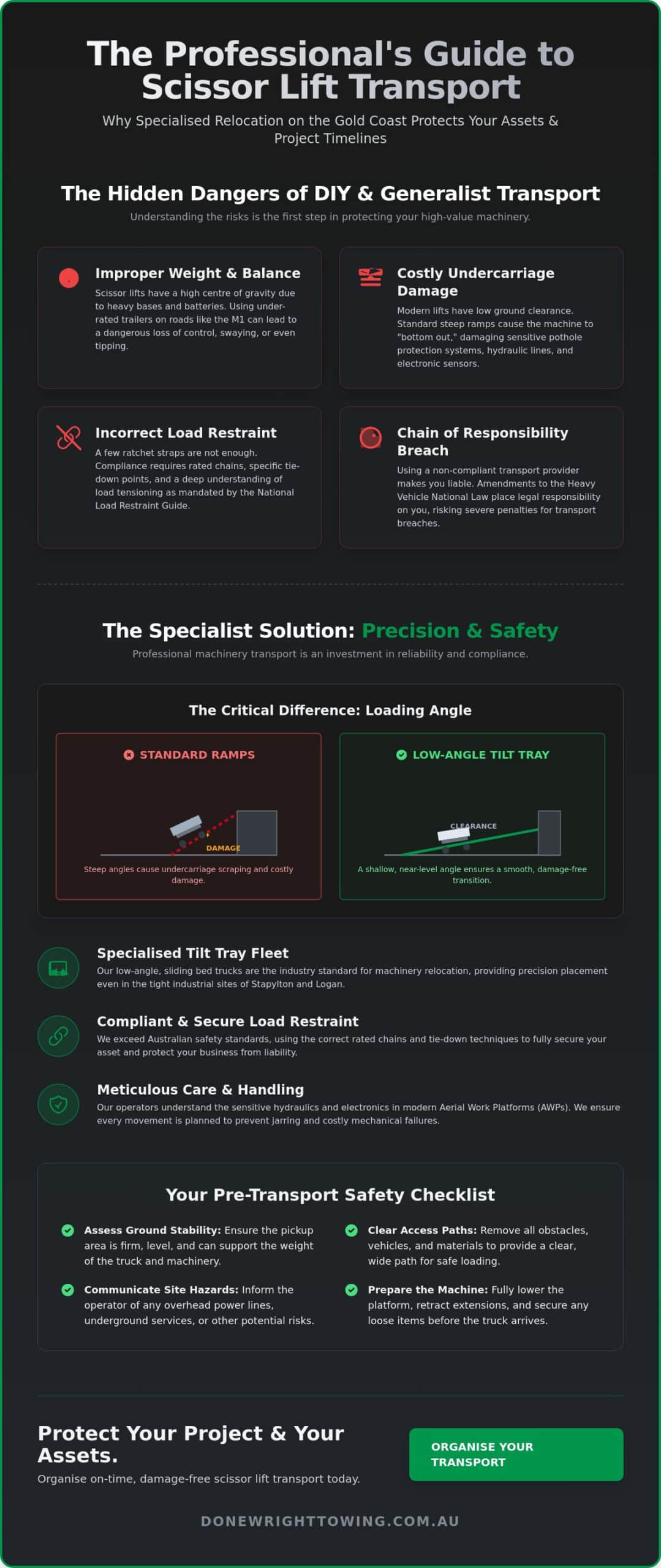
    Scissor lifts are deceptively heavy. Their compact footprint hides a massive amount of weight concentrated in the base and battery compartments. This design is essential for stability while the platform is extended, but it creates a high centre of gravity during transit. If you use under-rated towing equipment on the M1 or local Logan roads, you risk a dangerous loss of control. Most standard trailers simply aren’t built to handle the concentrated point loads of a heavy scissor lift. Professional transport rigs are designed with the specific capacity to manage these dense loads. They ensure the machine stays planted and stable, regardless of road conditions or sudden stops. This level of precision handling prevents the swaying that causes accidents on Southeast Queensland’s busy motorways.

    Compliance with Australian Safety Standards

    Queensland’s transport regulations are strict for a reason. The Department of Transport and Main Roads (TMR) expects every operator to follow the National Load Restraint Guide to the letter. This involves far more than just a few basic ratchet straps. It requires rated chains, specific tie-down points, and a deep knowledge of load tensioning. Licensed operators act as an expert guardian for your machinery, mitigating your liability on the road and at the job site. This level of compliance is vital in a professional environment where safety standards are the benchmark for success. It’s about doing the job right every single time to protect your business from the legal and financial fallout of a transport breach. Using a specialised scissor lift transport service ensures that your machinery relocation meets every Australian safety standard without exception.

    The Mechanics of Safe Loading: Specialised Tilt Trays and Securing Techniques

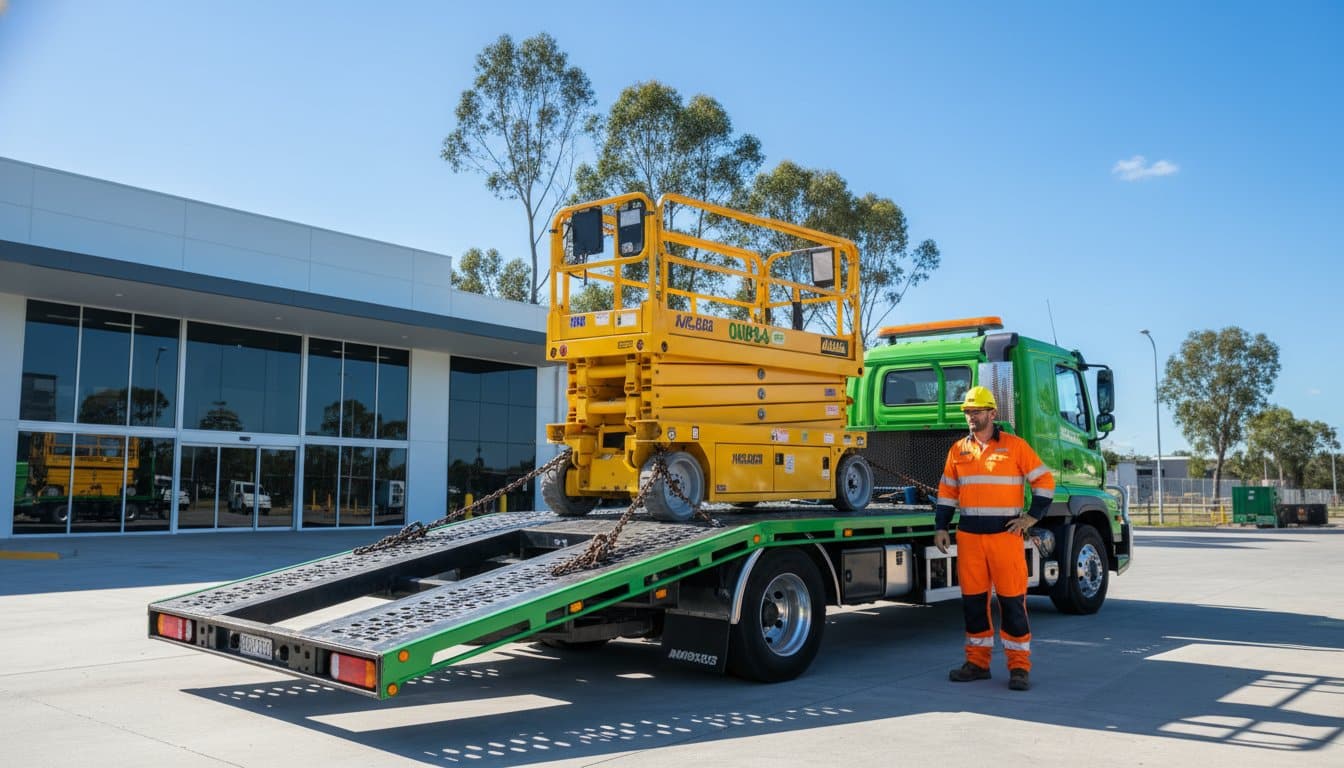
    Loading a scissor lift requires more than just a heavy-duty winch and a set of ramps. It demands a disciplined approach to mechanical physics. Most modern electric or diesel lifts are engineered with pothole protection systems that significantly reduce ground clearance. This makes traditional loading ramps a liability; they often cause the machine to bottom out, leading to expensive undercarriage damage or hydraulic leaks. A professional scissor lift transport service avoids these risks by utilising specialised low-angle tilt trays. These trucks feature a sliding bed that creates a near-level transition from the bitumen to the deck. It’s a methodical process that ensures the machine’s integrity remains uncompromised from the moment it leaves the ground.

    Why Tilt Tray Trucks are the Industry Standard

    The sliding bed mechanism is the gold standard for machinery relocation across the Gold Coast and Logan. By extending the tray horizontally before tilting, the operator achieves a shallow approach angle. This is vital for protecting the delicate electronic sensors often found on the underside of modern units. Precision placement is another key advantage. In the tight industrial pockets of Stapylton, a tilt tray allows for surgical accuracy when offloading in narrow driveways or busy construction zones. If you need a partner who understands these technical nuances, you can request a machinery transport quote to see our precision in action.

    Advanced Load Restraint Systems

    Once the lift is positioned, the focus shifts to elite-level securing techniques. We don’t just rely on standard straps. Every load is anchored using Grade 70 transport chains and high-tensile winches to prevent even a millimetre of movement. It’s also crucial to secure the extendable platform decks and guardrails, as wind resistance on the M1 can cause these components to rattle or shift. Following OSHA’s guidelines on scissor lift safety, we ensure the machine is in its stowed position with all safety locks engaged before transit. Our ‘Done Wright’ checklist includes a series of rigorous inspections:

    • Verifying the emergency stop is engaged and the battery isolator is switched off.
    • Shielding sensitive control boxes and decals from road debris and harsh SE QLD weather.
    • Applying non-abrasive padding to contact points where chains meet the chassis.
    • Double-checking the tension on all four anchor points to ensure the load is perfectly balanced.

    This level of meticulous care safeguards the hydraulic seals and electronic components from the stresses of transit. By treating every machine as a prized asset, we eliminate the risk of the ‘hidden damage’ that often occurs when equipment is handled by generalists. Your scissor lift arrives on-site not just on time, but in peak operational condition, ready to go to work immediately.
    Professional Scissor Lift Transport Service: SE QLD’s Reliable Machinery Relocation Guide

    Standard Towing vs. Specialised Machinery Transport: Why Precision Matters

    Choosing between a general towing company and a specialised scissor lift transport service often comes down to how you value your equipment. A standard tow truck is designed to move passenger vehicles, but a heavy scissor lift is a different beast entirely. It requires a rig that can handle concentrated weight without compromising the truck’s suspension or the machine’s sensitive internal components. When you hire a generalist, you’re often gambling with your project’s timeline. If a driver lacks specific machinery experience, they might secure the lift by a hydraulic line or an electronic sensor housing. These mistakes don’t just cause immediate damage; they lead to silent failures that only appear once the machine is extended ten metres in the air.

    Is professional transport worth the cost? The answer lies in the total cost of ownership. A single hour of site downtime usually costs far more than the premium for expert transport. By choosing a provider that acts as an expert guardian for your assets, you eliminate the risk of the “hidden damage” that plagues the hire industry. We treat every piece of machinery with a level of respect that generalists simply can’t match. This disciplined approach ensures that your equipment isn’t just moved, but is relocated with a focus on engineering integrity and operational readiness.

    The Cost of Inexperienced Handling

    Inexperienced operators often overlook the delicate nature of a lift’s underside. Common damage points include hydraulic leaks from improper chain placement, tyre flat-spotting due to excessive winch tension, and sensor misalignment from road vibrations. These aren’t minor issues. A single misaligned sensor can trigger a safety lockout, rendering the machine useless until a technician arrives. We apply the same meticulous standards to machinery as we do for prestige car transport, ensuring every asset is protected from start to finish. Structural integrity is our priority. We treat your investment as a prized possession, not just another job on a list. This elite handling ensures your equipment remains in peak condition for its entire service life.

    Reliability and Project Timelines

    Success in construction depends on precision timing. In Southeast Queensland, navigating the M1 or the Logan Motorway requires local expertise and a dedicated dispatcher. A specialised scissor lift transport service understands that a thirty-minute delay at the gate can derail an entire day’s schedule for your subcontractors. We don’t just drive; we coordinate. Our team monitors traffic patterns in real-time to ensure your machinery arrives exactly when it’s needed. This “Right First Time” execution is the only acceptable standard for modern logistics. While a generalist might offer a lower initial quote, the cost of a missed deadline or a damaged machine far outweighs the small saving. Investing in professional machinery relocation is a strategic decision that protects your project’s profitability and your site’s safety record.

    Site Logistics: Preparing Your Scissor Lift for a Smooth Relocation

    Success for a professional scissor lift transport service begins long before the tilt tray arrives at the gate. A site foreman plays a vital role in this rhythmic progression by ensuring the environment is prepared for a heavy-lift operation. This preparation de-risks the entire process, moving the project from a state of logistical concern to one of disciplined execution. Assessing ground conditions is the first priority. Whether the machine is sitting on a cured concrete slab or a rough terrain development site, the loading area must be level and capable of supporting the combined weight of the transport rig and the EWP. Soft soil or uneven bitumen can compromise the stability of the tilt tray during the critical loading phase.

    Establishing a safety exclusion zone is another non-negotiable step. Clear communication between the site contact and the driver ensures that pedestrians and other machinery remain at a safe distance while the winch is in operation. This methodical approach to site safety reflects the high standards of a premium service provider. If you are ready to schedule your next move, you can book your machinery relocation with our specialist team today. By treating the loading zone with the same respect as the project itself, you ensure the machinery is handled with the meticulous care it deserves.

    Pre-Transport Machine Checklist

    A few minutes of proactive preparation can prevent hours of site delays. Before the transport truck arrives, the site crew should perform a final walk-around of the machine to ensure it is in a transport-ready state. This disciplined habit protects the equipment’s sensitive components from unnecessary stress during transit. Ensure the following steps are completed:

    • Verifying the lift is fully retracted and the extendable deck is securely locked.
    • Checking battery levels to ensure the machine can be driven onto the tray without requiring a manual override.
    • Engaging the battery isolator switch to prevent power drain or electronic interference.
    • Clearing the basket of all loose tools, debris, or construction materials.
    • Ensuring the pothole protection bars are in their stowed position to maintain ground clearance.

    Access and Egress Planning

    Navigating the tight industrial hubs of Logan or the busy streets of the Gold Coast requires a clear and unobstructed path. Site foremen must account for overhead obstructions like power lines, low-hanging branches, or shop front awnings that could snag a high-profile load. Turning circles are equally important; a large tilt tray needs ample room to manoeuvre into a safe loading position. If unauthorised vehicles are obstructing the loading zone or narrow access paths, you may need to arrange a towing service to clear the area before the transport window begins. This level of logistical foresight ensures a seamless transition and maintains the integrity of your project’s strict timeline.

    Done Wright: Expert Machinery Transport Across Stapylton, Logan, and the Gold Coast

    Finding a local partner who treats a diesel scissor lift with the same reverence as a vintage car is rare in the logistics industry. While many providers in the search results are based in Melbourne or Sydney, our operations are firmly rooted in the Stapylton industrial hub. This local presence allows us to offer a scissor lift transport service that is responsive, reliable, and deeply familiar with the specific site dynamics of Southeast Queensland. We don’t view your equipment as just another heavy load. Instead, we act as an expert guardian, ensuring that every asset is relocated with the meticulous care required to maintain its operational integrity and market value. Our team is fully licensed and insured, providing the essential security blanket needed when moving high-value industrial assets across the region.

    Our commitment to excellence extends beyond the local corridor. We also specialise in interstate backloads, allowing you to move your machinery beyond the Queensland border with efficiency and precision. This service is designed for businesses that demand a high-standard partner for long-haul relocations without the premium price tag of a dedicated interstate trip. By combining heavy-lift capability with a service-oriented atmosphere, we’ve created a transport solution that prioritises the safety of your investment above all else. Every journey is planned with a disciplined focus on reliability, ensuring your project stays on track regardless of the distance.

    Serving the South-East Queensland Construction Corridor

    Our deep knowledge of Logan, Stapylton, and Gold Coast site dynamics is a significant advantage for our clients. We understand the unique challenges of navigating narrow access points in developing residential estates and the strict delivery windows of major infrastructure projects. Our central hub location facilitates rapid deployment, ensuring we can reach your site quickly when schedules shift. Local expertise also matters when it comes to compliance. We stay ahead of Queensland’s specific transport permits and pilot requirements, so you don’t have to worry about regulatory delays. This proactive approach to logistics is what defines the ‘Done Wright’ difference in the SE QLD construction sector.

    Comprehensive Transport Solutions

    Our expertise isn’t limited to elevating work platforms. We provide integrated machinery transport for a wide range of equipment, including excavators, bobcats, and site sheds. This versatility allows you to streamline your site logistics by working with a single, trusted provider. Our background in prestige car transport informs our ‘no-damage’ philosophy, which we apply to every piece of industrial equipment we handle. We use non-abrasive securing methods and specialised equipment to ensure your machines arrive in the same condition they left. When you’re ready to experience a higher standard of service, it’s time to get your machinery moved ‘Wright’ the first time. Reach out to our Stapylton team to discuss your next relocation and discover the peace of mind that comes with professional handling.

    Secure Your Next Site Movement with Precision

    Choosing a professional scissor lift transport service is a strategic decision that protects your project’s timeline and your business’s legal standing. We have discussed how specialised tilt tray fleets prevent costly undercarriage damage and why a disciplined approach to load restraint is essential for meeting strict Australian safety standards. By prioritising meticulous care over mere speed, you ensure your high-value assets remain in peak operational condition for every project across Logan, Stapylton, and the Gold Coast.

    As fully licensed and insured SE QLD specialists, we provide the peace of mind that comes from knowing your equipment is handled by professionals who understand the high stakes of machinery downtime. Our role as an Expert Guardian means we treat every EWP with the same respect as a prestige vehicle, utilising a fleet specifically engineered for low-clearance machinery. This methodical approach ensures a seamless transition from the road to the work zone without the risk of hidden damage.

    Ready to experience the ‘Done Wright’ difference? Request a Precision Quote for Scissor Lift Transport today and secure your machinery with Southeast Queensland’s relocation specialists. Let’s get your next job site moving with the reliability and precision it deserves.

    Frequently Asked Questions

    How much does scissor lift transport service cost in 2026?

    Pricing for a professional scissor lift transport service is determined by several specific variables rather than a flat rate. These factors include the machine’s dimensions and weight, the total travel distance, and the accessibility of the pickup and delivery locations. To receive an accurate figure tailored to your project’s specific requirements, we recommend providing your equipment specifications for a direct quote.

    Can you transport a scissor lift on a standard car trailer?

    Transporting a scissor lift on a standard car trailer is generally unsafe and often illegal due to the concentrated weight and high centre of gravity of these machines. Standard trailers usually lack the structural reinforcement and rated tie-down points required to secure an EWP safely. Using specialised machinery transport rigs ensures the load remains stable and compliant with the National Load Restraint Guide.

    What information do I need to provide for a machinery transport quote?

    To provide a precise machinery transport quote, we require the make and model of the lift, its operating weight, and its stowed dimensions. You should also provide the specific addresses for pickup and delivery, noting any site-specific challenges like narrow gates or overhead power lines. This information allows our dispatchers to allocate the correct tilt tray and planned route for the task.

    Do you offer interstate transport for scissor lifts and boom lifts?

    Yes, we provide interstate backloads for scissor lifts and other heavy machinery moving beyond the Queensland border. This service allows for efficient relocation between major interstate hubs while maintaining the same meticulous care and precision handling found in our local operations. We coordinate these movements to ensure your equipment arrives ready for work at its destination without unnecessary delays.

    Is my machinery insured while it is on your tilt tray truck?

    Every piece of machinery is fully insured while it is in our care on a tilt tray truck. We understand the significant financial stakes involved in transporting high-value industrial assets, so our comprehensive protection provides the reassurance you need during transit. This coverage forms the backbone of our commitment as an expert guardian for your equipment and investments.

    How much notice is required to book a scissor lift relocation?

    Booking lead times vary depending on current demand and the specific logistics of your machinery relocation. While we strive to accommodate your project schedule, providing as much notice as possible helps ensure we can secure a dedicated window for your transport. We recommend contacting our Stapylton hub as early as possible in your planning process to confirm availability.

    Can you deliver scissor lifts to sites with limited access or narrow gates?

    Our specialised tilt tray fleet is specifically designed to navigate sites with limited access and narrow gates across Logan and the Gold Coast. The sliding bed mechanism allows for surgical precision when offloading in confined industrial spaces or busy construction zones. We work closely with site contacts to ensure the delivery path is clear and safe before the truck enters the site.

    What is the maximum weight capacity for your machinery transport trucks?

    Our machinery transport trucks are equipped to handle a wide range of weights, from compact electric lifts to heavy-duty diesel rough terrain units. The specific capacity depends on the individual rig assigned to your relocation, which is chosen based on the technical specifications you provide. This ensures the load is perfectly balanced and within all legal weight limits for Southeast Queensland roads.
  • Industrial Machinery Transport: The Complete Guide to Safe Heavy Haulage in 2026

    Industrial Machinery Transport: The Complete Guide to Safe Heavy Haulage in 2026

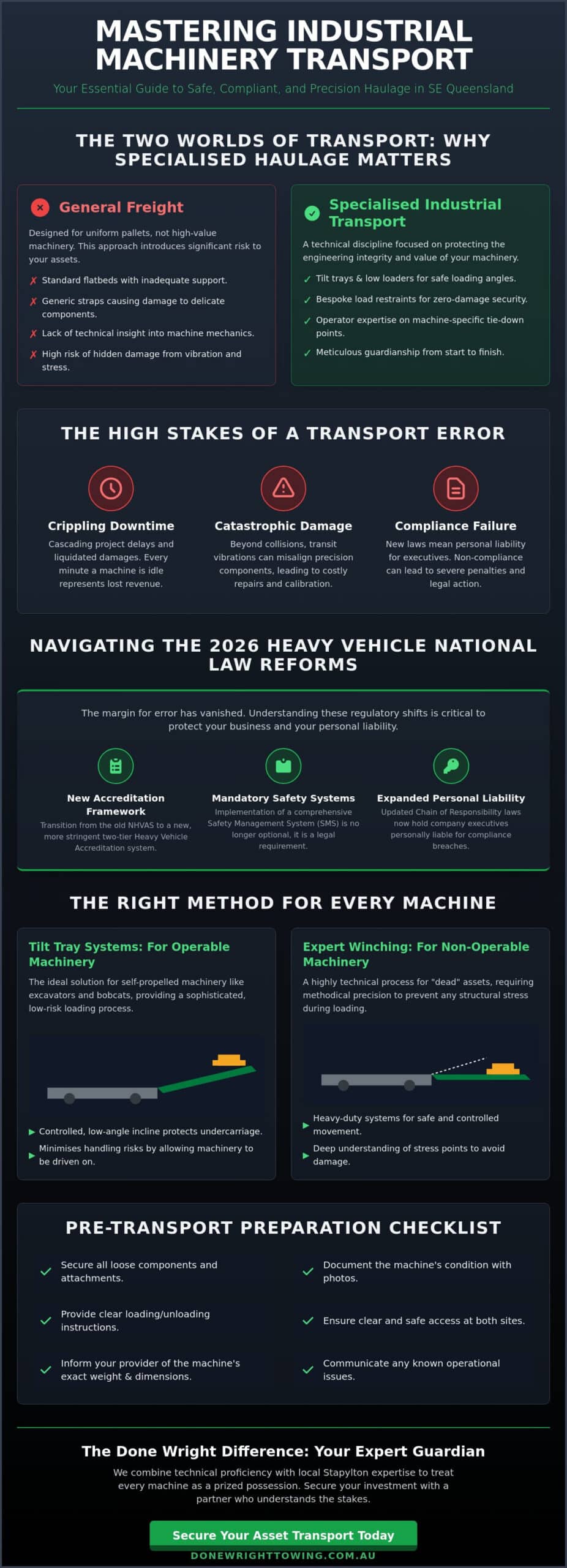
    Industrial machinery transport is far more than a simple logistics task; it is a discipline of precision engineering and meticulous guardianship that demands absolute technical proficiency. You likely understand the mounting pressure of the 2026 Heavy Vehicle National Law reforms, where the margin for error has effectively vanished. The anxiety of potential equipment damage during a complex site-to-site relocation, coupled with the new personal liabilities for company executives under the updated Chain of Responsibility, can make even the most seasoned project manager feel uneasy.

    This guide empowers you to master these complexities by providing a clear roadmap for safe heavy haulage, ensuring your high-value assets arrive in pristine condition while meeting every new regulatory standard. We’ll examine the transition from the old NHVAS to the new two-tier Heavy Vehicle Accreditation framework, the necessity of mandatory Safety Management Systems, and the specialised methods required for zero-damage delivery in the current Australian landscape. By understanding these shifts, you can secure your investments and maintain seamless logistics without the fear of hidden costs or compliance failures.

    Key Takeaways

    • Recognise why standard towing fails precision equipment and how specialised industrial machinery transport protects your high-value engineering investments.
    • Discover the technical advantages of tilt tray systems and why non-operable machinery requires a methodical, expert winching approach.
    • Master the 2026 Heavy Vehicle National Law reforms to mitigate personal liability and navigate the complex Logan to Gold Coast logistical corridor.
    • Follow our comprehensive preparation protocol to ensure your asset is transport-ready and eliminate the risk of damage-related disputes.
    • Learn how the “Expert Guardian” philosophy at Done Wright Towing & Transport secures your prized possessions through technical proficiency and local Stapylton expertise.

    Understanding Industrial Machinery Transport: More Than Just Haulage

    Industrial machinery transport encompasses the sophisticated relocation of over-dimensional, heavy, or high-value assets that form the backbone of your commercial operations. This isn’t a commodity service like general freight; it’s a technical discipline requiring elite handling and deep mechanical insight. When you’re moving a multi-million dollar CNC machine or a massive excavator, you aren’t just paying for a truck. You’re investing in the security of your business’s future. General towing services often lack the specialised equipment and specific knowledge of oversize load regulations necessary to protect such sensitive engineering. Choosing a transport partner based on price alone often overlooks the hidden costs of failure. The investment in a premium service represents a fraction of the total replacement value of the asset. A disciplined approach ensures that the engineering integrity of the machine remains uncompromised from the moment it leaves the floor until it reaches its new destination.

    The High Stakes of Heavy Equipment Relocation

    The financial implications of a transport error extend far beyond the cost of a repair. Operational downtime can cripple a project’s timeline, leading to cascading delays and liquidated damages. Beyond the obvious impact of a collision, subtle technical risks like harmonic vibration or structural stress during transit can misalign precision components. Treating every machine as a prized possession isn’t just a sentiment; it’s a risk-mitigation strategy that ensures your equipment arrives ready to work immediately. Every minute a machine sits idle due to transport damage is a minute of lost revenue. Meticulous care during the loading and unloading phases is the only way to guarantee a zero-damage outcome.

    Key Differences Between General Freight and Industrial Transport

    Standard flatbeds are designed for uniform pallets, whereas industrial machinery transport utilises specialised low loaders, tilt trays, and extendable trailers. These vehicles allow for safer loading angles and better weight distribution. Bespoke load restraint systems are essential. You can’t simply throw a generic strap over a delicate hydraulic line or a glass-panelled control centre. Operators must understand the mechanics of the machine they are hauling to identify safe tie-down points that won’t cause structural deformation. This level of expertise distinguishes a true specialist from a generalist. It requires a steady, methodical pace that prioritises safety over speed, ensuring that every chain and tensioner is placed with absolute precision.

    Common Types of Machinery and Specialised Transport Methods

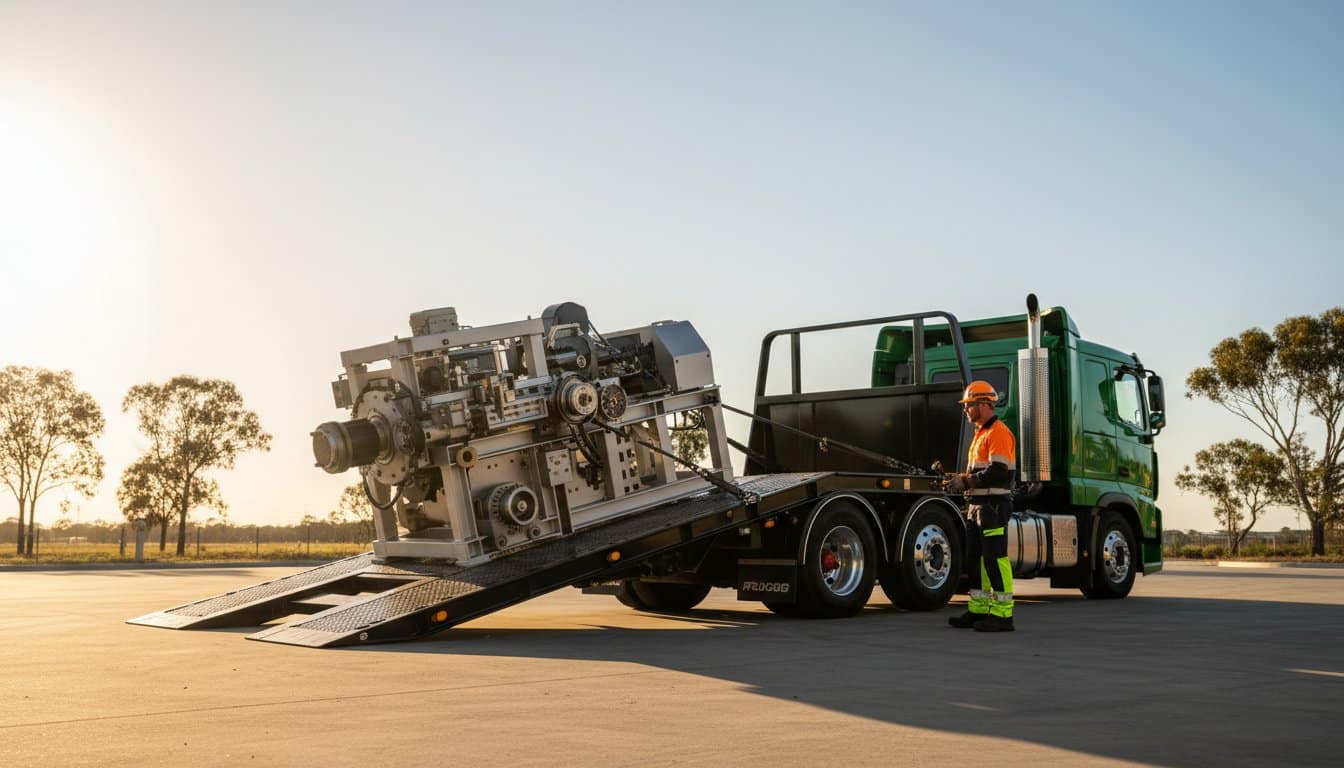
    Successful industrial machinery transport depends on the meticulous pairing of the asset with the correct specialised haulage method. We categorise these critical assets into three primary streams: earthmoving plant, manufacturing systems, and site infrastructure. Each category presents unique physical profiles and technical requirements that demand a bespoke logistical blueprint. For many self-propelled units, tilt tray trucks provide a sophisticated, self-loading solution that minimises handling risks. The hydraulic deck allows for a controlled, low-angle incline, which is vital for protecting the undercarriage and sensitive internal sensors of modern equipment. When you require reliable machinery transport, the focus remains on the technical compatibility between the transport vehicle and the load.

    Transporting non-operable or “dead” machinery introduces a significantly higher level of complexity. These assets cannot rely on their own power for loading, requiring heavy-duty winching systems and precise manual positioning by an experienced operator. The lack of operational steering or braking means the provider must exercise extreme caution to prevent structural stress during the winching process. Every chain and strap is placed with a deep understanding of the machine’s specific stress points to avoid damage during transit. This disciplined approach ensures that even a non-functional machine is treated with the same respect as a prized possession.

    Earthmoving and Construction Plant

    Relocating excavators, bobcats, and rollers requires a profound understanding of load distribution and centre-of-gravity management. Low-clearance trailers and specialised tilt trays are the essential tools for this task, as they provide the stability needed for heavy, tall loads. Adhering to OSHA safety requirements regarding equipment positioning and securement prevents dangerous load shifts on the road. Expert construction transport services treat these machines as high-value investments rather than just heavy iron, ensuring they arrive on-site ready for immediate operation.

    Site Infrastructure: Sheds and Containers

    Precision is the defining factor in site shed transport and the relocation of industrial shipping containers. These oversized structures are prone to racking if not supported correctly during the lifting and transit phases. The arrival process is equally critical; it involves meticulous levelling and placement to ensure doors align and the structure remains safe for your crew. Whether it’s a mobile office or a heavy-duty storage container, the handling process remains disciplined and methodical. For those managing a complex facility relocation, you can discuss your specific infrastructure needs with our team to ensure your site is organised correctly from day one.

    Industrial Machinery Transport: The Complete Guide to Safe Heavy Haulage in 2026

    Safety, Compliance, and Logistics in SE Queensland

    Compliance with the National Heavy Vehicle Regulator (NHVR) standards is the non-negotiable foundation of every successful project. In 2026, the Heavy Vehicle National Law reforms have introduced stricter accountability for all parties in the transport chain. This means that industrial machinery transport requires more than just a capable truck; it demands a comprehensive Safety Management System that anticipates risks before the wheels turn. We treat your equipment with the meticulous care of a guardian, ensuring every permit is secured and every regulation is met with absolute precision. This disciplined approach removes the burden of liability from your shoulders, allowing you to focus on your core operations while we manage the complex legal landscape.

    Navigating Local Regulatory Requirements

    The logistical corridor between Logan and the Gold Coast presents unique challenges for oversize and overmass (OSOM) loads. Navigating the M1 or the industrial arterials of Stapylton requires a deep understanding of local council restrictions and peak traffic windows. Large-scale industrial moves often necessitate pilot vehicles to ensure safe passage through narrow construction zones or high-traffic intersections. While we follow strict Australian standards, looking at international benchmarks like FMCSA transport regulations highlights the universal importance of rigorous safety audits. We coordinate every detail, from the initial route survey to the final site arrival, ensuring no detail is overlooked.

    The Importance of Specialised Load Restraint

    Securing heavy machinery is a matter of physics and engineering. A shifting load isn’t just a regulatory breach; it’s a catastrophic risk to the asset and the public. We utilise specialised, non-abrasive load restraint equipment to secure your machinery without damaging high-end paintwork or delicate external components. Unlike general freight carriers who might rely on standard steel chains, our methodical process involves identifying specific load-bearing points that preserve the machine’s structural integrity. We believe that “near enough” is never acceptable in industrial safety. Every tensioner and strap is checked and re-checked to maintain absolute stability during transit.

    Comprehensive insurance and high-tier licensing form the final layer of our security-focused service. We don’t just move equipment; we protect a prized possession. This elite level of handling ensures that even the most complex site-to-site relocation is executed with quiet confidence and technical proficiency. By choosing a partner that values precision over shortcuts, you eliminate the anxiety of hidden costs and unreliable arrival times. Our presence in the Stapylton hub allows us to respond with local expertise while maintaining the high standards expected by enthusiasts and industrial leaders alike.

    Preparation Checklist: Getting Your Machinery Ready for Transit

    Meticulous preparation is the silent partner of successful industrial machinery transport. While our team provides the technical proficiency and specialised equipment, the security of your asset begins long before the prime mover arrives on-site. We view the preparation phase as a shared responsibility between the owner and the “Expert Guardian” providing the haulage. By following a disciplined pre-transport protocol, you effectively eliminate the variables that lead to loading delays or damage-related disputes. This methodical approach ensures that your high-value engineering is treated with the respect it deserves, allowing for a seamless transition from its current position to the transport deck.

    Mechanical and Physical Preparation

    Securing the physical integrity of the machine involves more than just a cursory check. All articulating components, such as excavator arms or crane booms, must be lowered to their lowest possible centre of gravity and mechanically locked. Remove or independently secure all loose attachments, buckets, and internal cabin items that could shift during transit. Fluid levels should be checked for leaks, and battery isolation is mandatory to prevent electrical hazards or accidental activation. An industrial asset is considered transport-ready in 2026 when all articulating components are mechanically locked, loose attachments are independently secured, and all hazardous energy sources are isolated according to the manufacturer’s transit specifications. Taking these steps protects delicate internal systems from the unique stresses of heavy haulage.

    Site Access and Documentation

    The logistical success of a move often depends on the environment at the pickup and drop-off points. You must ensure that the designated loading area is clear of debris, level, and capable of supporting the combined weight of the machinery and the transport vehicle. Identifying overhead hazards like low-hanging power lines or branches is essential for over-dimensional loads. Documentation acts as your primary shield in risk management. Ensure all serial numbers are recorded and insurance certificates are current and accessible. Communicating site-specific hazards, such as soft ground or tight entry gates, to the transport team early allows for a more organised and methodical execution of the task. For a relocation plan tailored to your specific site requirements, contact our specialist team for a precision transport assessment.

    Proper preparation is the most effective way to de-risk the relocation of business-critical assets. When a machine is presented in a clean, isolated, and documented state, the loading process becomes a precision exercise rather than a problem-solving session. This discipline reflects the high standards of the manufacturing and construction industries we serve, ensuring that every prized possession is moved with absolute confidence and technical proficiency.

    The Done Wright Difference: Precision Transport in Stapylton

    Done Wright Towing & Transport operates on a fundamental promise embedded within our name: every task must be executed correctly the first time. We approach industrial machinery transport through the lens of an Expert Guardian, acknowledging that your equipment is a business-critical asset that demands meticulous care. By moving away from the aggressive tone of general haulage, we offer a premium, security-focused service that treats your machinery as a prized possession. Our base in the Stapylton industrial hub provides a strategic advantage, allowing us to serve the M1 corridor with unparalleled efficiency. Whether you are moving a single unit or an entire facility, our disciplined methodology ensures your engineering remains uncompromised during every stage of the journey.

    For clients managing projects that extend beyond state lines, we offer specialised interstate backloads. This service provides a methodical and cost-effective solution for long-distance relocation without sacrificing our high standards of precision. We don’t believe in shortcuts; we believe in a planned, rhythmic progression that de-risks the transport process for every customer. This commitment to reliability is why industry leaders trust Done Wright Towing & Transport to handle their most valuable investments with quiet confidence and technical proficiency.

    Local Expertise for South-East Queensland

    As a family-owned and independently operated business, we possess a deep, localised knowledge of the arterial routes connecting Logan, the Gold Coast, and Brisbane. This expertise allows us to navigate the specific logistical hurdles of the region, from local council restrictions to the complexities of the Stapylton industrial zones. We are equipped to manage both scheduled site-to-site moves and urgent breakdown recoveries with the same level of detail-oriented care. Our presence in the local community means we aren’t just a service provider; we are a reliable partner invested in the success of Queensland’s manufacturing and construction sectors.

    Why Precision Handling Matters for Your Bottom Line

    Expert handling is a direct investment in the longevity of your machinery. By utilising non-abrasive equipment and bespoke load restraint systems, we prevent the subtle structural stresses and surface damage that lead to increased maintenance costs over time. The peace of mind that comes from a fully licensed and insured transport partner allows you to focus on your core business objectives without the anxiety of regulatory breaches or equipment failure. Done Wright Towing & Transport provides the steady, structured logistics required to keep your operations moving forward. To secure your next move with a team that values engineering and craftsmanship, request a professional machinery transport quote today.

    Securing the Future of Your Industrial Operations

    Successfully managing industrial machinery transport in 2026 requires a disciplined blend of regulatory foresight and technical precision. By adhering to the updated NHVR standards and following a methodical preparation protocol, you protect both your financial investment and your operational timeline. You’ve learned that treating heavy equipment as a prized possession, rather than just a logistical task, is the definitive way to ensure zero-damage delivery across every project.

    Done Wright Towing & Transport provides the elite handling your assets deserve through our specialised tilt tray fleet and deep expertise in the Stapylton and South-East Queensland industrial zones. We’re fully licensed and insured for heavy haulage; this offers you the peace of mind that comes from a partner who understands the high stakes of your industry. Choosing a provider with expert local knowledge ensures that your site-to-site logistics are executed with quiet confidence and technical proficiency.

    Get Your Machinery Moved Safely with Done Wright Towing & Transport and experience the certainty of a relocation performed with absolute precision. Your machinery is ready for its next project; let’s ensure it arrives in pristine condition and ready to work immediately.

    Frequently Asked Questions

    How much does industrial machinery transport cost in SE Queensland?

    Transport costs are determined by the asset’s specific dimensions, total weight, and the distance travelled across the South-East Queensland corridor. While industry averages for construction machinery often start from $4.50 per kilometre, your total investment will depend on the complexity of the load. Factors such as the requirement for pilot vehicles or specialised Oversize/Overmass (OSOM) permits will influence the final cost structure for your relocation.

    Do I need special permits to move my machinery on public roads?

    Permits are mandatory for any industrial load that exceeds standard legal dimensions for width, height, or weight. The National Heavy Vehicle Regulator (NHVR) manages these requirements to ensure road safety and infrastructure protection. It’s essential to verify the exact dimensions of your equipment early so that any necessary OSOM permits or pilot vehicle arrangements can be organised well before the scheduled move date.

    What is the best way to secure an excavator for transport?

    Securing an excavator requires lowering the boom and bucket to the trailer deck and engaging all mechanical locks to prevent movement. You must use the designated tie-down points specified by the manufacturer to avoid structural stress or deformation of the chassis. Utilising non-abrasive, high-tensile restraints ensures the machine remains stable without damaging the high-end finish or sensitive hydraulic lines during transit.

    Does my business insurance cover my machinery while it is on a tow truck?

    Standard business insurance policies frequently exclude or strictly limit coverage for assets while they are in transit on a third-party vehicle. It’s vital to consult your insurance provider to confirm your current level of protection for off-site movements. Choosing a transport partner that maintains comprehensive, high-tier transit insurance provides a critical layer of security and peace of mind for your business-critical equipment.

    Can you transport non-operable or broken-down industrial equipment?

    Non-operable or broken-down equipment can be safely relocated using specialised winching systems and heavy-duty loading methods. This process requires a disciplined, methodical approach to ensure the winching points can handle the load without causing structural damage. Our team specialises in these complex recoveries, treating every non-functional machine with the same meticulous care and respect as a functional, prized possession.

    What is a tilt tray truck, and why is it used for machinery?

    A tilt tray truck features a hydraulic deck that inclines to ground level, allowing machinery to be driven or winched directly onto the platform. This vehicle is preferred for industrial machinery transport because it provides a controlled, low-angle loading process that protects the undercarriage. It eliminates the need for external ramps or cranes, significantly reducing the risks associated with loading and unloading precision engineering.

    How far in advance should I book my machinery relocation?

    Booking your relocation at least two to four weeks in advance is highly recommended to secure your preferred timeline and ensure equipment availability. If your move requires specific permits or the coordination of pilot vehicles, additional lead time is necessary to satisfy regulatory bodies. Early booking allows for a structured planning process that ensures every safety standard is met with quiet confidence and technical proficiency.

    What information do I need to provide for an accurate transport quote?

    To receive a precise quote, you must provide the exact dimensions (length, width, height) and the verified weight of the machinery. Detailed information regarding the machine’s operability and the specific site access conditions at both the pickup and delivery points is also essential. This data allows for the selection of the correct specialised vehicle and the planning of a secure, compliant route for your asset.

  • Vehicle Transport Security: Busting the Myths of Moving Your Pride and Joy

    Vehicle Transport Security: Busting the Myths of Moving Your Pride and Joy

    Handing over the keys to your prized classic or custom-built performance car shouldn’t feel like a high-stakes gamble with your hard-earned investment. You likely worry about every centimetre of undercarriage clearance or the possibility of abrasive straps marring a flawless paint job. It’s a valid concern, especially when the industry is occasionally shadowed by uninsured operators who lack the specialised gear required for elite assets. Understanding the pillars of genuine vehicle transport security is the first step toward ensuring your pride and joy arrives in the exact condition it left your driveway.

    We’re here to bust the common myths surrounding car carriage and provide the total peace of mind you deserve. You’ll discover how professional handling protects your high-value investment through meticulous damage-prevention techniques and comprehensive insurance coverage. We’ll also preview the critical July 2026 updates to the Heavy Vehicle National Law, including the mandatory Safety Management Systems that distinguish an expert guardian from a standard operator. From specialised soft-strap technology to rigorous new audit standards, you’ll learn exactly what to look for when choosing a partner for your prestige or classic car transport.

    Key Takeaways

    • Understand that true security is a multi-layered shield involving physical, legal, and operational protections rather than just a simple padlock.
    • Discover the advantages of non-abrasive, soft-strap tie-down systems that protect delicate rims and pristine paintwork from damage during transit.
    • Learn how the Chain of Responsibility (CoR) framework and verified insurance coverage form a vital part of your vehicle transport security strategy.
    • Master essential preparation techniques, such as the “quarter-tank rule,” to balance weight distribution and fire safety for your high-value investment.
    • Recognise why a specialist operator with a dedicated hub in Stapylton provides the elite handling and local expertise required for prestige car transport.

    What is Vehicle Transport Security? Beyond the Padlock

    Vehicle transport security is often misunderstood as merely ensuring a car isn’t stolen during a transit stop. While physical theft prevention is critical, true security represents a sophisticated, multi-layered shield that encompasses legal protection, operational precision, and meticulous physical care. It’s a commitment to maintaining the absolute integrity of an asset from the moment it’s loaded until it’s safely offloaded at its destination. From our Stapylton hub, we provide this elite level of protection for South East Queensland collectors who understand that their vehicle is a significant financial and emotional investment.

    Relying on “cheap” transport options often results in compromises on these invisible yet vital security features. A budget operator might lack the comprehensive insurance or the specialised training required to handle a rare classic, effectively leaving your investment vulnerable to risks that a professional “Expert Guardian” would systematically eliminate. Whether we are managing Prestige & Classic Car Transport, Machinery Transport, or Caravans & Boats, our methodology remains focused on precision. We don’t just move items; we secure them through a disciplined process that prioritises the preservation of engineering and craftsmanship.

    The Psychology of Vehicle Security

    Handing over the keys to a prized possession naturally creates a sense of anxiety. We recognise that for enthusiasts, a vehicle is far more than just a task on a manifest. The first line of security isn’t a strap or a lock, but rather clear transparency and consistent communication. Professional documentation, such as detailed high-resolution photos and comprehensive condition reports, provides a factual baseline for the journey. This level of meticulous detail ensures that every party is accountable, providing the psychological reassurance that your investment is being treated with the respect it deserves.

    The Myth of the “Standard” Tow

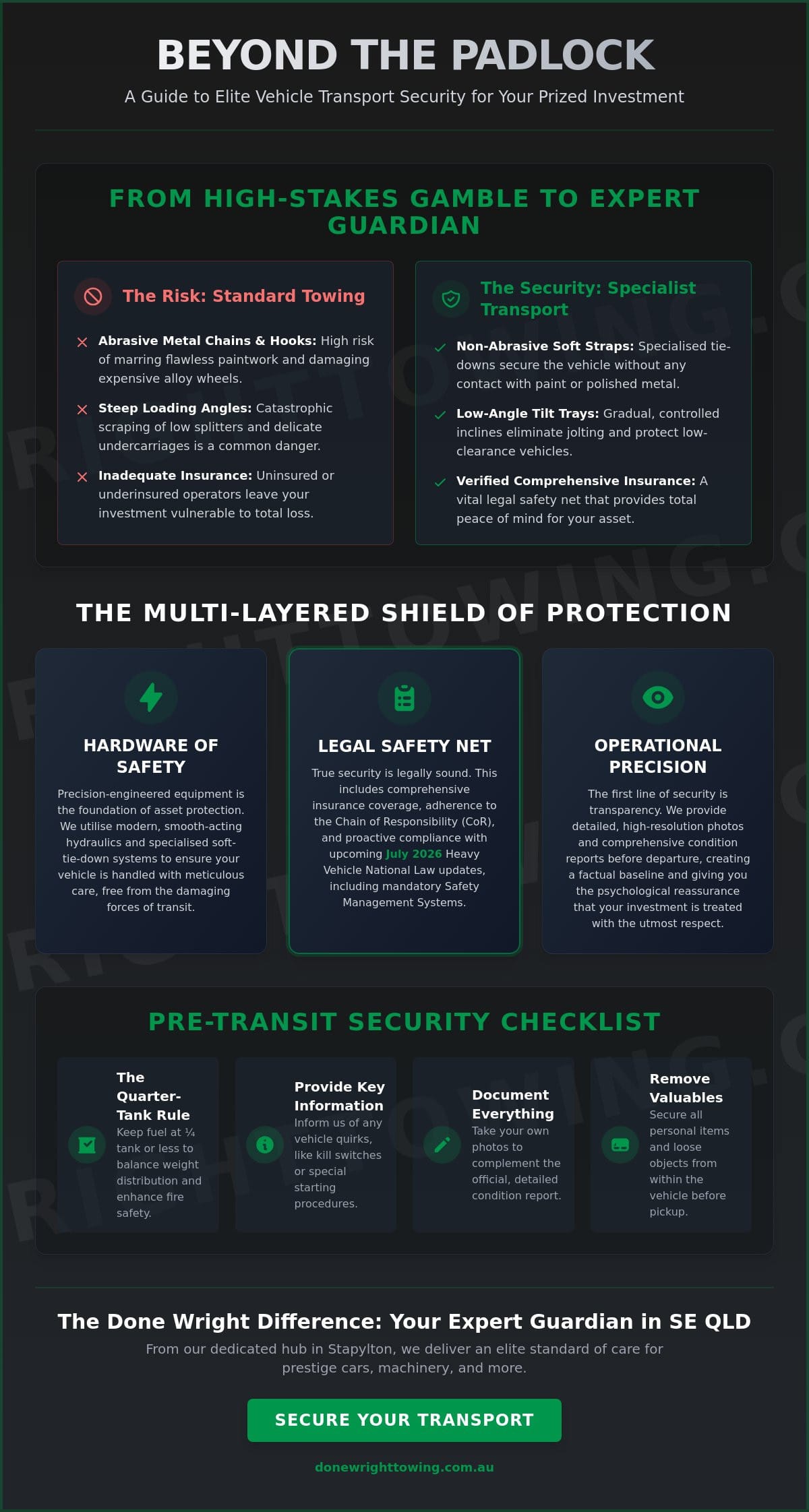
    Many owners mistakenly believe that all transport methods are essentially the same. This is a dangerous myth that can lead to heartbreak. A standard tow often relies on heavy metal chains and aggressive hooks that can easily mar expensive alloys or damage delicate undercarriages. High-value assets require a specialised approach that replaces metal contact with non-abrasive, soft-tie-down systems. This is a core component of our prestige car transport service. By using specialised equipment, we ensure that even the lowest-slung supercars or the rarest vintage models remain unblemished by the shifting forces of the road. True vehicle transport security is found in the hardware of safety, ensuring your pride and joy is protected from every vibration and jolt.

    The Hardware of Safety: Soft Straps and Specialist Tilt Trays

    A common misconception persists in the logistics industry that metal chains and heavy-duty hooks are the only reliable way to secure a heavy load. While this rugged approach might suffice for scrap metal or basic industrial equipment, it represents a significant threat to the integrity of a high-value asset. True vehicle transport security requires a shift from brute force to technical precision. We replace these archaic methods with non-abrasive, soft-tie-down systems. These specialised straps are designed to secure the vehicle without ever making contact with sensitive paintwork or polished metal surfaces, ensuring the engineering remains as pristine as the day it was manufactured.

    The hardware used for loading is just as critical as the equipment used for transit. Standard towing equipment often lacks the nuanced control needed for high-performance vehicles. We utilise specialised tilt trays equipped with modern, smooth-acting hydraulics. These systems allow for a gradual, controlled incline that eliminates the violent jolting often associated with older recovery vehicles. This methodical approach ensures that every movement is planned and executed with the quiet confidence of a specialist who understands the financial stakes involved. Precision is our baseline.

    Protecting the Undercarriage

    Lowered performance cars face specific security risks during the loading phase. A steep loading angle can lead to catastrophic scraping of the front splitter or underbody components. To mitigate this, we employ low-angle trays and specialised ramps that provide a near-level transition from the bitumen to the truck bed. This level of care is essential for maintaining the structural and aesthetic condition of your investment. If you are moving a high-performance model, our guide on performance car towing details the specific engineering involved in damage-free transit.

    Wheels and Tyres: The Soft-Touch Approach

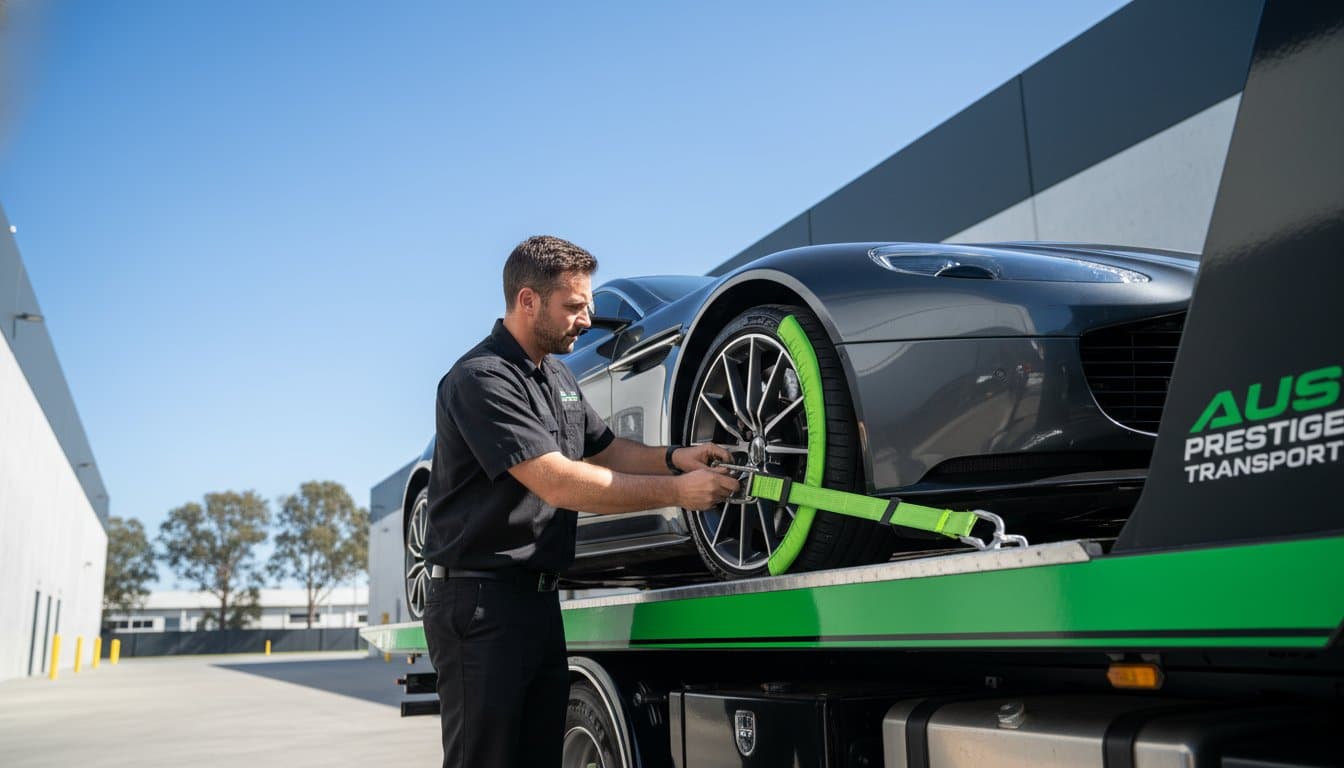
    Securing a vehicle through the wheel spokes is a common error that risks scratching expensive alloys and stressing the suspension geometry. Our method utilises over-the-tyre webbing. This technique applies downward pressure directly to the rubber, locking the vehicle into a stationary position without any metal-on-metal contact. It provides maximum stability during transit while allowing the vehicle’s own suspension to absorb road vibrations naturally. This meticulous attention to detail is why collectors trust us with their Prestige & Classic Car Transport needs across South East Queensland. We treat every set of rims with the same respect we would show our own.

    Vehicle Transport Security: Busting the Myths of Moving Your Pride and Joy

    The physical safeguards of soft straps and hydraulic tilt trays provide the immediate protection your vehicle needs on the road. However, true vehicle transport security is incomplete without a robust legal safety net. A common and costly myth among enthusiasts is the belief that every tow truck operator carries comprehensive insurance for high-value cargo. In reality, many budget carriers only hold basic “hook insurance.” This limited coverage typically only applies while the vehicle is physically attached to the towing apparatus and often features liability caps that fall far short of the replacement value for a prestige or classic car.

    In Australia, the legal landscape is governed by the Chain of Responsibility (CoR). This principle ensures that everyone involved in the transport task, not just the driver, shares legal accountability for safety and compliance. With the major overhaul of the Heavy Vehicle National Law (HVNL) commencing on July 1, 2026, these obligations are becoming even stricter. Professional operators must now implement documented Safety Management Systems (SMS) to manage risks. Choosing a provider with a physical hub in Stapylton ensures local accountability and provides a verifiable point of contact, which is far more secure than dealing with a faceless national broker who may outsource your pride and joy to an unvetted sub-contractor.

    Vetting Your Transport Provider

    Ensuring your asset is protected requires asking the right questions before the truck arrives. You should verify that the carrier holds specific transit insurance rather than just public liability. Ask if their policy covers the total market value of your vehicle during loading, transit, and unloading. Family-owned businesses often provide a higher level of security accountability because their reputation is directly tied to the service they provide. They act as an “Expert Guardian” for your asset, ensuring that licensing and industry accreditations are always current and auditable under the new 2026 Master Code guidelines.

    Documentation as a Security Tool

    Digital documentation is a vital component of modern transport security. A professional “Pre-Transit Inspection” should never be rushed. This process involves capturing high-resolution photographic evidence of the vehicle from multiple angles before the winch is even engaged. These digital condition reports protect both the owner and the transporter by creating an indisputable record of the vehicle’s state at pickup. We ensure every detail, from the condition of the alloys to the integrity of the paintwork, is recorded. This transparent approach de-risks the process, giving you the confidence that your investment is being handled with the methodical care it requires.

    Preparing Your Vehicle for Maximum Transit Security

    While a professional carrier provides the technical hardware and legal protection, your own preparation acts as the final, critical layer of vehicle transport security. Securing an asset for the road requires a methodical approach that goes beyond simply locking the doors. High-performance aerodynamics, such as large rear spoilers or front splitters, can experience unusual wind resistance when positioned on a tilt tray. Retracting antennas and folding side mirrors reduces the vehicle’s profile, minimising the risk of catch-points during the loading process. These small adjustments ensure that the “Expert Guardian” approach begins long before the truck departs your driveway.

    Fuel levels are another essential consideration for transit safety. We recommend the “Quarter-Tank Rule,” which involves keeping just enough petrol to allow for loading and unloading. A full tank adds unnecessary weight and increases the fire load of the transport vehicle, whereas an empty tank can lead to fuel pump issues during winching. Additionally, modern alarm systems with tilt or motion sensors should be placed into “transport mode” or deactivated. This prevents the battery from draining and ensures the siren doesn’t trigger repeatedly due to the natural vibrations of the journey. A clean car is a transparent car; removing road grime allows for a flawless pre-transit inspection where every centimetre of paintwork is visible.

    The Pre-Transport Checklist

    • Step 1: Conduct a thorough wash and dry to reveal the true condition of the surface and alloys.
    • Step 2: Remove all personal belongings, E-tags, and aftermarket GPS units to ensure internal security.
    • Step 3: Check that tyre pressures are at the manufacturer’s recommended levels to provide a stable footprint on the tray.
    • Step 4: Take your own high-resolution, timestamped photos from every angle, including the roof and undercarriage.

    Special Considerations for Classics

    Vintage assets often require a higher level of mechanical intuition. Older bonnet and boot latches may not be as robust as modern equivalents, so we recommend ensuring these are fully engaged or even temporarily taped if the mechanism is known to be temperamental. For “non-runners” or project cars, vehicle transport security involves specialised winching protocols that avoid stressing aged chassis components. Collectors moving a vintage vehicle should also review our comprehensive classic car towing protection and comparison guide to understand the full range of non-abrasive equipment and transport options available in 2026. If you are preparing a rare find for a move, refer to our car transport checklist for a comprehensive, printable guide. Ready to move? You can book your secure car transport today with our Stapylton-based team.

    Why Done Wright is the Choice for Secure SE QLD Transport

    Choosing a partner for your high-value asset isn’t just about finding a truck; it’s about finding a specialist who understands the nuances of vehicle transport security in the South East Queensland context. Our operational hub in Stapylton serves as a central point for Logan and Gold Coast residents who require more than just a standard tow. We’ve built our reputation on the “Expert Guardian” model, where every prestige model or rare classic is treated as if it were part of our own collection. This isn’t a generic logistics task; it’s a disciplined execution of safety protocols designed for enthusiasts who value precision above all else.

    Our fleet is specifically tailored for the unique requirements of performance and luxury vehicles. We don’t just use standard equipment; we utilise the soft-strap technology and hydraulic tilt trays discussed earlier to ensure damage-free results. Whether we are navigating the heavy traffic of the M1 or the winding backroads of the SEQ hinterland, our drivers apply a level of meticulous care that generalist operators simply cannot match. We understand the specific regional challenges, from unpredictable weather patterns to the varying bitumen conditions across the Logan and Gold Coast corridors. This local expertise ensures your asset is protected against the specific environmental risks of our region.

    Family-Owned Security and Accountability

    Dealing directly with a family-owned business significantly reduces the communication gaps that often compromise security. When you speak with us, you’re talking to the people whose name is on the line. This direct accountability ensures that the “Doing it Wright” promise is more than just clever wordplay; it’s a verbal commitment to correct execution the first time, every time. We maintain an elite standard of service because we are personally invested in the safety of your machinery, boat, or classic car. This personal stake in the outcome provides a level of vehicle transport security that large-scale franchises often struggle to replicate.

    Your Next Steps for Secure Transport

    Getting started with a secure transport plan is a straightforward, professional process. We provide tailored quotes that reflect the specific needs of your high-value investment, ensuring that all insurance and logistical requirements are met before we arrive. When our team reaches your door, you can expect a professional arrival, a thorough pre-transit inspection, and the immediate peace of mind that comes from seeing specialised gear in action. Our methodical approach is designed to de-risk the entire journey for you. Protect your investment and get a secure transport quote from Done Wright today.

    Secure Your Investment with the Expert Guardian Approach

    True vehicle transport security is the culmination of elite-level hardware and a disciplined, methodical operational process. You now understand that protecting a high-value asset involves more than just a standard tow; it requires a multi-layered shield of physical care and legal accountability. By choosing specialised non-abrasive equipment and adhering to the 2026 safety standards, you ensure your pride and joy remains in pristine condition from pickup to delivery. Preparation is your final layer of defence, turning a complex logistical task into a successful mission of preservation.

    As a family-owned operation based in Stapylton, we take personal pride in every vehicle we move across South East Queensland. We are fully licensed and insured for high-value assets, providing the local expertise needed to navigate the M1 and regional backroads with absolute precision. You don’t have to settle for the risks of an unvetted carrier when professional handling is a simple conversation away. Our team is ready to provide the elite handling and peace of mind your investment requires.

    Secure your vehicle’s journey; contact Done Wright for a prestige transport quote. We look forward to treating your prized possession with the meticulous care it deserves.

    Frequently Asked Questions

    Is my car 100% safe during vehicle transport?

    No transport can claim absolute zero risk, but choosing a specialist operator reduces the possibility of an incident to the absolute minimum. We implement a documented Safety Management System (SMS) as required by the July 1, 2026, HVNL reforms. This disciplined approach ensures that every risk is identified and mitigated through methodical planning and professional execution, providing the highest level of vehicle transport security available today.

    What kind of insurance covers my car while it is on a tow truck?

    You should look for comprehensive transit insurance that covers the full market value of your asset during loading, transit, and unloading. Many budget operators only carry basic hook insurance, which is often insufficient for high-value investments. We maintain elite-level coverage specifically for Prestige & Classic Car Transport, Machinery Transport, and Caravans & Boats to ensure total financial security and peace of mind for our clients.

    Will using a tilt tray damage my lowered performance car?

    A specialist low-angle tilt tray prevents damage to lowered performance cars by providing a near-level transition during the loading phase. Standard tow trucks often have steep angles that can scrape front splitters or delicate undercarriage components. Our modern hydraulic systems allow for precise, incremental movements that eliminate the violent jolts associated with older equipment, ensuring your vehicle’s engineering and bodywork remain uncompromised throughout the process.

    Do I need to be present during the pickup and delivery for security?

    We strongly recommend being present at both pickup and delivery to verify the high-resolution digital condition reports. This transparent process ensures that both the owner and the transporter agree on the vehicle’s state before the journey begins. If you cannot be there personally, you should appoint a trusted representative to sign off on the pre-transit inspection and photographic evidence to maintain the chain of accountability.

    How are prestige cars secured differently than regular cars?

    Prestige cars require a non-abrasive approach using specialised soft-tie-down equipment instead of traditional metal chains or harsh ratchets. This method enhances vehicle transport security by securing the vehicle via the tyres rather than the chassis or wheel spokes. This prevents any surface marring, rim scratches, or suspension stress, treating the car as a prized possession rather than just another task on a manifest.

    What happens if my vehicle is damaged during transport?

    If damage occurs, the digital condition report and timestamped photos taken at pickup serve as your primary evidence for a transit insurance claim. Professional operators will have a clear, auditable process for managing incidents under the 2026 National Audit Standards. Dealing with a family-owned Stapylton hub ensures you have direct access to the owners to resolve any concerns with the level of accountability and care you expect.

    Can I leave personal items in the boot during transport?

    You should remove all personal belongings, E-tags, and aftermarket GPS units before the vehicle is loaded for transit. These items are generally not covered by transit insurance and can shift during movement, potentially causing internal damage to the cabin or boot lining. Keeping the vehicle empty also ensures the weight remains consistent with the transport manifest, which is a key requirement for regulatory compliance and safety.

    How does Done Wright protect my car from road debris during transit?

    We protect your vehicle from road debris by using specialised tilt trays and strategic positioning on the transport vehicle. Our methodology involves a meticulous loading process that minimises exposure to kick-up from the road surface. By maintaining a high standard of equipment maintenance and using professional handling techniques, we ensure your paintwork remains protected throughout the South East Queensland journey from Stapylton to your destination.