Tag: car transport Australia

  • Safe Classic Car Transport & Insurance: The 2026 Expert Guide

    Safe Classic Car Transport & Insurance: The 2026 Expert Guide

    Would you trust a rare, high-value investment to a tow operator who treats a vintage Porsche the same way they treat a rusted wreck? For most Australian collectors, the answer is a resounding no. You have likely spent years meticulously restoring or sourcing your vehicle, so the fear of a steep loading angle scraping the undercarriage or a coarse tie-down marring the paint is entirely justified. Finding the right classic car transport insurance and a provider who respects the engineering of your asset is the difference between a seamless relocation and a costly disaster.

    This guide provides the technical blueprint for a damage-free arrival, helping you master the steps required to move your prestige vehicle without risking a single scratch or mechanical strain. We will explore the specialised equipment necessary for low-clearance cars and the prep work needed for 2026’s regulatory environment. You will gain a clear understanding of how to verify insurance coverage and ensure your transport partner uses the non-abrasive methods your car deserves for total peace of mind.

    Key Takeaways

    • Identify why suspension components should never be used as primary anchor points and how non-abrasive equipment prevents costly paint abrasions.
    • Understand the technical necessity of specialised tilt trays for low-clearance vehicles to avoid undercarriage damage during the loading and unloading phases.
    • Master the nuances of classic car transport insurance to ensure your prestige investment is shielded by comprehensive, high-value protection.
    • Implement a meticulous pre-transport checklist, including high-resolution documentation and fluid management, to guarantee a seamless handover.
    • Evaluate the distinct security benefits of open versus enclosed transport to determine the safest method for your vehicle’s specific requirements.

    The Risks of Classic Car Transport: Why Specialised Handling Matters

    Relocating a vintage or prestige vehicle involves far more than simple logistics. It’s a high-stakes operation where the emotional and financial value of a non-replaceable asset is on the line. Generalist towing services often treat every vehicle with the same rugged approach, but classic cars require a level of meticulous care that accounts for aged components and delicate finishes. While a robust policy for classic car transport insurance is essential for peace of mind, the ultimate objective is to avoid the need for a claim through expert handling.

    Several factors contribute to the risk profile of transporting a classic:

    • Mechanical Strain: Constant road vibrations during transit can cause aged gaskets and seals to fail, leading to unexpected leaks.
    • Structural Integrity: Vintage metals are often more brittle or prone to deformation than modern counterparts when subjected to improper tension.
    • Finish Protection: Custom paintwork and chrome are highly susceptible to micro-abrasions from standard industrial equipment.

    When evaluating open vs. enclosed carriers, the decision should be based on the specific vulnerabilities of your vehicle’s engineering and the level of protection required from road debris.

    Frame Stress vs. Wheel Securing

    Using a chassis hook on a vintage frame is a recipe for disaster. Older metal doesn’t have the same resilience as modern high-tensile steel. It’s susceptible to bending or fatigue when subjected to the high-tension forces of industrial winches. Frame fatigue is the structural weakening or permanent deformation of a vintage chassis caused by excessive tension from improper anchor points during transit. Professional transporters instead utilise over-the-tyre strapping. This method allows the car’s own independent suspension to work naturally during the journey. It absorbs road shocks without transferring stress directly into the frame, ensuring the vehicle arrives exactly as it left.

    Abrasive Damage Prevention

    Technical Safeguards: Loading and Securing Your Pride and Joy

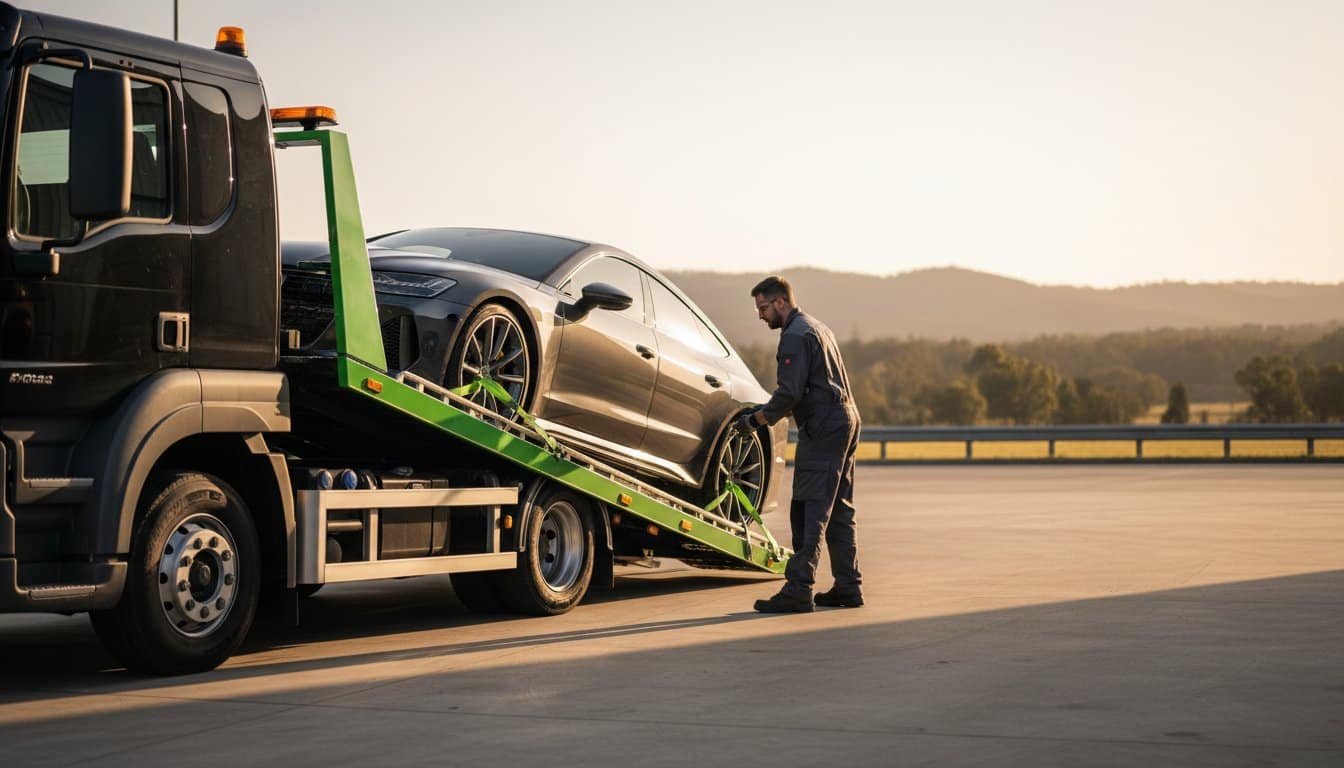
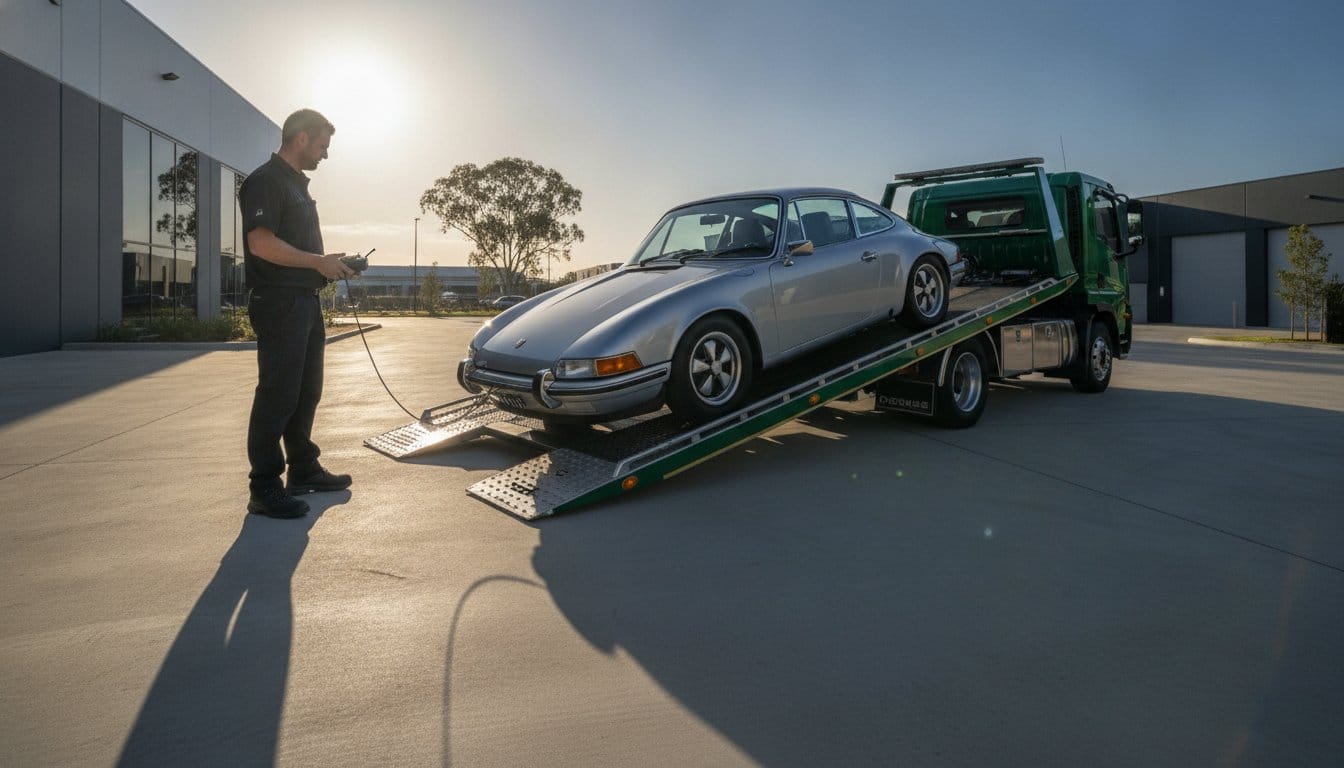
    Loading a prestige vehicle is a technical exercise in geometry and patience. The primary hurdle for many owners is the “Approach Angle”. A standard tow truck’s steep incline can instantly shatter a carbon-fibre front splitter or scrape a pristine undercarriage. To mitigate this, specialised tilt trays are the industry standard for high-value assets. These vehicles allow the tray to sit at a much lower angle, often just a few degrees from the horizontal, ensuring that even the most grounded performance cars clear the ramp without a millimetre of contact.

    Owners should prioritise reputable transport carriers who demonstrate a clear understanding of these physics. For vehicles that are currently non-running, the process becomes even more delicate. A professional operator will never pull a car by its suspension arms or steering rack. Instead, winching is conducted solely via verified recovery points or the chassis, using high-tensile synthetic ropes that offer a smoother pull than traditional steel cables. This meticulous approach ensures the mechanical integrity of the car remains uncompromised from the moment it leaves your driveway.

    Precision Loading with Tilt Trays

    Modern tilt trays are engineered to reduce the incline to an absolute minimum. For ultra-low performance classics, expert operators often employ “ramps within ramps.” This technique involves placing secondary, low-gradient ramps at the base of the tilt tray to extend the approach distance. It effectively flattens the transition from the road to the truck. Every centimetre of movement is monitored to ensure the exhaust, air dams, and side skirts remain clear of the tray surface. Precision is paramount; a single rushed movement can result in structural damage that even the best restoration cannot easily hide.

    The Four-Point Tie-Down Protocol

    Once the vehicle is positioned, implementing a rigorous securing protocol is vital. A professional four-point tie-down ensures the load is distributed evenly across the tray, which prevents the vehicle from “walking” or shifting during transit. This process includes:

    • Soft-Tie Method: Utilising non-abrasive webbing loops that wrap around the tyres or wheels, avoiding any metal-on-metal contact with the rims or bodywork.
    • Secondary Safety: Placing heavy-duty wheel chocks at all four corners and using safety chains as a redundant backup, ensuring they remain slack enough to avoid frame stress.
    • Final Calibration: Setting the handbrake and placing the vehicle in the manufacturer-recommended gear for transport, usually neutral for automatics or a specific gear for manuals.

    While comprehensive classic car transport insurance provides a necessary financial safety net, these physical safeguards are what truly preserve your investment’s condition. For collectors in SE QLD, choosing a partner that follows these disciplined steps is the only way to guarantee a damage-free arrival. You can request a quote for prestige transport to see how these technical safeguards are applied to your specific vehicle, ensuring it is treated with the respect its engineering deserves.

    Carrier Options: Comparing Open vs. Specialised Tilt Tray Transport

    Selecting the appropriate carrier is a pivotal decision that balances the specific vulnerabilities of your vehicle against the logistical realities of the journey. While many collectors assume enclosed transport is the only viable method for high-value assets, modern open tilt trays offer a sophisticated and highly secure solution for regional transit. The choice ultimately hinges on the vehicle’s “concours” status, the total distance of the move, and the prevailing weather forecasts for South East Queensland. Regardless of the equipment used, verifying that your provider maintains comprehensive classic car transport insurance is the first step in de-risking the relocation process.

    Professional carriers operate with a level of discipline that far exceeds standard towing services. While Australia maintains its own rigorous transport standards, elite logistics firms often look to international federal safety regulations as a benchmark for load securing and operational safety. This global perspective ensures that whether your car is on an open tray or inside a hard-sided trailer, the technical execution remains flawless.

    When to Choose an Open Tilt Tray

    Open tilt trays are the workhorses of prestige car relocation within the Brisbane, Logan, and Gold Coast corridors. They provide several distinct advantages for local moves:

    • Constant Monitoring: The driver has an unobstructed view of the vehicle through the rear-view mirrors, allowing for immediate detection of any strap movement or shifting.
    • Operational Efficiency: These vehicles are ideal for navigating tight residential streets or private driveways where a large enclosed trailer might struggle.
    • Security Standards: High-end open carriers still utilise the “Soft-Tie” protocol and precision loading angles discussed previously, ensuring mechanical safety without the premium price tag of a climate-controlled unit.

    The Enclosed Transport Advantage

    Enclosed transport acts as a mobile vault for your investment. This method is often vital when moving vehicles interstate or during seasons of volatile weather. The M1 motorway can be a harsh environment; road debris, loose gravel, and the intense Queensland UV rays pose a constant threat to original nitrocellulose lacquers or custom wraps. A hard-sided trailer eliminates these variables entirely. It also provides a layer of “stealth” security, keeping your asset away from prying eyes during rest stops or overnight stays. For owners of rare, six-figure investments, the additional cost of an enclosed unit is a small price for the absolute protection it affords against the unpredictable elements.

    Cost-conscious owners might also consider interstate backloads. This involves utilising the empty space on a carrier returning from a previous delivery. It’s a highly efficient way to access premium transport at a reduced rate, provided you work with a specialist who doesn’t compromise on their classic car transport insurance or handling standards just because the route is a back-haul. Choosing the right partner means finding an “Expert Guardian” who treats a backload with the same meticulous care as a primary delivery.

    The Ultimate Pre-Transport Checklist for Owners

    Preparation is the final pillar of the “Done Wright” philosophy. It is a disciplined strategy designed to eliminate any variables that could compromise your vehicle’s safety during transit. While the carrier provides the technical expertise and specialised equipment, the owner’s role in preparing the asset is what ensures a seamless handover. This meticulous process begins long before the tilt tray arrives at your driveway in Stapylton or the Gold Coast.

    The “High-Res” walkaround is your most powerful tool for condition documentation. You should capture time-stamped, high-definition photographs and video of every panel, the glass, the interior, and specifically the undercarriage. This creates an indisputable record of the vehicle’s state. Additionally, fluid management is critical for vintage assets. Older mechanical seals often weep when subjected to the persistent vibrations of transit. Ensuring there are no active leaks protects your car’s finish and prevents contaminants from affecting the carrier’s tray or other vehicles on a backload.

    Safety regulations and weight distribution also dictate fuel levels. A 1/4 tank of fuel is the industry-standard sweet spot. It provides sufficient fuel for loading and unloading procedures while minimising the unnecessary weight and fire risk associated with a full tank. You should also remove all personal items and loose parts from the cabin. In the event of a sudden stop, a loose trophy or spare carburettor can become a projectile, causing internal damage to your upholstery or glass.

    Mechanical Preparation

    Ensuring your vehicle is mechanically ready for the tray involves several specific steps:

    • Tyre Pressures: Check that all tyres are inflated to the manufacturer’s specifications. Correct pressure ensures the car sits at the intended height, preserving the precision approach angles of the tilt tray.
    • Identifying Quirks: If your classic has a tricky starter, a unique kill-switch location, or a sensitive handbrake, document these “quirks” for the driver.
    • Electrical Isolation: For older electrical systems, isolating the battery or using a master kill switch prevents a dead cell upon arrival and ensures the alarm doesn’t trigger mid-transit.

    Documentation and Insurance

    Your financial security relies on verifying the transporter’s “Goods in Transit” classic car transport insurance policy. Do not assume a general towing licence includes the high-value coverage required for prestige assets. You should also organise a duplicate set of keys and have all ownership paperwork ready, especially for interstate relocations where border documentation may be required. Before the journey begins, confirm the agreed value and the specific terms of the classic car transport insurance to ensure your investment is fully shielded. To start your relocation with a provider who understands these meticulous requirements, you can book your prestige car transport today and experience the “Expert Guardian” standard of care.

    Why Professional Prestige Transport in SE QLD Matters

    Relocating a prestige vehicle through the South East Queensland corridor requires more than just a truck; it demands an intimate understanding of the region’s unique logistical pressures. The Pacific Motorway represents one of the most high-traffic environments in the country. Constant roadworks, heavy freight movements, and unpredictable congestion between Brisbane and the Gold Coast increase the risk of stone chips and road debris strikes for unprotected vehicles. Choosing a specialist who understands these local variables is essential for maintaining the pristine condition of your investment. While classic car transport insurance provides the necessary financial indemnity, local expertise is what prevents a claim from ever becoming necessary.

    Environmental stressors in Queensland are particularly aggressive. The combination of intense UV radiation, high humidity, and salt air from the coast can compromise older paint finishes and delicate rubber seals if a vehicle is handled without care. A disciplined transporter accounts for these factors by minimising the time an asset spends exposed to the elements during loading and unloading. By choosing a partner with deep roots in the region, you ensure that your vehicle is managed by professionals who treat the M1 not just as a road, but as a technical challenge requiring constant vigilance and logistical precision.

    Local Expertise in Logan and the Gold Coast

    Operating from our strategic hub in Stapylton, we provide a localized service that interstate generalists simply cannot match. We understand the specific road conditions of high-traffic corridors and the nuances of accessing private estates in the Gold Coast hinterland or tight residential streets in Logan. This proximity allows for better communication and more flexible scheduling, ensuring your vehicle isn’t sitting on a trailer longer than required. For collectors seeking
    prestige car transport with a focus on regional expertise, our Stapylton centre serves as the perfect launch point for secure relocations across SE QLD.

    The Done Wright Guarantee

    Our commitment to the “Expert Guardian” philosophy means every vehicle is treated as a prized possession rather than just another task. We utilise specialised, non-abrasive equipment and low-clearance tilt trays to ensure every move is executed with meticulous care. This approach is backed by a robust classic car transport insurance framework, providing you with total peace of mind from the moment of pick-up to the final damage-free arrival. We don’t believe in shortcuts; we believe in doing the job correctly every single time. If you are ready to secure a transport partner that values engineering and craftsmanship as much as you do, you can
    contact Done Wright Towing & Transport for a prestige quote and experience the gold standard in vehicle relocation.

    Secure the Future of Your Automotive Investment

    Relocating a prestige vehicle is a technical operation that leaves no room for error. By mastering the approach angle physics and adhering to a rigorous pre-transport checklist, you ensure your asset remains as pristine as the day it was manufactured. Whether you’re moving a performance classic across Logan or relocating a rare investment interstate, the combination of specialised tilt tray equipment and comprehensive classic car transport insurance is your ultimate safeguard against the unpredictable.

    Done Wright Towing & Transport serves as the Expert Guardian for South East Queensland’s finest collections. We are fully insured and licensed, providing a service-oriented experience that prioritises engineering integrity and damage-free execution. You don’t have to risk the structural health of your vintage car with generalist towers who lack the right tools for the job. Our methodical approach ensures every relocation is handled with the precision your craftsmanship deserves.

    Get a Meticulous Quote for Your Classic Car Transport and experience the peace of mind that comes with professional, high-standard handling. Your pride and joy is ready for its next journey.

    Frequently Asked Questions

    Is my classic car insured while it’s on the tow truck?

    Yes, your vehicle is covered by our comprehensive “Goods in Transit” policy throughout the entire journey. It’s vital to verify that your provider maintains specific classic car transport insurance rather than a basic commercial towing policy. This ensures the agreed value of your prestige asset is protected against unforeseen incidents. We provide full licensing and insurance documentation to every client before the loading sequence begins for total transparency and peace of mind.

    Do I need to be present when my car is being picked up or delivered?

    We highly recommend being present or nominating a trusted representative for both the pick-up and delivery phases. This presence allows for a collaborative condition report and the “High-Res” walkaround documentation discussed earlier in this guide. Having a representative on-site ensures that any specific mechanical quirks or handling requirements are communicated directly to the driver, maintaining the disciplined standard of care your vehicle requires for a successful handover.

    Can you transport a classic car that doesn’t run or steer?

    We specialise in the relocation of non-running or non-steering vehicles using high-tensile winching systems and specialised manoeuvring equipment. Provided the vehicle is accessible and its condition is clearly communicated during the booking phase, we can safely load it onto our specialised tilt trays. This process avoids any strain on delicate steering components or aged suspension arms, ensuring the mechanical integrity of your restoration project or barn find remains completely uncompromised.

    What is the difference between a standard tow and prestige transport?

    Prestige transport is defined by the use of specialised equipment and a disciplined handling protocol that standard towing often lacks. This includes low-gradient tilt trays for low-clearance vehicles and non-abrasive soft-tie securing methods. Unlike generalist towers who may use abrasive chains or chassis hooks, prestige transport prioritises the long-term preservation of your asset’s structural and aesthetic condition through meticulous technical safeguards and higher insurance coverage limits.

    How much fuel should I leave in my classic car before transport?

    Maintaining a fuel level of approximately 1/4 tank is the ideal safety and logistical sweet spot for vehicle relocation. This volume provides enough fuel for the necessary loading and unloading procedures while minimising the total weight on the carrier. It also reduces the fire risk associated with a full tank during transit. We ask that you avoid filling the tank immediately before the move to comply with these industry safety standards.

    How do you protect the paintwork on my car during the move?

    We protect your paintwork by utilising a “Soft-Tie” securing method that eliminates all metal-on-metal contact. Our equipment includes non-abrasive webbing and soft-sleeve technology that acts as a protective barrier between the straps and your car’s finish. By ensuring the vehicle is clean before loading, we prevent trapped grit from causing micro-abrasions, maintaining the “Done Wright” promise of a damage-free arrival for every prestige asset we handle.

    Can you transport my classic car interstate from Queensland?

    We facilitate secure interstate relocations from our primary hub in Stapylton to major centres across Australia. This service includes both direct prestige transport and cost-effective interstate backloads, provided the high standards of our classic car transport insurance are maintained throughout the journey. Our local expertise in the South East Queensland corridor ensures a seamless transition from the Gold Coast or Logan onto the national motorway network for long-haul transit.

    What happens if there is bad weather on the day of transport?

    If extreme weather, such as a severe hailstorm or flash flooding, is forecast, we conduct a rigorous risk assessment before commencing the move. The safety of your asset is our primary concern; therefore, we may recommend rescheduling the relocation to a clearer window. This disciplined approach prevents exposure to the intense environmental stressors of Queensland, ensuring your vehicle is never placed in a position where its condition could be compromised by the elements.
  • Interstate Backloads: The Smart Guide to Cost-Effective Vehicle Transport

    Interstate Backloads: The Smart Guide to Cost-Effective Vehicle Transport

    Why should you pay the premium for a dedicated, empty transporter when your prestige vehicle or heavy machinery only requires a single, secure bay on an existing professional route? You likely recognise that moving high-value assets across state lines is frequently a source of significant financial stress, especially when coupled with the fear of transit damage or opaque delivery schedules. It’s perfectly natural to feel hesitant about shared transport options when your investment is on the line. However, choosing interstate backloads isn’t a compromise on quality; it’s a strategic logistical decision used by savvy collectors and site managers alike.

    We understand that your priority is the meticulous protection of your asset. This guide will show you how to achieve significant cost savings, often between 20% and 60% compared to dedicated freight, without sacrificing the elite handling and comprehensive insurance your cargo deserves. We will examine the rigorous safety standards required by the 2026 Heavy Vehicle National Law updates and provide a clear roadmap for ensuring your vehicle arrives on a precise, professional timeline.

    Key Takeaways

    • Understand how modern transport efficiency leverages existing return journeys to reduce carbon emissions and operational waste.
    • Discover why professional interstate backloads for prestige vehicles and machinery rely on specialised tilt tray equipment rather than standard towing methods.
    • Learn how the distribution of fixed overheads like fuel and tolls allows for significant cost reductions without compromising on meticulous handling.
    • Master the preparation process by using a professional checklist to document asset condition and organise your booking for optimal route availability.
    • Identify the strategic advantages of utilising dedicated regional hubs in Logan and Stapylton for secure transit across the Queensland and New South Wales border.

    What are Interstate Backloads? Defining Modern Transport Efficiency

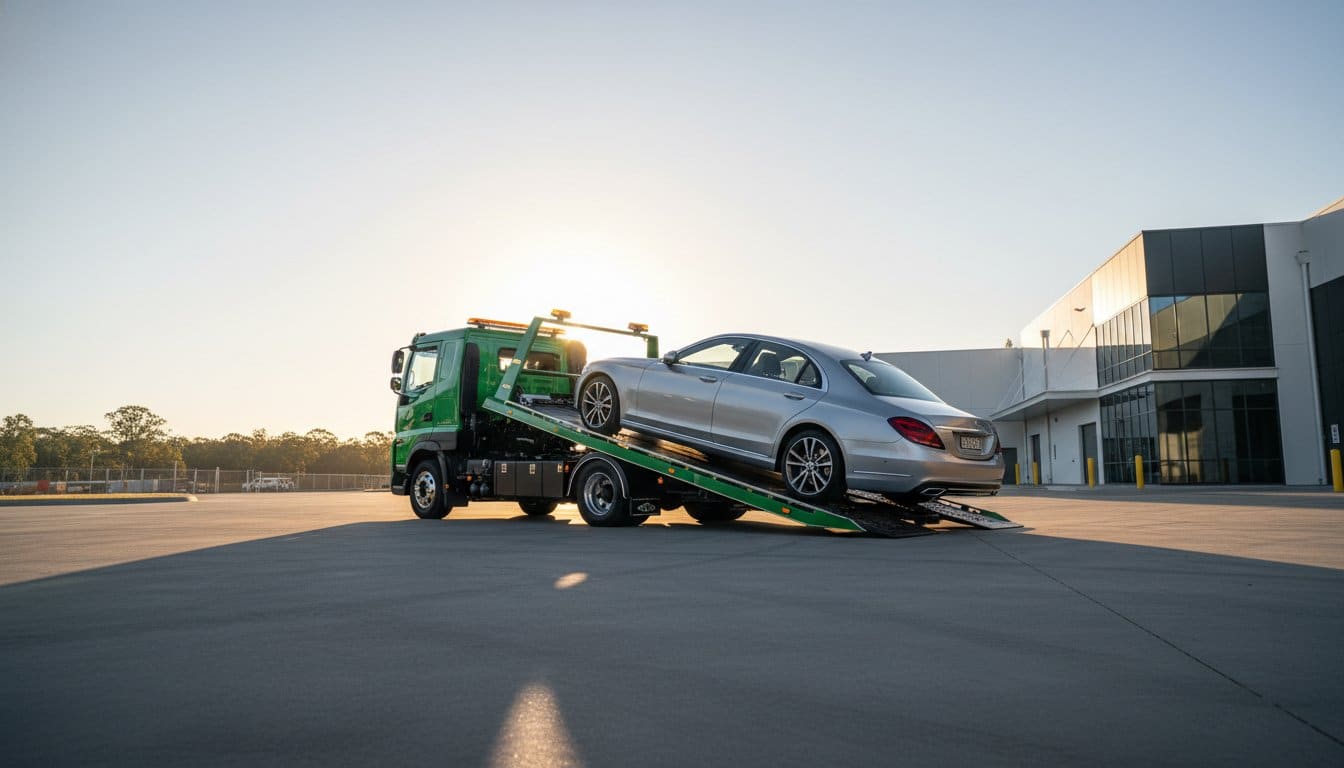
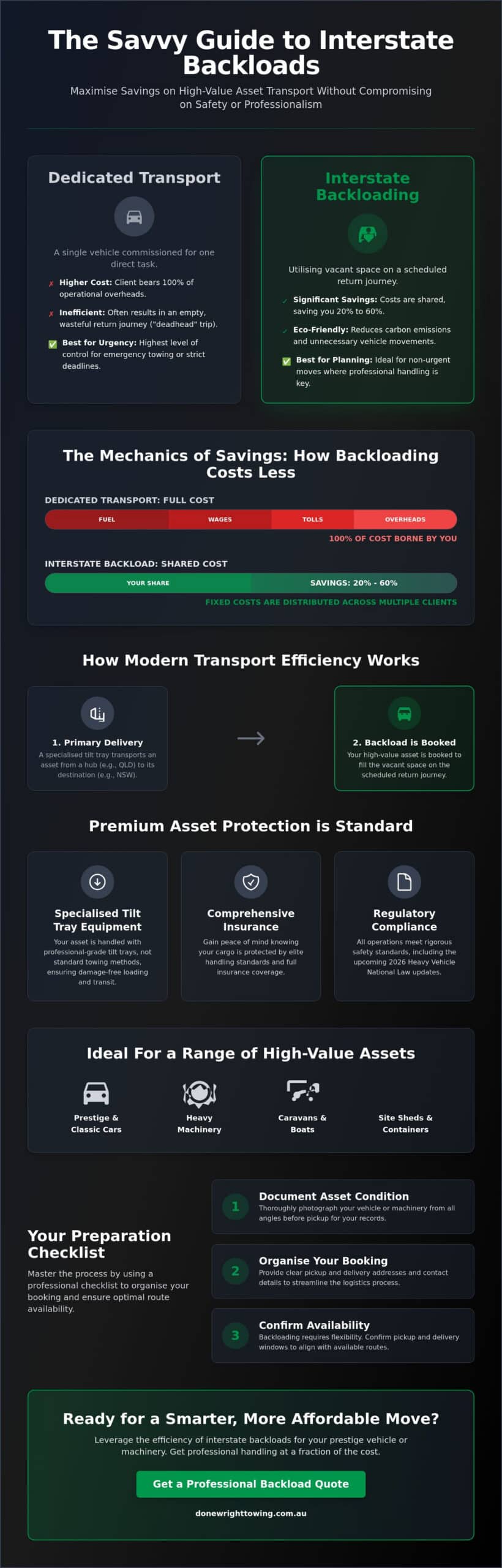
    To understand the strategic value of this service, one must first ask: What are Interstate Backloads? At its core, backloading is the sophisticated practice of utilising the vacant space on a heavy vehicle that is already scheduled for a return journey. Rather than a transporter returning to its primary hub with an empty tray, a professional carrier integrates secondary cargo into the planned route. This method transforms what would otherwise be a “deadhead” trip into a precision-managed logistics operation. It’s a refined approach that prioritises resource management over the traditional, often wasteful, model of dedicated single-asset transport.

    For the discerning owner of a prestige vehicle or vital machinery, interstate backloads represent a marriage of fiscal responsibility and environmental stewardship. By filling existing capacity, the industry significantly reduces the number of unnecessary vehicle movements on major Australian freight arteries. This consolidation directly lowers the collective carbon footprint of the transport sector. It also ensures that the heavy vehicle’s operational costs, such as fuel, tolls, and driver hours, are distributed across multiple consignments. The result is a premium service that costs less because it is smarter, not because it cuts corners on safety or quality.

    The Return Trip Concept

    Logistical planning often centres on major transport corridors stretching from operational hubs in Logan and Stapylton toward the southern states. When a specialised tilt tray completes a primary delivery of a classic car or a site shed to Sydney or Melbourne, the vehicle must eventually return to Queensland. For the carrier, an empty return journey is an inefficiency to be avoided. For the client, this creates a premium opportunity to secure elite transport standards at a reduced rate, as the primary transit costs are already accounted for by the outbound leg. It’s a win-win scenario that rewards those who plan their transport needs with a focus on efficiency.

    Backloading vs. Dedicated Transport

    Choosing between these two methods depends entirely on your specific requirements for timing and exclusivity. A dedicated transport service involves commissioning a vehicle for a singular, direct task, providing the highest level of schedule control for urgent relocations or breakdown towing. In contrast, backloading requires a degree of flexibility regarding pickup and delivery windows. It’s the superior choice for non-emergency relocations, such as moving a caravan, a boat, or construction machinery, where the priority is professional, secure handling rather than a strict, hour-specific arrival. This methodical approach ensures your asset receives the same level of meticulous care as a dedicated load but at a significantly more accessible price point.

    The Mechanics of Savings: Why Backloading Costs Less

    The financial logic behind interstate backloads is rooted in the mathematical distribution of fixed operational expenses. A single journey from Queensland to Victoria incurs massive overheads. These include the driver’s professional wages, heavy vehicle registration, and the wear on specialised tilt tray equipment. When a carrier runs a dedicated service, the client bears these costs alone. Backloading changes this dynamic by allowing multiple high-value assets to share the same journey. It is a sophisticated method of modern transport efficiency that preserves the premium standards expected by collectors and commercial operators alike. According to industry data, this collective approach allows customers to save between 20% and 60% on their move compared to a dedicated truck.

    Route density plays a critical role in these savings. The corridor connecting the Gold Coast to Sydney and Melbourne is one of the busiest freight arteries in the country. Because road freight accounts for approximately 75% of all non-bulk domestic freight in Australia, there is a constant flow of professional transporters moving between these capitals. If you are planning a move, exploring a professional vehicle relocation via backload can offer the same elite security as a private tow at a fraction of the investment. We ensure that every bay on the transporter is utilised effectively, which keeps the wheels turning and the costs manageable for every client on the manifest.

    Fuel and Toll Efficiency

    Interstate transport requires navigating expensive toll networks, particularly through the Sydney and Melbourne metropolitan areas. For a heavy vehicle, these fees can accumulate rapidly across a 1,000-kilometre journey. Modern logistics planning ensures that these costs aren’t wasted on an empty tray. By distributing the substantial fuel expenditure across several consignments, the individual cost to each client is significantly reduced without impacting the calibre of service provided. This methodical approach ensures that the high price of diesel doesn’t become a barrier to safe, professional transport.

    Logistics Planning in South-East Queensland

    Stapylton serves as a critical strategic nexus for transport between Brisbane and the Gold Coast. This location allows for the efficient aggregation of prestige cars, caravans, and machinery before they begin their journey south. High route density along the East Coast means there are more frequent opportunities to fill the gaps in a carrier’s schedule. This frequency ensures that even though backloading requires some flexibility, your asset doesn’t wait long for a secure bay on a professional transporter. It’s about disciplined scheduling that respects both the client’s budget and the asset’s requirements for secure, damage-free handling.

    Interstate Backloads: The Smart Guide to Cost-Effective Vehicle Transport

    Premium Asset Protection: Safe Backloading for High-Value Vehicles

    A common misconception persists that choosing interstate backloads implies a compromise on the calibre of handling your asset receives. In reality, the lower price point is a result of logistical efficiency, not a reduction in safety protocols. For owners of prestige vehicles and rare classic cars, the standard of care remains the highest priority. Professional transporters treat every vehicle as a prized possession, employing disciplined loading techniques that respect the engineering and craftsmanship of the asset. Whether you are relocating a vintage Jaguar or a modern performance vehicle, the methodology remains focused on meticulous protection and damage prevention.

    Security during transit is underpinned by strict adherence to Australian transport regulations and comprehensive insurance coverage. Reputable operators must maintain public liability and transit insurance, which typically covers significant events such as collisions, overturning, or theft. Under the 2026 Heavy Vehicle National Law (HVNL) amendments, all accredited operators are now required to have a robust Safety Management System (SMS) in place. These strengthened Chain of Responsibility (CoR) laws ensure that every party involved in the transport process is legally accountable for the safety of the load. This regulatory environment provides peace of mind that your investment is protected by professional guardians who understand the financial and emotional stakes involved.

    Specialised Equipment for Prestige and Classic Cars

    The use of specialised tilt tray equipment is non-negotiable for high-value vehicle relocations. Low-angle tilt trays are essential for performance cars with minimal ground clearance, ensuring that spoilers and undercarriages remain untouched during the loading process. Once on the tray, we utilise non-abrasive soft straps rather than traditional chains. These specialised tie-downs secure the vehicle firmly by the wheels or chassis without risking the delicate paintwork or chrome finishes. This level of technical precision ensures that your asset arrives in the exact condition it was in when it left your driveway.

    Machinery and Heavy Equipment Safety

    Securing industrial assets requires a deep understanding of weight distribution and load dynamics on a multi-load journey. When integrating site sheds, containers, or heavy plant equipment into a shared route, expert loaders must calculate the optimal placement to maintain the transporter’s balance and stability. This is particularly vital for machinery transport, where irregular dimensions and high centres of gravity demand specialised knowledge. By using heavy-duty winches and engineered lashing points, we ensure that even the most cumbersome equipment remains immobile and secure across thousands of kilometres of Australian highway.

    Planning Your Interstate Move: A Step-by-Step Backload Checklist

    The success of a premium relocation begins long before the tilt tray arrives at your property. Securing a position for interstate backloads requires a disciplined approach to scheduling, as these high-demand slots fill quickly on popular East Coast routes. Industry experts recommend booking 4 to 6 weeks in advance, particularly during the peak season from November to February, to ensure your asset is prioritised. This lead time allows the logistics team to integrate your vehicle into a route that maximises efficiency while maintaining the high standards of care your investment deserves.

    Documenting the precise condition of your vehicle is a critical step in the “Expert Guardian” process. We recommend taking high-resolution photographs of every panel, including the roof and undercarriage, to create a definitive record before the loading process commences. This level of detail provides immediate peace of mind and serves as an essential reference for insurance purposes. Additionally, you must ensure that both the pickup and delivery locations provide ample clearance for a heavy vehicle. Under the 2026 HVNL amendments, the maximum vehicle length has increased to 20 metres, meaning your transporter may require more space than a standard local tow truck to manoeuvre safely.

    Preparing Your Vehicle for Transit

    A clean vehicle is more than a matter of pride; it’s a prerequisite for a thorough condition report. Dust and road grime can obscure minor imperfections, so a professional wash allows for a more accurate inspection during the handover. You should remove all personal belongings from the interior, as transit insurance typically does not cover loose items left inside the cabin. Finally, verify that the battery is healthy and fluid levels are adequate. Even if the vehicle is not being driven long distances, it must be capable of steering and braking safely for the winching and loading process.

    Managing Timelines and Communication

    Embracing a flexible window for pickup and delivery is the most effective way to maximise your savings. Because backloading relies on the movement of other primary cargo, a small degree of patience allows the carrier to offer a more competitive rate. Direct communication with the dispatch centre ensures you receive timely updates regarding the transporter’s progress. Before the journey begins, take a moment to review your interstate towing service contract. It’s vital to confirm that the transit insurance coverage aligns with the specific value of your prestige car, caravan, or machinery.

    If you are ready to organise a secure relocation for your classic car or heavy equipment, request a professional backload consultation to secure your place on our next scheduled route.

    Done Wright: Professional Backloads Across the QLD/NSW Border

    Choosing Done Wright Towing & Transport means entrusting your vehicle to a team that views logistics through the lens of meticulous care rather than mere volume. Our approach to interstate backloads is defined by a commitment to the “Expert Guardian” philosophy, where every classic car, piece of machinery, or building container is handled with the same reverence as a personal heirloom. By maintaining a steady presence on the roads between South-East Queensland and the southern states, we ensure that your asset is integrated into a disciplined, planned schedule that prioritises security above all else. This isn’t just about moving an item from point A to point B; it’s about executing the task “Done Wright” every single time.

    Our operational hub in Stapylton serves as the ideal launchpad for vehicles heading south. We understand the emotional and financial stakes involved in high-end transport, which is why we deliberately move away from the aggressive, rugged tone of general logistics. Instead, we offer a service-oriented atmosphere that appeals to enthusiasts and collectors who are protective of their investments. By choosing a specialist who understands engineering and craftsmanship, you gain the peace of mind that comes from knowing your asset is in the hands of technically proficient professionals.

    The SE QLD to Northern NSW Specialists

    As specialists in the corridor stretching from Logan and Stapylton to Northern NSW and beyond, we have mastered the nuances of border towing and regional deliveries. Our team frequently manages the collection of auction vehicles and private property removals, ensuring that even complex logistics are handled with quiet confidence. Whether you’re moving a prestige vehicle purchased at a southern auction or relocating heavy machinery to a regional work site, our deep knowledge of New South Wales transport routes allows us to provide a premium service experience at a more accessible backload price point.

    Why Choose a Family-Owned Specialist?

    In an industry often dominated by faceless aggregators, the value of a dedicated family-owned specialist is significant. Unlike generic booking platforms that outsource your cargo to the lowest bidder, we maintain direct control over our fleet and our safety standards. This allows us to focus on the technical details that matter, such as the use of specialised, non-abrasive equipment and precise weight distribution for interstate backloads involving heavy machinery. Our reputation among local enthusiasts is built on years of reliable, high-standard execution. To secure a tailored quote for your next relocation, contact our dispatch office to discuss your specific requirements and upcoming route availability.

    Secure Your Next Relocation with Expert Precision

    Navigating the complexities of long-distance transport doesn’t require a choice between fiscal responsibility and the safety of your investment. By utilising existing route capacity, interstate backloads provide a sophisticated solution that maintains the highest standards of meticulous care. We’ve established that cost efficiency is a result of smart logistics, not a reduction in protection. Every relocation we manage adheres to the stringent 2026 Heavy Vehicle National Law standards, employing specialised equipment like low-angle tilt trays and non-abrasive soft straps to ensure your asset remains pristine.

    Our Stapylton-based team specialises in the transport of prestige, classic, and performance cars, treating every load with the disciplined attention of an expert guardian. You shouldn’t have to settle for generic aggregators when you can partner with a fully licensed and insured specialist with deep regional expertise. We take pride in delivering a service-oriented experience that ensures every task is Done Wright. We look forward to assisting you with your upcoming transport requirements.

    Get a Professional Quote for Your Interstate Backload

    Frequently Asked Questions

    How much can I actually save by using an interstate backload?

    You can typically achieve significant cost savings of between 20% and 60% compared to commissioning a dedicated transporter. This reduction is possible because your vehicle or machinery shares the fixed operational overheads of a route that is already scheduled. By utilising the vacant space on a return journey, you avoid the premium expense of paying for the entire truck’s fuel, tolls, and driver wages alone.

    Is backloading safe for my classic or prestige car?

    Backloading is exceptionally safe for high-value assets when handled by a specialist provider using professional tilt tray equipment. We treat every vehicle as a prized possession, employing non-abrasive soft straps and low-angle trays to protect delicate paintwork and low-clearance undercarriages. The technical safety protocols and meticulous handling methods remain identical to a dedicated service; only the logistical scheduling of the trip differs.

    How long does an interstate backload typically take to deliver?

    Delivery timelines for interstate backloads generally depend on the primary route’s schedule and the specific logistics of the shared load. While a dedicated tow offers immediate transit, a backload usually requires a flexible window of several days to a week for pickup and delivery. We maintain disciplined communication throughout the journey to ensure you are informed of the precise arrival time at your destination.

    Do I need to be present for the pickup and delivery of the vehicle?

    It’s highly recommended that you or a trusted representative be present to sign the condition report and oversee the loading process. This presence ensures that the high-resolution documentation of your asset’s condition is agreed upon before the journey commences. If you cannot be there personally, we can arrange for an authorised agent to facilitate the handover at your private property or commercial site.

    Are backloaded vehicles still covered by transit insurance?

    Reputable transport operators provide comprehensive transit insurance that covers major events such as collisions, overturning, or theft during the journey. Under the 2026 Master Code, carriers must demonstrate a rigorous Safety Management System to maintain their accreditation. You should always verify that the policy’s coverage limit reflects the full replacement value of your prestige or classic vehicle before confirming your booking.

    Can I use backloading for heavy machinery or site sheds?

    Backloading is an ideal, cost-effective solution for relocating heavy machinery, site sheds, and shipping containers across state lines. These large assets often fit perfectly into the logistical gaps of return journeys originating from regional hubs like Stapylton or Logan. Our expert loaders ensure correct weight distribution and secure lashing to maintain the stability and safety of the transporter throughout the long-distance haul.

    What happens if the truck is delayed on its interstate route?

    Delays on interstate routes are occasionally caused by adverse weather conditions or strict adherence to mandatory rest breaks required by heavy vehicle fatigue laws. If a delay occurs, our dispatch centre provides immediate updates to keep you informed of the revised timeline. We prioritise the safety of your asset and our professional drivers over rushed schedules, ensuring a secure and damage-free arrival.

    Do you offer backloads from the Gold Coast to Sydney and Melbourne?

    We frequently operate interstate backloads along the busy freight corridor connecting the Gold Coast and South-East Queensland to Sydney and Melbourne. This high-density route allows for more frequent opportunities and greater flexibility for our clients seeking professional vehicle relocation. By utilising our strategic hub in Stapylton, we provide a premium service for enthusiasts and commercial operators moving assets across the East Coast.

  • Reliable Interstate Car Towing Services: The 2026 Guide to Long-Distance Transport

    Reliable Interstate Car Towing Services: The 2026 Guide to Long-Distance Transport

    Would you hand over the keys to your performance investment if you knew there was a risk of it arriving with structural stress or fresh stone chips? Most owners find the prospect of a 1,500-kilometre journey across state lines deeply unsettling, especially when 95% of long-distance moves in May 2026 still rely on open carriers. We understand that your vehicle is a prized possession, not just a logistics task. You need more than basic interstate car towing services; you require a partner who treats your car with the same precision used to engineer it.

    We’ve designed this 2026 guide to ensure you move your vehicle across Australia safely and cost-effectively without the anxiety of hidden fees or poor communication. You’ll learn how to navigate current industry rates, which average between A$0.70 and A$1.00 per kilometre for long-distance hauls, and why the January 2026 heavy vehicle driver medical certification updates are vital for your car’s security. We’ll also explore why Done Wright Towing & Transport’s “Expert Guardian” approach, using soft-strap technology and specialised tilt trays, is the superior choice for your Performance, Prestige & Classic vehicles.

    Key Takeaways

    • Learn why professional interstate car towing services are more cost-effective than DIY driving when you account for fuel, accommodation, and unnecessary vehicle wear.
    • Understand why tilt tray transport and soft-strap technology are the industry gold standard for protecting Performance, Prestige & Classic vehicles during long-distance transit.
    • Discover how to utilise interstate backloads to secure premium transport quality at a reduced rate by leveraging empty return-trip capacity.
    • Master the essential preparation checklist, including high-resolution photo documentation, to ensure your vehicle is ready for a safe and secure hand-off.
    • Identify the critical safety credentials and insurance requirements you must verify before trusting a carrier with your high-value automotive investment.

    What are Interstate Car Towing Services and Why Use a Specialist?

    Interstate car towing services involve the professional relocation of vehicles across state borders using specialised logistics equipment like tilt trays or multi-car transporters. While many general towing companies focus on local emergency recovery, interstate transport is a disciplined operation designed for long-haul security. For owners of high-value assets, this service is about more than moving a car from point A to point B. It’s about preserving the mechanical integrity and financial value of a Performance, Prestige or Classic vehicle. Using modern car carrier trailers ensures that your vehicle remains stationary and protected from the structural stresses of a thousand-kilometre journey.

    Choosing a specialist over a generalist is a critical distinction. A general tow truck operator might use heavy chains or abrasive straps that can mar delicate alloy wheels or damage sensitive suspension components. In contrast, a specialist employs an “Expert Guardian” approach. We utilise soft-strap technology and damage-free loading techniques. This level of care is essential when booking interstate car towing services for a significant investment. Professional transport also keeps your odometer reading exactly where it was when the car left your driveway. This is a vital factor in maintaining the resale value of collectable or low-kilometre prestige cars.

    The Risks of Long-Distance DIY Transport

    Attempting to drive a vehicle across state lines yourself carries significant hidden burdens. Fatigue is a primary safety concern on major Australian routes like the M1 or the Pacific Highway, where long stretches of road require intense concentration. Beyond personal safety, there’s the risk of mechanical strain. High-kilometre trips can trigger unexpected failures in older classic cars or project vehicles not seasoned for long-distance hauls. The financial “savings” of DIY often vanish when you calculate the current price of petrol, which frequently exceeds A$2.00 per litre. You also have to factor in overnight accommodation, meals, and the cost of a return flight home.

    When to Book a Professional Interstate Service

    Most clients seek out professional handling during major life transitions or high-stakes acquisitions. Common scenarios include:

    • Work or Lifestyle Relocations: Moving a household between Queensland and the southern states requires a reliable partner to ensure the family fleet arrives safely.
    • Interstate Purchases: Buying a vehicle from a private collector or an auction house in another state necessitates a secure transport solution to bring the new asset home.
    • Non-Running Projects: Relocating a project car that isn’t roadworthy requires specialised tilt tray equipment capable of winching the vehicle without causing further damage.
    • High-Value Asset Protection: When the emotional and financial stakes are high, enthusiasts trust specialists who understand the nuances of prestige automotive engineering.

    The Mechanics of Safe Long-Distance Transit

    The physical process of moving a vehicle across Australia requires more than just a truck; it demands a methodical system of safeguards. For high-value vehicles, tilt tray trucks represent the industry gold standard because they eliminate the risks associated with traditional towing. Unlike older methods that drag a vehicle behind a truck, a tilt tray allows the entire asset to sit safely on a flat platform. This setup is particularly vital for interstate car towing services where road conditions can vary significantly between the Gold Coast and Sydney or Melbourne.

    At Done Wright, our promise is to treat every vehicle as a prized possession. We understand the emotional and financial investment involved in Performance, Prestige & Classic automotive ownership. Our methodical approach begins with a comprehensive inspection and ends with a damage-free arrival. To ensure total peace of mind, we maintain rigorous insurance standards. As of May 2026, all reputable carriers must provide valid cargo insurance. We recommend verifying these limits before booking. Our fully insured operations are designed to de-risk the transport process for collectors and enthusiasts alike.

    Soft-Strap Technology: Protecting Your Pride and Joy

    Traditional transport often relies on metal chains or hooks that can cause structural stress or mar expensive alloy rims. We’ve eliminated this risk by adopting soft-strap technology across our entire fleet. These specialised tie-downs distribute tension evenly across the tyre tread. They prevent the paintwork scratches and undercarriage strain that often occur during long-haul vibrations. Soft-strap technology is the primary method for damage-free prestige transport, utilising high-tensile fabric webbing to secure the vehicle by its tyres rather than the chassis. This ensures your vehicle remains in its factory-specified alignment throughout the journey. If you’re concerned about your vehicle’s safety, you can request a specialised transport quote from our team.

    Tilt Tray Advantages for Interstate Logistics

    Low-clearance performance cars require a specific loading geometry to avoid front-splitter or underbody damage. Our low-angle tilt trays provide a gentle incline that accommodates even the most aggressive aerodynamic setups. This precision is why enthusiasts prefer our interstate car towing services over general multi-car carriers that might use steeper ramps. Once the vehicle is on the tray, it’s secured for the varied road conditions found on Australian highways, from smooth motorways to uneven rural bypasses. Because our tilt trays are highly manoeuvrable, we can often provide door-to-door service in suburban streets where larger multi-car transporters simply cannot fit. This precision handling is a hallmark of our Stapylton-based operations, ensuring your car is never driven unnecessarily during the loading or unloading phases.

    Comparing Costs: Interstate Backloads vs. Dedicated Transport

    Relocating a vehicle from South East Queensland to a southern capital involves balancing two primary factors: budget and timeline. While dedicated transport offers the fastest turnaround for those on a strict schedule, savvy owners often choose interstate backloads to secure elite service at a more competitive price point. This choice doesn’t mean compromising on quality. It’s about understanding how logistics networks operate to your advantage. At Done Wright, we apply the same “Expert Guardian” standards to every job, ensuring your Performance, Prestige & Classic assets receive meticulous care regardless of the pricing model you select.

    How Interstate Backloads Work

    An interstate backload is a savvy logistics solution that utilises the empty space on a transport carrier’s return journey. For example, if a truck delivers machinery from Melbourne to Brisbane, it’s more efficient for the operator to carry a vehicle on the trip back rather than driving an empty deck. This model is an eco-friendly and budget-conscious choice for non-urgent moves. You’re essentially sharing the operational overheads with another client, which allows us to offer more competitive rates. Despite the lower cost, we don’t cut corners. Your vehicle still benefits from our specialised soft-strap technology and damage-free loading protocols, maintaining our promise of perfection across every kilometre.

    Pricing Factors for 2026 Transport

    Several variables influence the final quote for interstate car towing services. Distance remains the primary driver of cost. According to verified industry data from May 2026, short-distance hauls under 500 miles typically attract rates between A$1.25 and A$2.00 per mile. As the distance increases beyond 1,000 miles, the rate becomes more economical, generally falling between A$0.50 and A$0.70 per mile. This sliding scale reflects the efficiency of long-haul logistics on major Australian routes.

    Vehicle size and condition also play a significant role in determining the final price. Larger assets such as SUVs, boats, or caravans occupy more deck space and can add between A$100 and A$400 to the base fee. If you’re moving a high-value asset, our Prestige Car Transport service provides the specialised handling required for elite automotive engineering. Finally, consider your timeline. If you require expedited service with a guaranteed 24-48 hour pickup, expect a surcharge ranging from A$150 to A$400. By planning ahead and opting for a backload, you can avoid these urgency fees while still ensuring your vehicle is handled by disciplined specialists.

    Reliable Interstate Car Towing Services: The 2026 Guide to Long-Distance Transport

    Preparation Checklist for Interstate Vehicle Relocation

    Ensuring your vehicle is ready for the journey is the final step in guaranteeing a seamless arrival. While our team provides the “Expert Guardian” level of care on the road, your preparation at home or the showroom creates the foundation for a damage-free transit. A thorough pre-transport wash is essential because it allows for a precise inspection of the paintwork and body integrity. Once the vehicle is clean, you should document its condition by taking 15 to 20 high-resolution photos from all angles, including close-ups of the wheels and undercarriage. This documentation serves as a verified baseline for both the owner and the provider of interstate car towing services.

    Safety regulations and insurance protocols require that all personal items be removed from the cabin and boot. Items like loose sunglasses, aftermarket GPS units, or heavy tools can become projectiles during transit vibrations, potentially damaging the interior. Additionally, most carriers are not licensed to transport household goods inside a vehicle. Managing your fuel level is another practical necessity; a quarter-tank of petrol is the ideal balance between keeping the vehicle operable for loading and minimising unnecessary weight. You should also check that tyre pressures are at the manufacturer’s recommended PSI to ensure the soft-strap tie-downs can secure the vehicle effectively without causing flat spots.

    Technical Preparation Steps

    Modern security systems can be a source of frustration during long-distance hauls. You must disable all car alarms before the driver arrives to prevent the battery from draining due to sensor triggers caused by road movement. Ensure all windows are fully closed and convertible tops are securely latched to prevent dust ingress or wind damage. Finally, check for any active fluid leaks. While we specialise in moving non-runners, a vehicle that leaks oil or coolant can pose a safety risk to other assets on the carrier deck. If your vehicle has unique technical requirements, you can book your interstate transport with our specialist team to discuss a tailored plan.

    Special Considerations for Caravans and Boats

    Relocating larger assets requires an additional layer of discipline. For caravan transport, you must secure all internal cabinetry and remove gas bottles entirely, as these are classified as hazardous materials for interstate transit. You can refer to our Caravan Recovery guide for more specific long-distance towing tips. For boat transport, ensure that all covers are tightly lashed and any loose rigging is secured. Wind pressure at highway speeds can cause loose covers to flap, which may lead to gelcoat scuffing or structural fatigue. By following these methodical steps, you ensure that our interstate car towing services can be executed with the precision and reliability your investment deserves.

    Choosing Done Wright for Your Interstate Vehicle Transport

    Done Wright Towing & Transport is a family-owned business operating out of Stapylton, QLD. We’ve built our reputation on a blend of professional authority and meticulous care that sets us apart from large, impersonal national freight networks. While those companies might focus on high-volume turnover, we treat every vehicle as a prized possession. Our local expertise in the Logan and Gold Coast regions serves as a strategic advantage for our interstate car towing services. Being based in the Stapylton industrial corridor allows us to efficiently stage and execute long-distance hauls to Sydney, Melbourne, and beyond with minimal delay.

    Choosing a partner for long-distance transit requires a high level of trust. We are a fully licensed, accredited, and insured organisation, providing a secure environment for your automotive investments. Our team understands that for owners of high-value assets, the emotional stakes are just as high as the financial ones. This is why we maintain a “Done Wright” standard of perfection across every aspect of our operations. We don’t rely on the rugged or aggressive tone found in general towing; instead, we adopt a premium, service-oriented atmosphere that appeals to collectors who are protective of their investments.

    Expert Guardian Service for High-Value Assets

    Automotive enthusiasts and collectors across Australia trust us as their “Expert Guardian” because we respect the engineering behind every vehicle. Our specialty lies in the relocation of Performance, Prestige & Classic cars, where precision is non-negotiable. We don’t use hyperbole; our credentials and specialised equipment speak for themselves. This disciplined approach ensures that your vehicle arrives in the same condition it left your driveway, free from the structural stress or cosmetic damage associated with less meticulous providers. If your logistics needs include more than just passenger vehicles, we also provide reliable Machinery Transport for industrial and construction equipment. Every job, whether it’s a classic Porsche or a site shed, receives the same elite handling and soft-strap security.

    Get Your Interstate Transport Quote Today

    The process for requesting a quote for your next interstate move is designed to be steady, structured, and transparent. We provide clear geographic and contact information to de-risk your decision-making process. From our base in Stapylton, we offer an expansive signature reach that covers major capital cities and regional hubs across Australia. You can expect a professional, service-oriented atmosphere from the first phone call to the final delivery. We invite you to Contact Done Wright Towing & Transport for a specialised quote and discover how we can move your vehicle safely and cost-effectively.

    Secure Your Vehicle’s Journey Across Australia

    Navigating the complexities of long-distance relocation requires a partner who prioritises precision over volume. You now understand that successful interstate car towing services depend on meticulous preparation and the use of specialised equipment like low-angle tilt trays and soft-strap technology. By leveraging savvy logistics like interstate backloads, you can achieve a damage-free arrival without the premium price tag of a dedicated urgent haul. Whether you’re moving a household to Melbourne or acquiring a new performance asset from a Sydney collector, the security of your vehicle remains our primary objective.

    Done Wright Towing & Transport provides the elite handling your investment deserves. We are a family owned and operated business based in Stapylton, QLD, specialising in the safe relocation of Performance, Prestige & Classic cars. Our fully insured and licensed operations ensure that every asset is treated as a prized possession from pickup to delivery. You can Get a Professional Interstate Transport Quote from Done Wright today to lock in your 2026 transit schedule. We look forward to providing the peace of mind that comes with knowing your automotive pride and joy is in expert hands.

    Frequently Asked Questions

    How much does interstate car towing cost in Australia for 2026?

    Interstate car transport costs in 2026 typically range from A$1,100 to A$1,600 for long-distance hauls exceeding 1,000 miles. For shorter distances under 500 miles, you can expect rates between A$600 and A$900. These figures are influenced by vehicle size and carrier type. Enclosed transport options often add a 40% to 60% premium over standard open carrier rates to provide maximum protection for high-value assets.

    Is my vehicle insured while being transported interstate?

    Your vehicle is protected by comprehensive cargo insurance throughout the entire transit period. As a professional provider of interstate car towing services, we maintain high-limit coverage to safeguard Performance, Prestige & Classic assets. It is essential to verify these insurance limits with your carrier before booking. Federal regulations require all active motor carriers to maintain valid cargo protection for third-party assets during transit.

    How long does it typically take to tow a car from Brisbane to Sydney?

    Transporting a vehicle from Brisbane to Sydney generally takes between 3 and 5 days. This mid-distance route covers approximately 900 kilometres and falls within the standard industry window for East Coast logistics. While transit times can vary based on route optimisation and weather conditions, we provide regular communication. This ensures you remain informed of your vehicle’s progress throughout its journey between Queensland and New South Wales.

    Can I leave personal belongings inside my car during interstate transport?

    You cannot leave personal items or loose accessories inside the vehicle during interstate transport. Items such as aftermarket GPS units, tools, or household goods are not covered by transit insurance and can cause interior damage if they shift. To comply with safety standards, we require the cabin and boot to be empty. This policy leaves only the spare tyre and factory jack to ensure a safe haul.

    What is an interstate backload and how can it save me money?

    An interstate backload is a logistics arrangement where your vehicle is transported using the empty space on a truck returning from a previous delivery. This method offers significant savings because the operational costs are shared with another client. It is an ideal choice for non-urgent relocations. Backloading allows you to access premium transport standards at a reduced rate by utilising existing route capacity across the country.

    Do you offer door-to-door interstate towing services?

    We provide door-to-door service across Australia provided the pickup and delivery locations are accessible by our specialised tilt tray transporters. Some suburban streets have weight or height restrictions that prevent large carriers from entering safely. In these specific instances, we arrange a convenient meeting point nearby, such as a local shopping centre or industrial park, to ensure the loading process remains methodical and secure.

    What happens if my car is a non-runner or has low ground clearance?

    We specialise in handling non-running vehicles and performance cars with low ground clearance using our specialised tilt tray fleet. Inoperable vehicles typically incur a surcharge between A$150 and A$500 to cover the additional winching requirements. Our low-angle trays are designed specifically to accommodate aggressive aerodynamic setups. This ensures that front splitters and undercarriages remain untouched during the loading phase of our interstate car towing services.

    How do I prepare my classic car for a long-distance interstate haul?

    Preparing a classic car for long-distance transit involves conducting a thorough wash followed by high-resolution photo documentation of all panels. You should check for fluid leaks and ensure the battery is secured. Disabling the alarm system is vital to prevent battery drain during road vibrations. Our “Expert Guardian” approach then takes over, utilising soft-strap technology to secure your investment without risking structural or cosmetic damage.